The Secret of the Colors: Thang-ga Pigments
A Thang-ga painting is a celebration of eternal color. The secret to their incredible longevity and luminous depth lies in the use of rare, natural mineral and organic pigments. Unlike synthetic paints, these ancient colors do not fade over time, allowing the sacred images to inspire generations for hundreds of years.
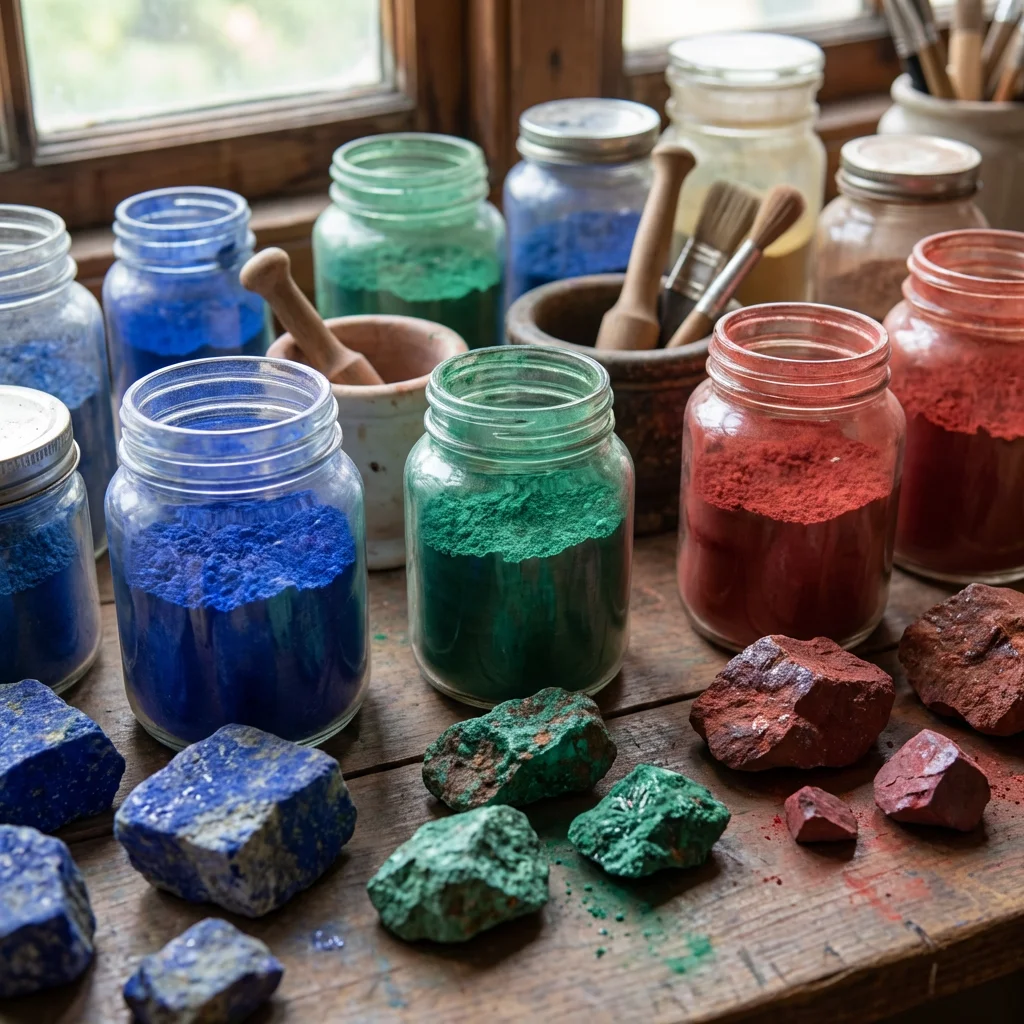
Mineral Treasures: Lapis, Malachite, and Cinnabar
Each color in a Thang-ga has a specific mineral source. Blue comes from ground Lapis Lazuli, green from Malachite, red from Cinnabar, and yellow from Orpiment. These minerals are ground into fine powders and mixed with yak-hide glue to create a paint that is both vibrant and extremely stable.
The Radiance of Pure Gold Leaf
Gold is essential for depicting the divine radiance of the Buddhas. Artisans use real 24K gold leaf, which is ground into a fine paste and applied to the painting. Once dried, the gold is polished with a gemstone (such as an agate) to create a shimmering, reflective surface that symbolizes the light of enlightenment.
The Alchemy of Pigment Preparation
Preparing the pigments is as much a skill as the painting itself. The minerals must be hand-ground for hours or even days to achieve the perfect consistency. The purity of the water used and the ratio of glue to pigment are closely guarded secrets that vary between different schools of Thang-ga art.
Frequently Asked Questions
Why are mineral pigments better than synthetic ones?
Mineral pigments have a unique chemical structure that resists oxidation and UV damage. They also have a natural "glow" and a depth of color that synthetic paints cannot replicate.
Are these pigments toxic?
Some traditional pigments, like cinnabar (mercury-based) and orpiment (arsenic-based), are toxic if ingested. Masters handle them with great care and follow strict safety rituals that have been part of the craft for centuries.
How can I tell if a Thang-ga uses real mineral pigments?
Real mineral colors have a subtle, matte texture and a specific "vibrancy" that changes slightly under different lighting. Over decades, synthetic colors will often turn grey or muddy, while minerals remain bright. | 



 Posted an update: