The Precision of Filigree Inlay Techniques
The art of Filigree Inlay is a testament to the extreme precision of Chinese metalwork. It transforms solid gold and silver into threads as thin as silk, which are then woven into complex, structural designs that challenge the limits of the material.
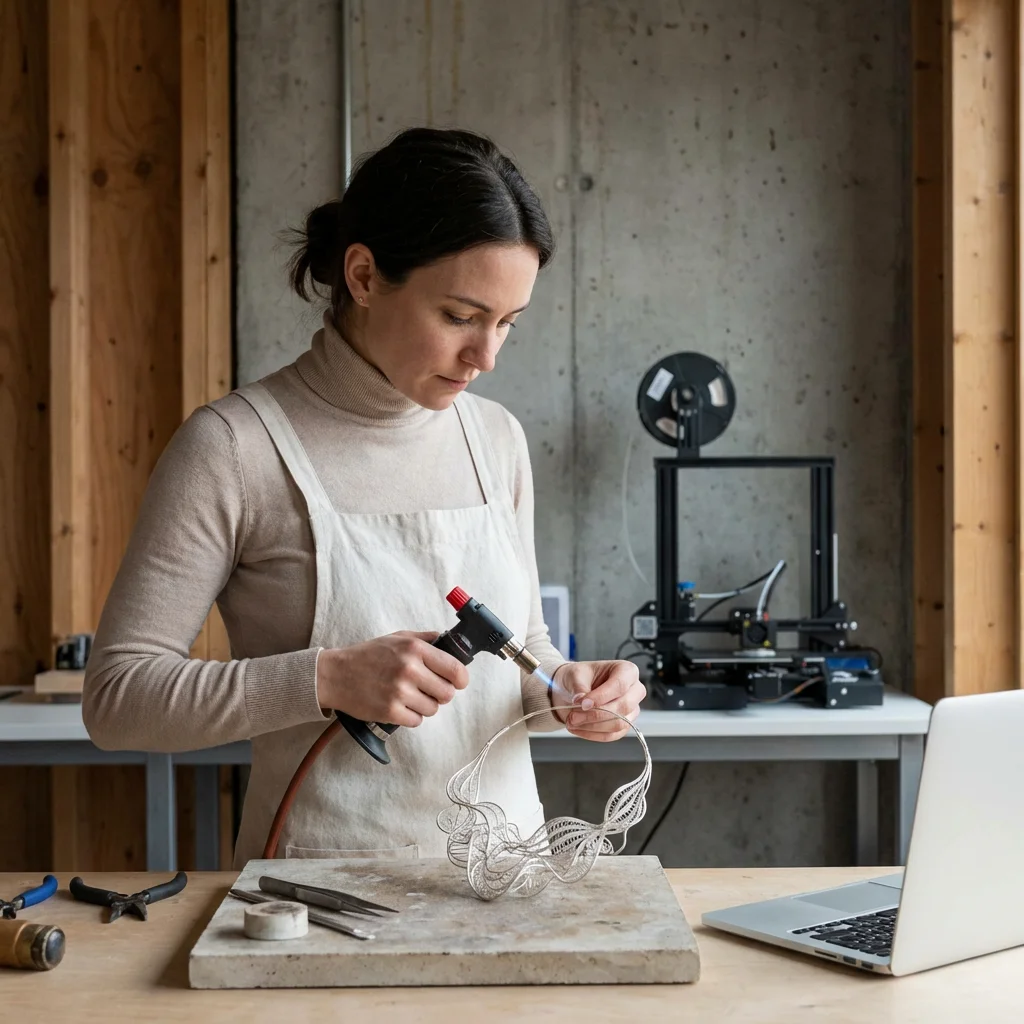
Drawing and Twisting Gold Wires
The process begins with "wire drawing," where gold or silver is pulled through smaller and smaller holes in a steel plate until it reaches the desired thickness. These wires are then twisted together to create a "threaded" texture that provides more surface area for soldering and a more complex visual effect.
Braiding and Nipping: Creating the Lace
Artisans use specialized tweezers to "nip" and "braid" the wires into thousands of tiny components—spirals, flowers, and geometric patterns. These are then carefully arranged on a metal framework and joined together using a high-precision soldering technique that leaves no visible seams.
Inlaying the Treasures of the Earth
Once the wire framework is complete, the "inlay" (Xiangqian) process begins. Filigree pieces are often set with a variety of precious stones, particularly jade, pearls, and kingfisher feathers (in the traditional "Tian-tsui" style). The settings are custom-built to fit each stone perfectly, ensuring that the final piece is a harmonious blend of metal and gem.
Frequently Asked Questions
How thin are the wires used in filigree?
The wires can be as thin as 0.2 millimeters—about the same thickness as a human hair. Drawing wire to this level of fineness without it breaking requires high-quality metal and a very steady hand.
What kind of gold is used?
Traditionally, 24K pure gold was used for its softness and ductility. Modern filigree may use 18K gold or sterling silver for added durability, especially for pieces intended for everyday wear.
Is filigree inlay an endangered craft?
It was once at risk, but it has seen a major revival as a National Intangible Cultural Heritage. Specialized schools and workshops in Beijing are now training a new generation of master artisans. | 



 Posted an update: 2026-4-3 12:02:12 77