Calligraphy: The Voice of the Zisha Teapot
A high-quality Zisha teapot is often more than just a functional vessel; it is a canvas for the "Three Perfections" of Chinese art: calligraphy, poetry, and painting. The integration of inscribed text on the clay body elevates the teapot from a craft item to a profound work of literary art.
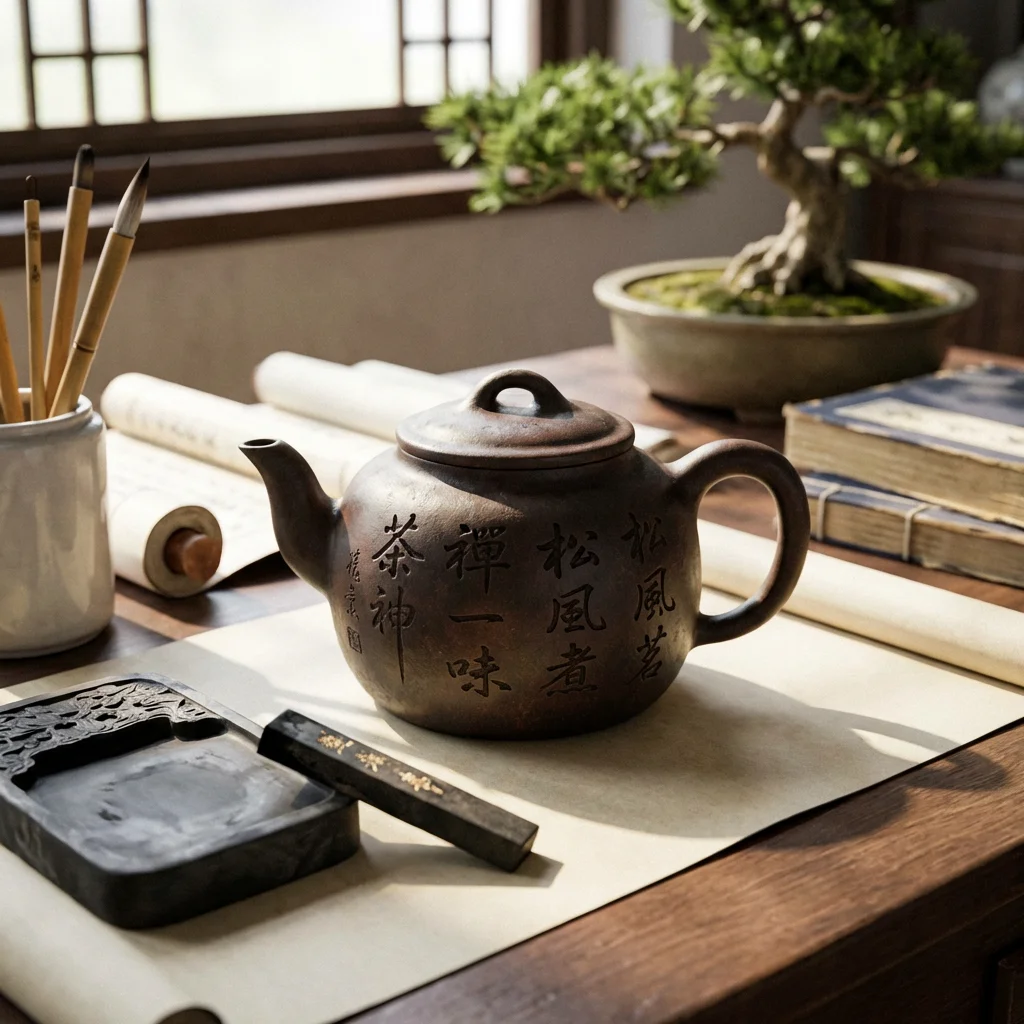
Carving Inscriptions on Purple Clay
Carving onto the unfired, leather-hard Zisha clay requires a master"s touch. Using small, sharp knives, the engraver must replicate the fluid strokes of a brush, capturing the varying thickness and energy (Qi) of the calligraphy. This process, known as "Tao Ke," is a specialized skill that takes years to master.
The Scholar-Artisan Collaboration
Historically, famous teapots were often the result of collaborations between master potters and renowned scholars. The scholar would provide the poem or the calligraphic design, and the potter would bring it to life on the clay. These "Scholar Teapots" are highly prized for their intellectual depth and artistic harmony.
Reading and Understanding the Inscriptions
The inscriptions often include Zen Buddhist sayings, descriptions of the tea-drinking environment, or philosophical reflections on nature. Reading these texts while sipping tea is considered a core part of the "Teapot Appreciation" experience, engaging both the senses and the mind.
Frequently Asked Questions
Do the carvings affect the teapot"s performance?
No, the carvings are only on the outer surface and do not penetrate the clay body or affect the heat-retention and breathing properties of the teapot.
Are all Zisha teapots inscribed?
No, many teapots are left plain to showcase the natural beauty and texture of the clay (Zisha). Both plain and inscribed teapots have their own unique appeal depending on the collector"s taste.
What is the most common script used for inscriptions?
Seal script (Zhuanshu) and Running script (Xingshu) are very common. Seal script adds a sense of antiquity, while Running script captures the spontaneous and fluid nature of tea culture. | 



 Posted an update: