The Silent Art of Jade Polishing
While carving gives jade its shape, polishing gives it its soul. In traditional Chinese jade art, the polishing process—known as "Jie Yu" (unbinding the jade)—is a meditative practice that transforms a rough, opaque stone into a luminous, translucent masterpiece.
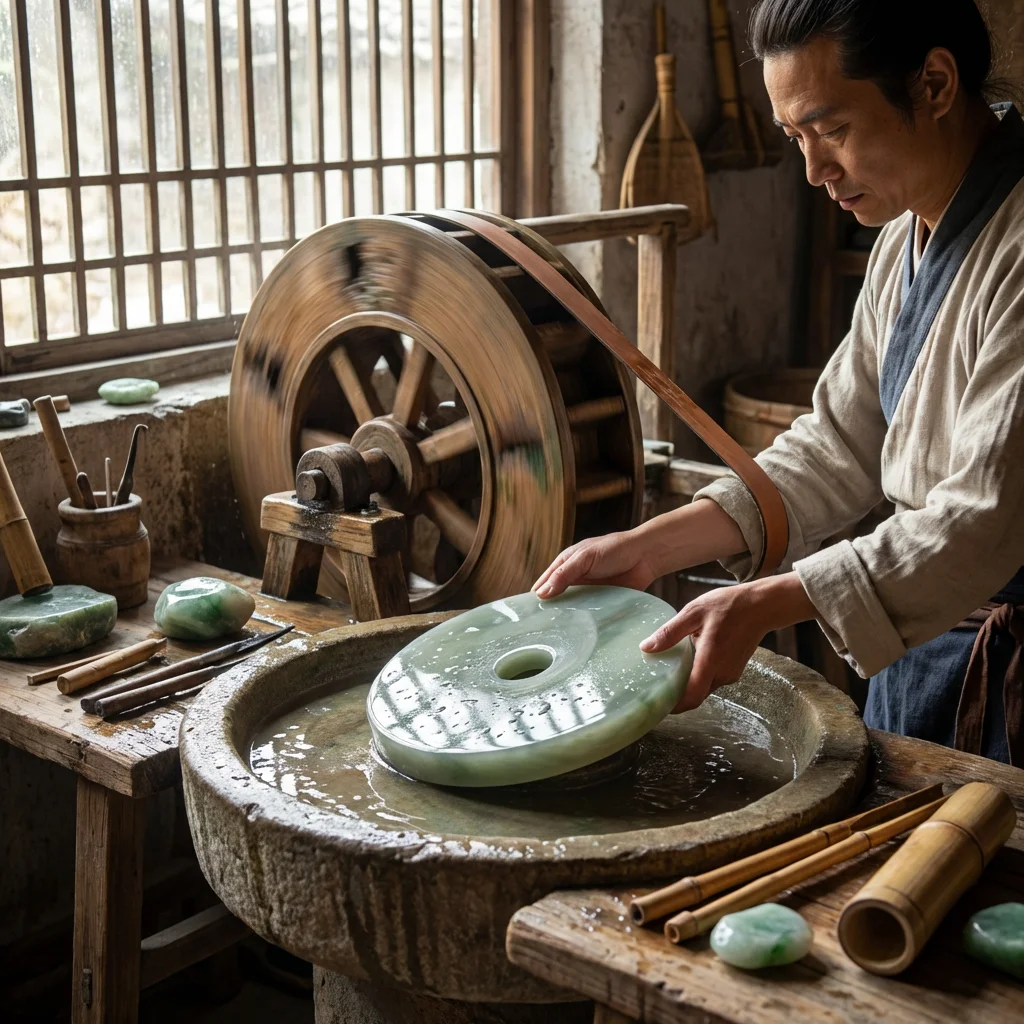
In ancient times, jade was polished using wooden or bamboo tools and "red sand" (garnet or quartz). Today, while artisans use modern electric motors and diamond pastes, the fundamental principle remains the same: gradually using finer and finer abrasives to remove all surface scratches and reveal the stone"s inner luster.
The Essential Role of Water and Sand
Water is the constant companion of the jade polisher. It cools the stone, prevents dust, and acts as a carrier for the abrasive particles. The "water-mill" polishing technique ensures that the heat generated by friction does not cause the delicate jade to crack or change color.
Patience: The Ultimate Tool of the Master
Polishing a single jade piece can take longer than the actual carving. It requires a steady hand and infinite patience to ensure that every curve and hollow is perfectly smooth. This slow, rhythmic process is often compared to the cultivation of one"s own character in Confucian philosophy.
Frequently Asked Questions
What is "Mutton Fat" luster?
This is a term used to describe the highest quality of white Nephrite jade. It refers to a surface that is so perfectly polished and of such high internal purity that it looks like solid, translucent fat or cream.
Does polishing damage the jade?
On the contrary, proper polishing protects the jade by closing the microscopic surface pores and revealing its natural toughness. It is a non-invasive process that only removes a negligible amount of material.
Can I polish my own jade at home?
While you can use a soft cloth to maintain the luster, professional polishing requires specialized equipment and years of training. Attempting to use household abrasives can permanently ruin the stone"s surface. | 



 Posted an update: