Thang-ga: Sacred Art of the Himalayas
Thang-ga is a unique form of Tibetan Buddhist scroll painting that serves as both a religious icon and a tool for meditation. These highly detailed paintings depict deities, mandalas, and scenes from Buddhist teachings, framed in colorful silk brocade.
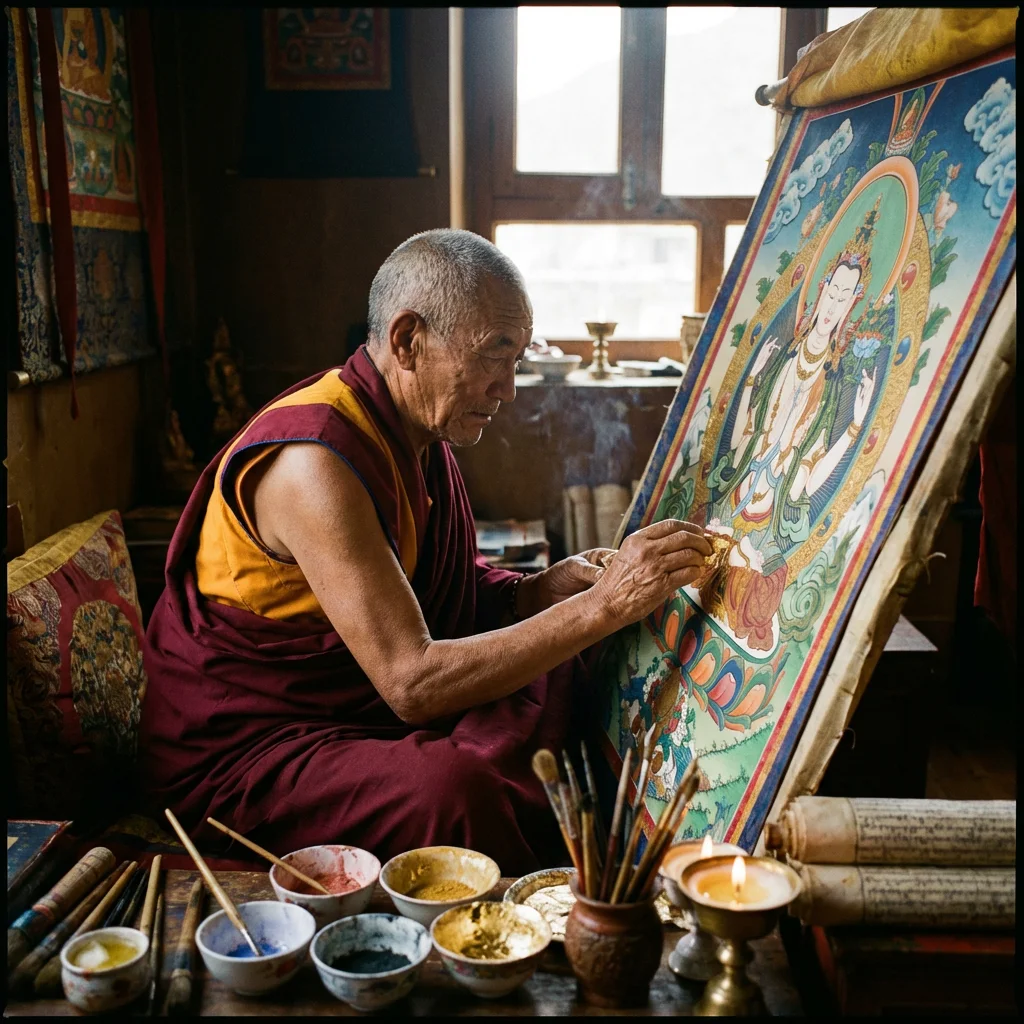
Mineral Pigments and Gold Leaf
What makes Thang-ga paintings truly exceptional is the use of natural mineral pigments—such as lapis lazuli for blue, malachite for green, and cinnabar for red. These minerals, combined with real gold leaf, ensure that the colors remain vibrant for centuries without fading.
The Devotional Process of Painting
The creation of a Thang-ga is a sacred ritual. The artist (often a monk or a dedicated practitioner) must follow strict mathematical proportions and iconographic rules. The process can take months or even years, as the artist applies thousands of microscopic strokes to achieve the final luminous effect.
Iconography and Spiritual Meaning
Every element in a Thang-ga—from the posture of the deity to the color of the halo—has a specific spiritual meaning. They are used in temples and private shrines as focuses for meditation, helping practitioners visualize the enlightened qualities of the Buddhas.
Frequently Asked Questions
Why are Thang-ga paintings so expensive?
The price reflects the use of precious materials (gold and minerals) and the extraordinary amount of time and spiritual devotion required to complete a single piece.
How should I care for a Thang-ga?
Thang-ga should be kept in a dry, shaded place away from direct sunlight. They are designed to be rolled up for transport, but should be hung vertically and occasionally aired out.
Are all Thang-ga paintings original?
While many are modern creations, "authentic" Thang-ga follow traditional methods and proportions. Antiques are rare and highly prized by collectors and practitioners alike. | 



 Posted an update: