A Practical Guide to Chinese Porcelain Authentication
Heritage News
Editorial Team
Every collector dreams of owning genuine antique pieces. Yet in today's curio markets, counterfeits proliferate to such an alarming degree that distinguishing the real from the fake has become an art in itself. Whether one is dealing with ancient jade or vintage porcelain, truly period-authentic specimens are exceedingly rare — and among porcelain wares, genuine official-kiln (guan yao) treasures are perhaps the most elusive of all. A collector may spend decades in the pursuit without ever securing a single authentic masterpiece.
Antique porcelain consists of objects that were actually used by people in bygone eras. Some pieces have been passed down through generations — what collectors call chuanshi ware; others have been unearthed from archaeological sites. Determining whether a piece is genuinely old or a modern imitation requires the appraiser to bring every sense to bear: sight, touch, smell, and hearing. Each historical period left its own distinctive signature on the ceramics produced within it.
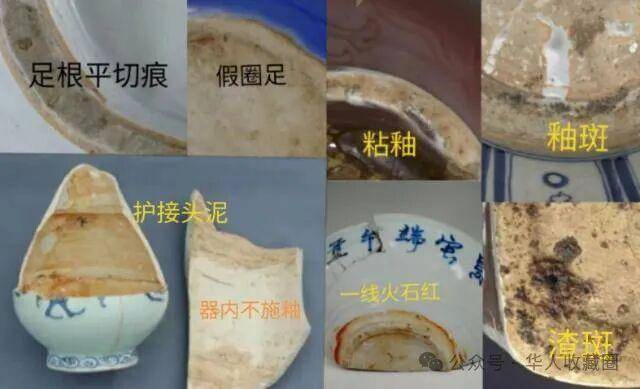
Chinese antique porcelain spans two broad categories: official kiln wares produced for the imperial court, and folk kiln wares made for everyday use. The pantheon is vast — Yuan-dynasty blue-and-white, Tang Sancai tri-colour glaze, sweet-white (tianbai) porcelain, marbled-clay (jiaotai) wares, and the storied output of the Ru, Jun, and Cizhou kilns, to say nothing of Jingdezhen, whose name has become synonymous with fine Chinese porcelain across the globe. For most enthusiasts entering the world of antique collecting, porcelain is the most accessible and the most commonly encountered category.
How to Tell Old from New, Genuine from Fake
Drawing on decades of hands-on research and personal experience with ceramics, the author has distilled a framework that approaches porcelain authentication from multiple angles simultaneously. When these dimensions are evaluated together — rather than in isolation — the reliability of dating, provenance, and authenticity judgments increases considerably.
I. Form and Silhouette
Why can a seasoned expert glance at a porcelain piece from across the room and instantly pronounce it wrong — without even picking it up? More often than not, the piece fails at the level of form.
Ancient potters worked within a deeply ingrained aesthetic tradition. Their vessels exhibit a deliberate sense of proportion and an eloquent fluidity of line that modern replicas struggle to reproduce convincingly. What follows are comparative illustrations of genuine and counterfeit forms:
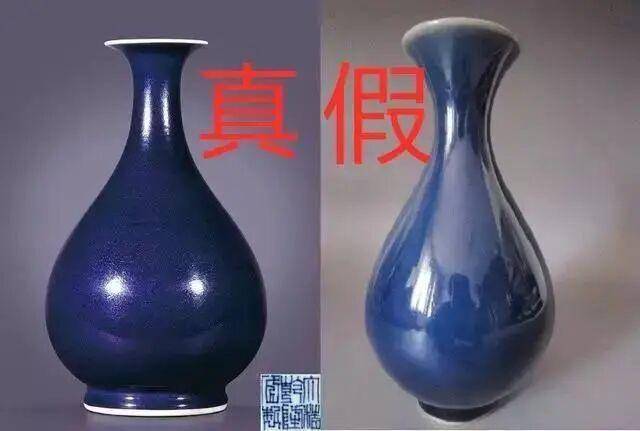
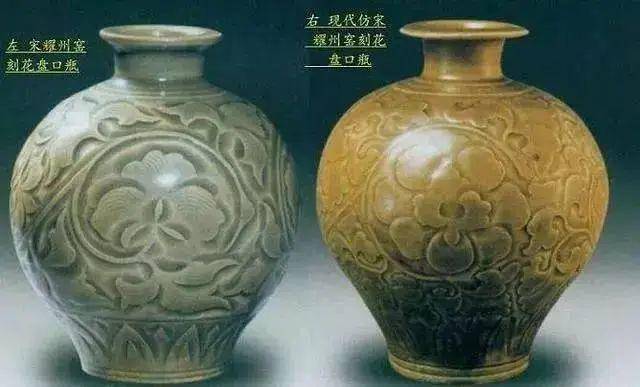
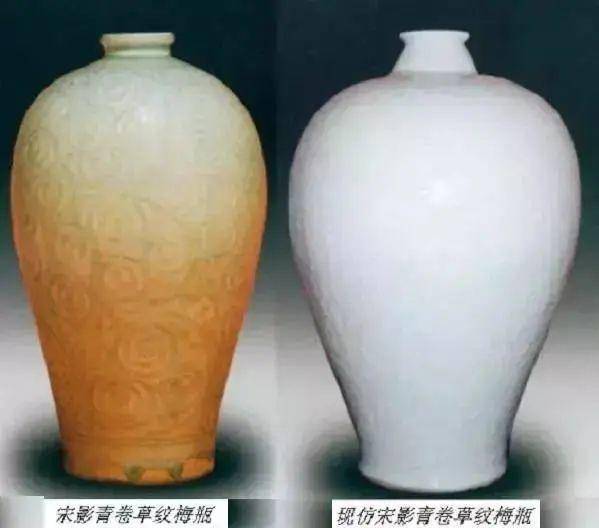
II. Clay Body (Porcelain Paste)
Seasoned connoisseurs invariably flip a piece over to examine the base. The exposed clay body — its colour, texture, density, and granularity — provides critical diagnostic information about kiln origin, period, and authenticity. Each type of porcelain is built upon a distinctly different clay formulation.
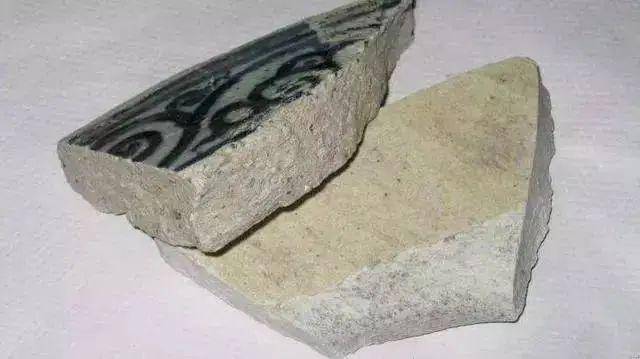
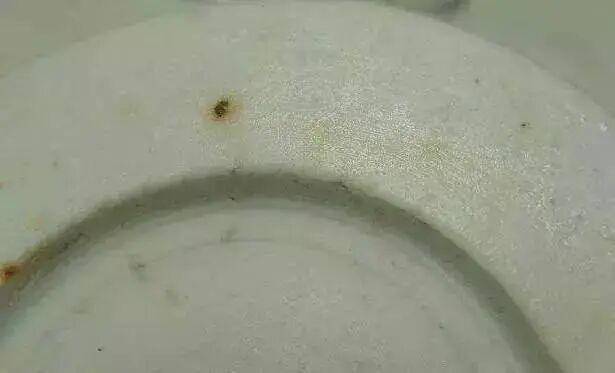
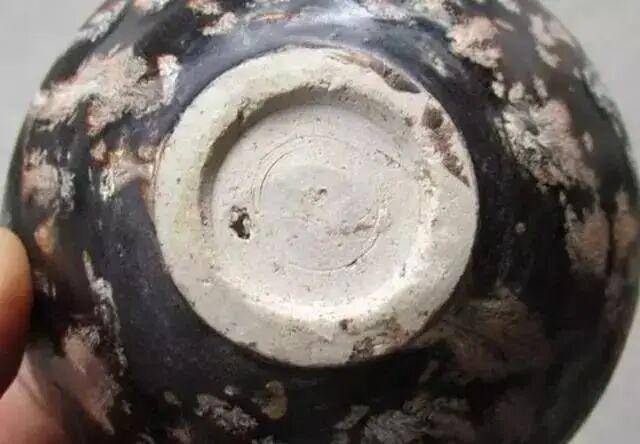
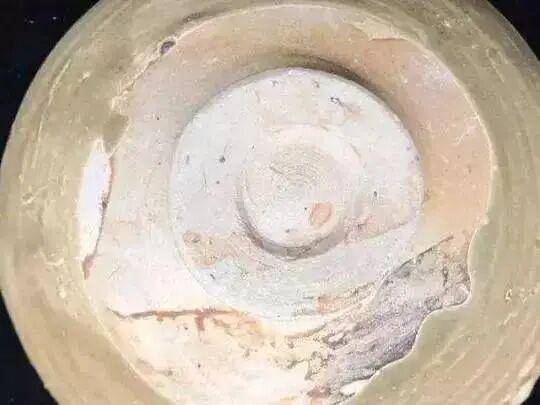
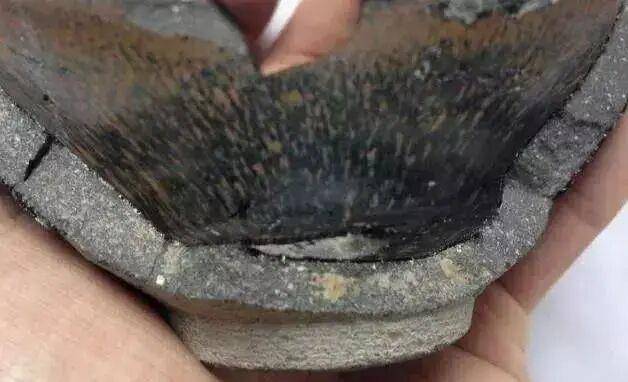
III. Oxidation and Handling Marks — The Signs of Transmission
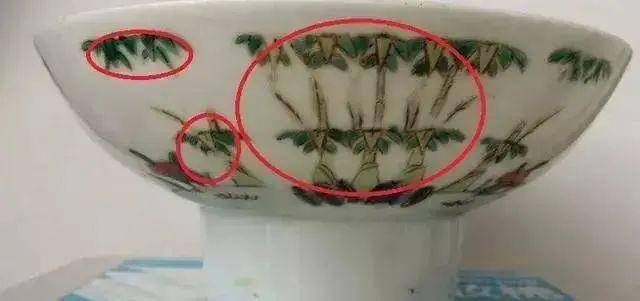
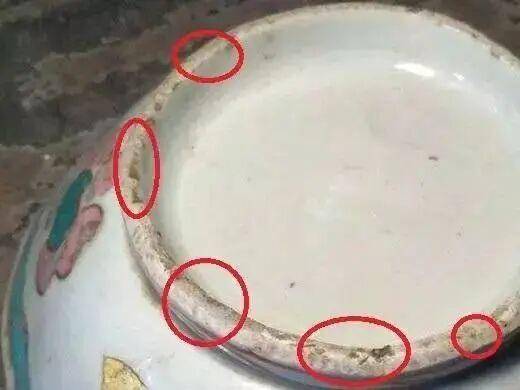
Pieces that have been handed down through the centuries accumulate a distinctive patina of age: pigments that have naturally oxidised and softened, a fine web of surface scratches from generations of wiping and dusting, and — most tellingly — a gradual build-up of grime in the recesses of the foot ring.
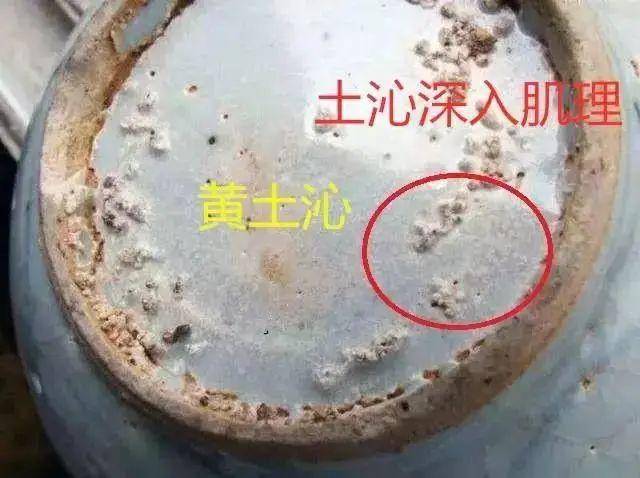
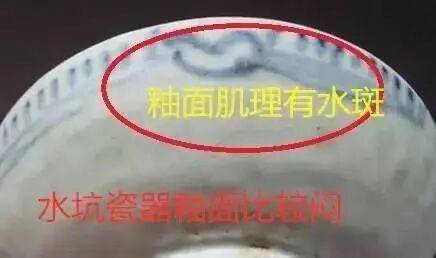
IV. Excavation Marks — Burial Stains and Water Immersion
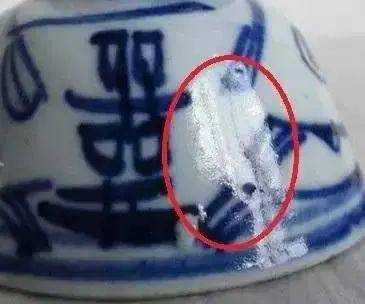
A great many high-fired ceramics of considerable antiquity spent centuries underground before being recovered. Prolonged burial nearly always leaves its signature on the glaze and body in the form of subtle — or sometimes dramatic — staining. The following examples illustrate common types of burial-derived discolouration:
V. Glaze-Body Bonding
Many fakes are assembled from mismatched parts — an old body fitted with a newly thrown base, or an authentic shard joined to a modern reconstruction. Under close scrutiny, the integrity of the glaze-to-body interface often betrays such deceptions. Does the glaze run naturally into the exposed clay at the foot? Is the transition seamless, consistent with the firing technology of the claimed period? These are the questions that separate authentic pieces from composite fabrications.
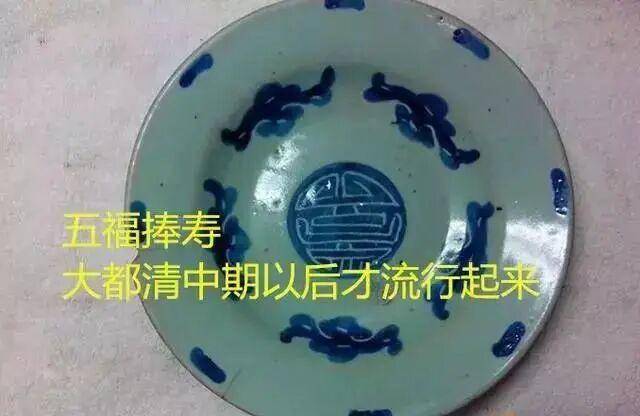
VI. Decorative Motifs
Each dynasty and reign period favoured its own repertoire of decorative themes. When a motif appears on a piece whose purported date does not align with the historical currency of that design, red flags should be raised immediately. Such anachronisms may result from old imitation or new forgery — but either way, the piece is not what it claims to be.
VII. Manufacturing Techniques
Every category of Chinese porcelain was shaped by a specific set of production methods, and close examination often reveals inconsistencies that betray a forgery. The principal firing and stacking techniques include:
Fired upside-down with unglazed mouth rim (mangkou fushao): Vessels were stacked mouth-down during firing, leaving the rim unglazed. On higher-grade pieces, the exposed rim was subsequently mounted with a band of copper, silver, or gold.
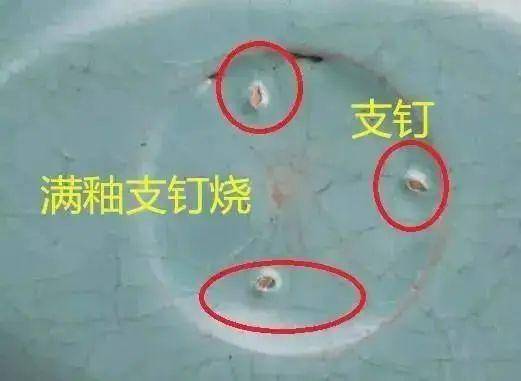
Spur-mark firing (zhiding shao): Vessels were supported on tiny refractory spurs during glost firing, leaving characteristic sesame-seed-sized unglazed marks on the base. This technique is most famously associated with Ru and Jun wares.
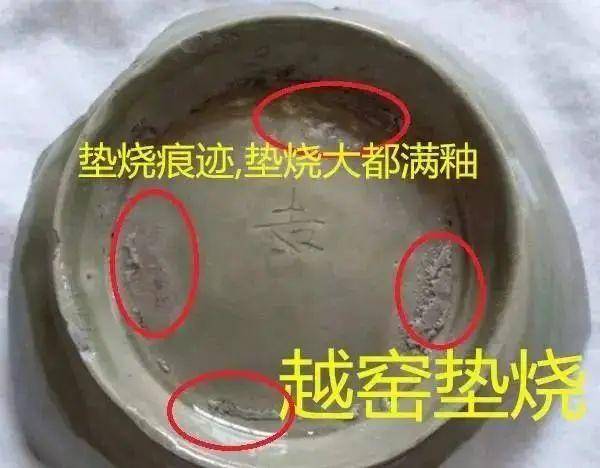
Setter-ring firing (dianshao): Pieces were placed on refractory setter rings or saggar supports, a technique that minimised contact marks while maximising kiln capacity.
Conclusion: Bringing It All Together
The seven factors outlined above must never be assessed in isolation. Each informs and constrains the others. A vessel's form must be consistent with its clay body; the clay body must match the firing technology; the decorative motifs must align with the period suggested by the glaze chemistry. Where even a single dimension fails to cohere, the entire attribution should be regarded as suspect.
The reason these specific criteria are emphasised is straightforward: they are the aspects that modern forgers find most difficult to convincingly reproduce. Beyond these seven pillars, the seasoned appraiser also weighs the piece in the hand (heft and density), evaluates its thermal properties, taps it to assess the resonance of the fired body, studies the painting technique and brushwork, examines the glazing method, scrutinises the trimming and finishing of the foot ring, and analyses the colour palette in natural light. Authentication is a holistic discipline — a symphony of observations, not a single note.
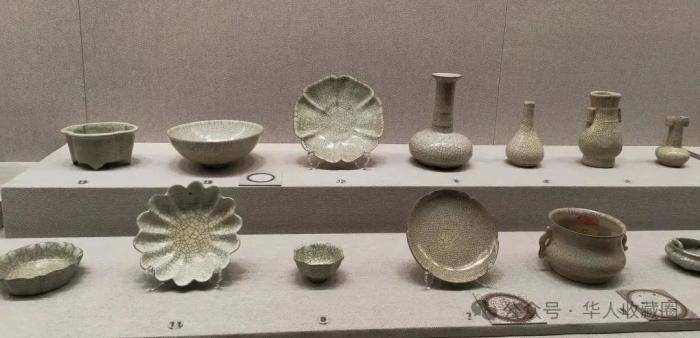
Chinese ceramics span thousands of years and encompass an extraordinary diversity of types, kilns, and regional traditions. They stand as a crystallisation of China's cultural history. Many are drawn to the beauty of antique porcelain, but relatively few possess the trained eye necessary to distinguish the genuine article from its myriad imitations. Masterworks from the celebrated kilns — the Ding, Ru, Guan, Ge, and Jun wares of the Song dynasty — inspired imitations even in their own time. Some of those early copies were of considerable quality and circulated widely. From the Yuan through the Ming and Qing, and right down to the present day, the impulse to replicate the great achievements of the past has never diminished. Over a thousand years of continuous production, imitation porcelain has become nearly ubiquitous. A single moment of carelessness is all it takes for even an experienced collector to be deceived.
To authenticate a piece of antique porcelain with confidence, one must first acquire a deep familiarity with the ceramic traditions of every major production centre across China's long history. Only then can a sound and reliable judgement be formed.