Luxury in a Glaze: How to Spot China's Most Precious Porcelains by Colour Alone
Heritage News
Editorial Team
In ancient China, the colour of a piece of porcelain was much like the fabric of an imperial robe: the more breathtaking the hue and the more fiendishly difficult it was to fire, the more precious it became. The most coveted glazes were often monopolised by the imperial court, forbidden to commoners — because nothing says "peerless majesty" quite like a colour that only the Son of Heaven is allowed to own.
So which porcelains can be identified as top-tier luxury at a single glance — purely by their colour? What follows is a connoisseur's crib sheet. The next time you walk through a museum, you will know exactly which display cases deserve your fullest attention.
Celadon & Sky-Blue — When Green Became Imperial
First, a reality check: the dazzling, multi-coloured porcelains we take for granted today were anything but easy to obtain in antiquity. They are the cumulative fruit of over a thousand years of trial and error by generations of craftsmen, who painstakingly worked out which glaze recipe, paired with which mineral additive, would reliably yield a desired colour — and even then, the kiln had the final say. In an age before thermometers, the slightest fluctuation in kiln temperature or atmospheric chemistry could doom an entire firing. It was common for hundreds of pieces to enter the kiln, only for a tiny handful to emerge with a truly pure, unblemished glaze.
This fundamental reality meant that certain glaze colours were, from the very moment of their invention, destined for greatness.
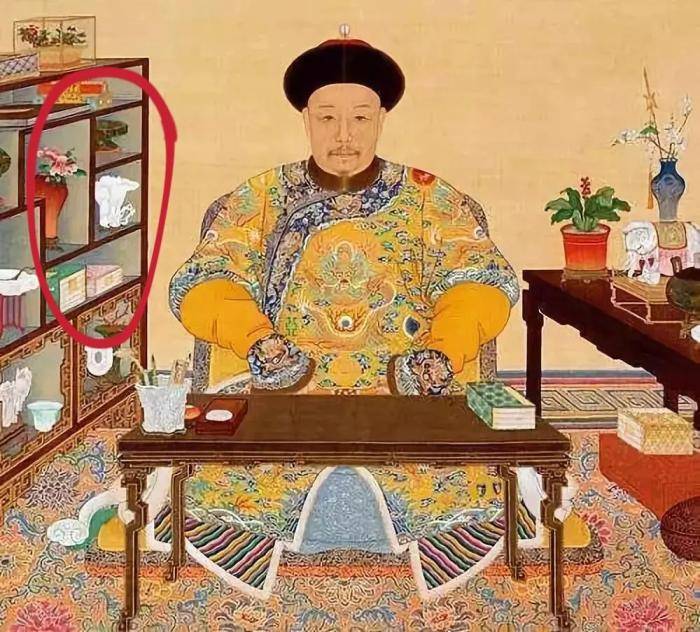
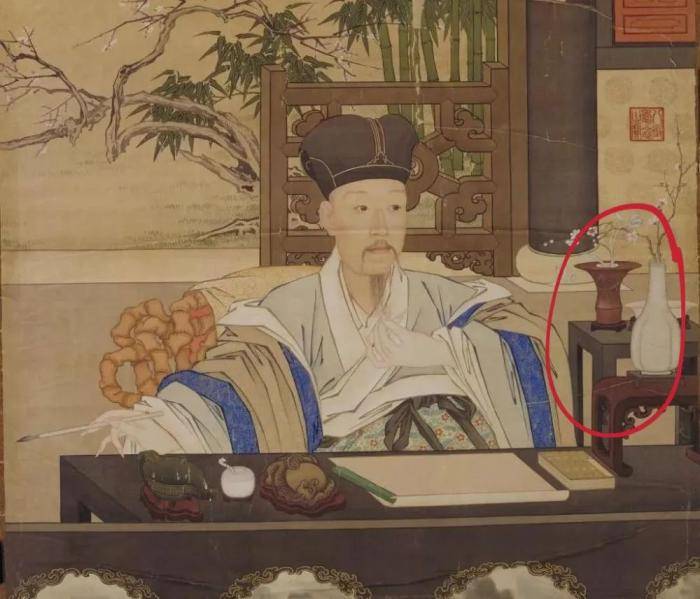
Celadon — the classic green-glazed stoneware — enjoyed the widest circulation of any porcelain type, used from emperor to commoner. But the celadon that graced the imperial table was emphatically not the ordinary kind. It had to be beautiful to the point of transcendence.
Mi-se Porcelain: the "Secret Colour" of the Yue Kilns
The very name — mi-se (secret colour) — carries an air of mystery. For centuries during the Ming and Qing dynasties, scholars pored over Tang-dynasty poems that rhapsodised about this fabled ware in language that bordered on the celestial: "When the Yue kilns open to the ninth-month wind and dew, they seize the green of a thousand mountain peaks." The poetry was intoxicating. The porcelain itself was nowhere to be found.
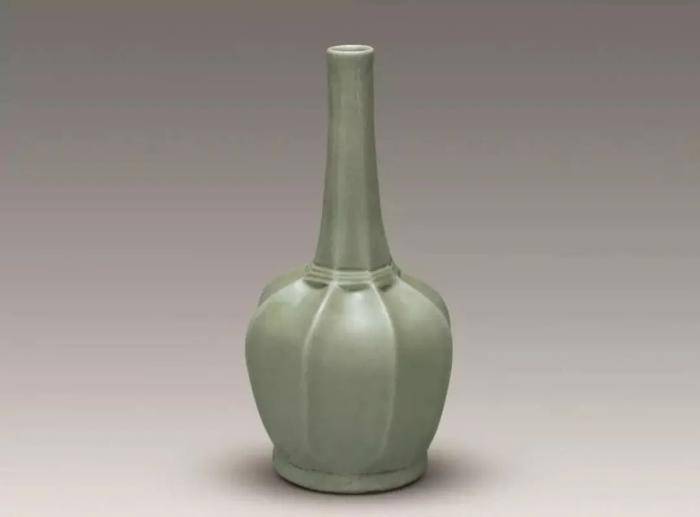
Historical records confirm that mi-se porcelain was successfully fired during the Tang Dynasty. By the Five Dynasties period, the King of Wuyue had converted its production into a state-run monopoly: tribute porcelain exclusively, forbidden to subjects. The recipe for the glaze was treated as a state secret, the firing process a closely guarded craft. As the Yue kilns declined and the technique faded into oblivion, later generations — through the Yuan, Ming and Qing — had no idea what mi-se porcelain actually looked like.
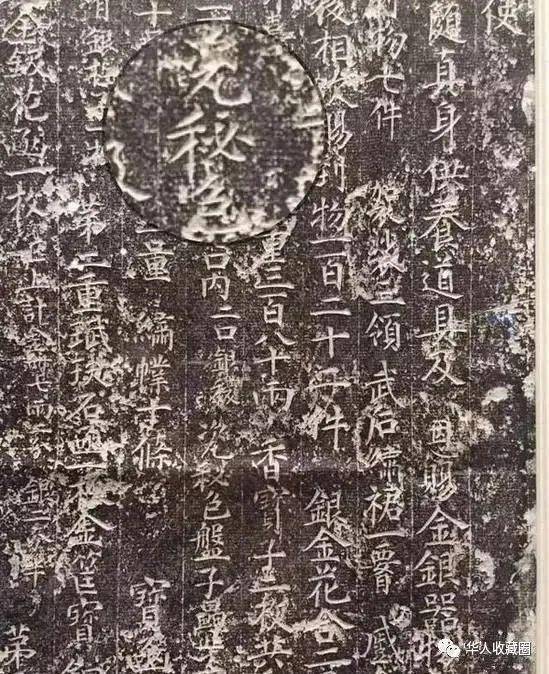
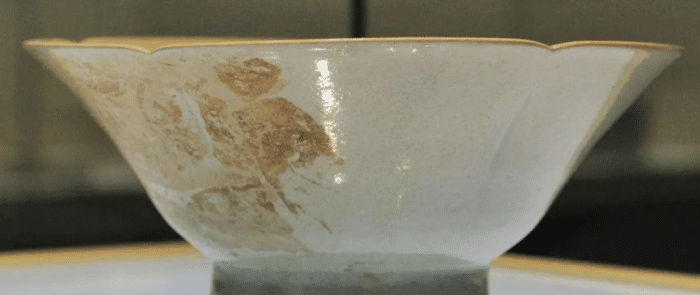
The answer came only in 1987, when the pagoda at Famen Temple in Shaanxi's Fufeng County unexpectedly collapsed. In the underground crypt, archaeologists discovered over a dozen pieces of Tang-dynasty mi-se porcelain — the first time anyone in the modern world had laid eyes on the real thing. Those who have seen it describe a glaze of mesmerising beauty, like the green of a deep lake catching spring light. To this day, nobody has successfully reproduced the technique that created it.
Ru Ware: the Sky After Rain
If mi-se porcelain was the mystery, Song-dynasty Ru ware was the apotheosis. The Song emperors desired a porcelain with the colour of the heavens and the texture of jade. The craftsmen of the Ru kilns rose to the challenge with an audacious solution: they ground agate into the glaze. The result was a porcelain of ethereal subtlety — a soft, lustrous finish that earned the description "resembling jade, yet surpassing jade."
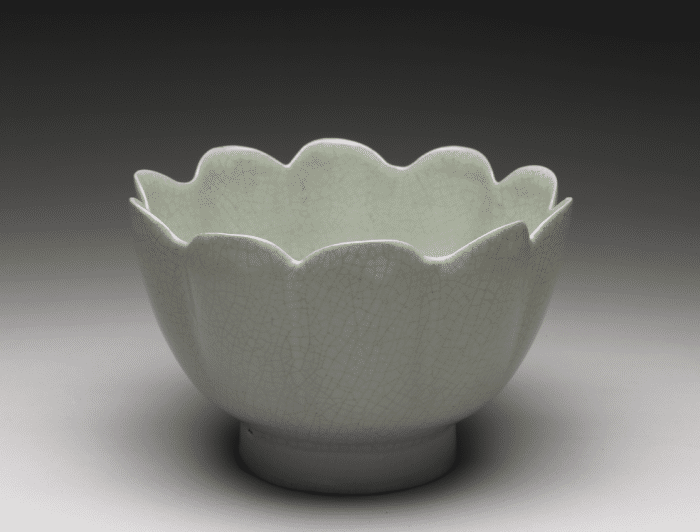
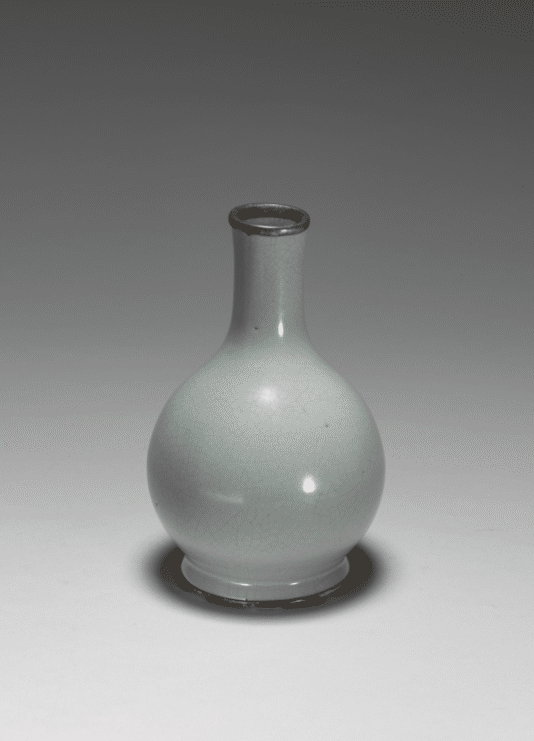
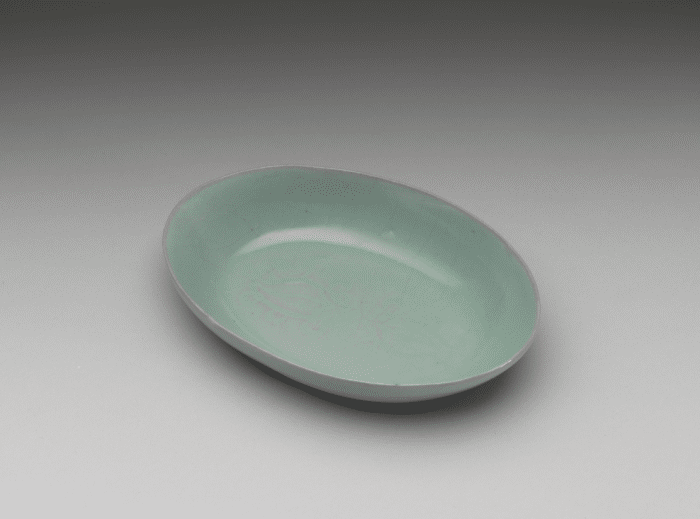
Achieving that iconic sky-blue demanded not only an exquisitely calibrated glaze formula but also perfect control of kiln position and firing temperature. Even under ideal conditions, the success rate was vanishingly low — which is why genuine Ru ware has always been extraordinarily scarce. It was not until the Qing Dynasty that potters finally succeeded in reproducing the poetic ideal: "After the rain, the sky clears and the clouds break — let this colour be brought into being."
White — When Minimalism Becomes Aristocratic
White porcelain followed green as the second great category of Chinese ceramics, and its appeal has never waned. Yet even within something as seemingly straightforward as white, there exists a transcendent tier: the tianbai (sweet white) glaze of the Ming Yongle period.
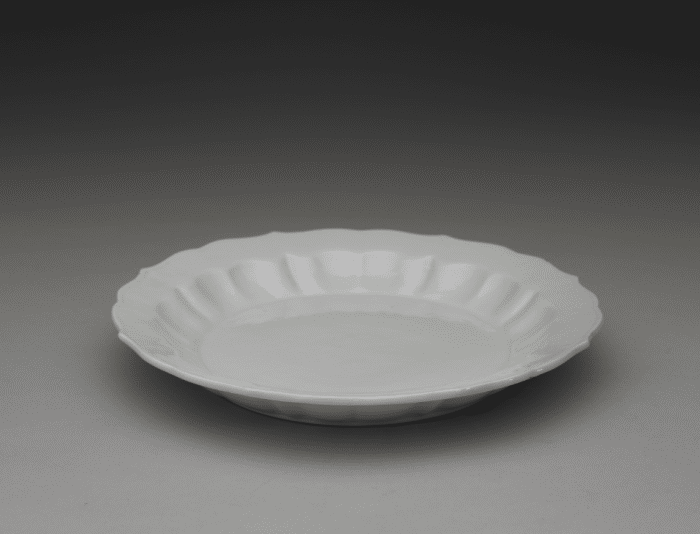
The Yongle Emperor is said to have been utterly captivated by this ware. Devoid of any painted decoration, it stakes everything on a single, sublime white glaze. The body is of immaculate whiteness; the glaze is as warm and unctuous as jade, as rich as cream — hence the descriptor tianbai, literally "sweet white," because it imparts a sensation of sweetness to the eye.
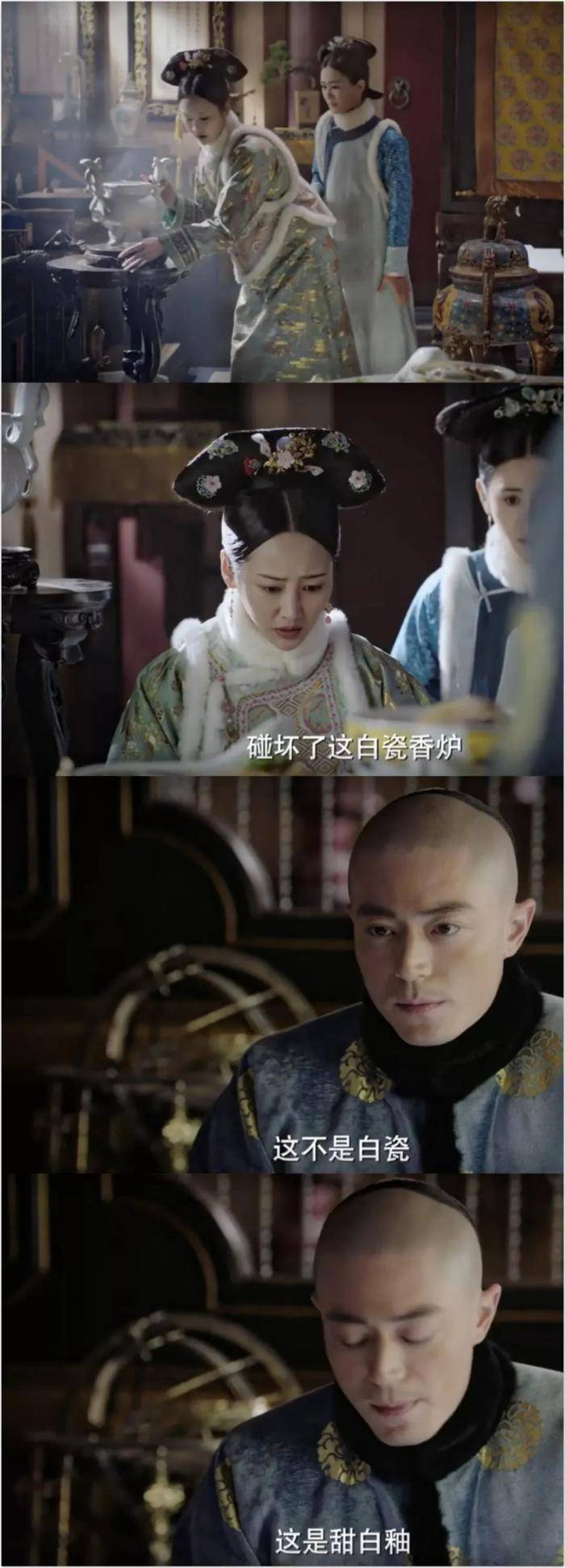
In the television drama Ruyi's Royal Love in the Palace, the consort Wei Yanwan — failing to recognise what she is holding — sends a Qianlong-period sweet white porcelain crashing to the floor. Every viewer who knows their ceramics winces. The emperor's expression says it all.
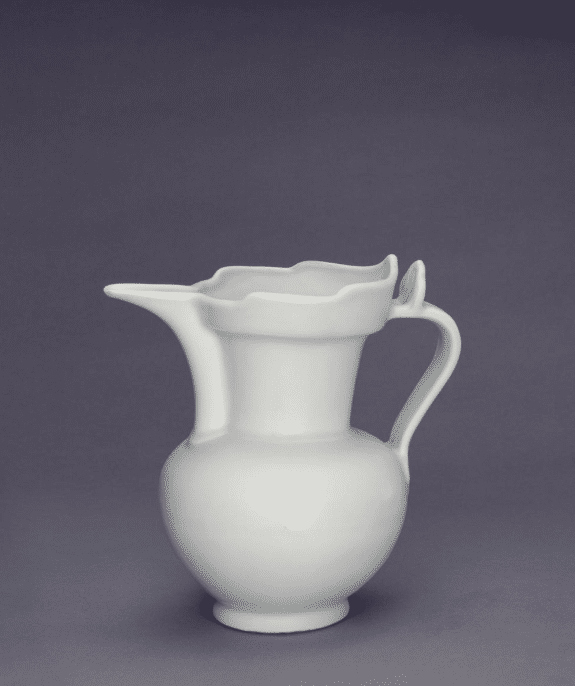
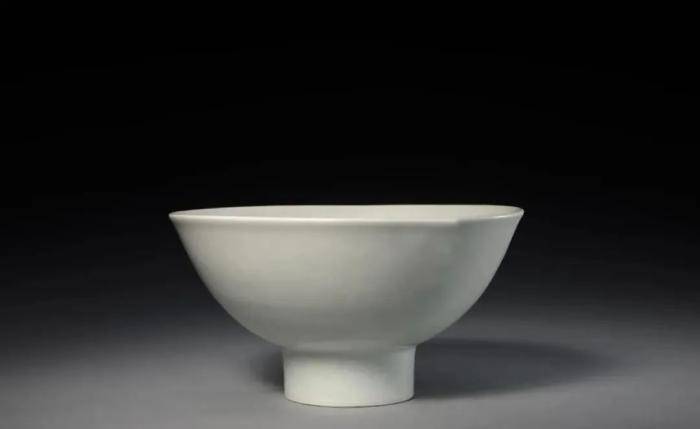
Do not imagine that firing a pure white porcelain is in any way easy. The process demands over a dozen separate stages. On a piece of undecorated porcelain, colour is determined entirely by the clay body and the glaze — both of which naturally contain iron oxide that, after firing, tints the result some shade of celadon. To achieve true, absolute white, the clay must be washed and re-washed, again and again, until the body is dense and flawlessly pale, and the iron content in the glaze must be driven below 0.75 percent. Only then, with a pure transparent glaze laid over a pure white body, does a white porcelain of the highest luminosity emerge.
Yellow — a Colour Reserved for One
Yellow — huang — is a homophone for "emperor" in Chinese. During the Ming and Qing dynasties, it was the colour of the imperial house alone, and yellow-glazed porcelain was no exception: it was the supreme material symbol of imperial authority.
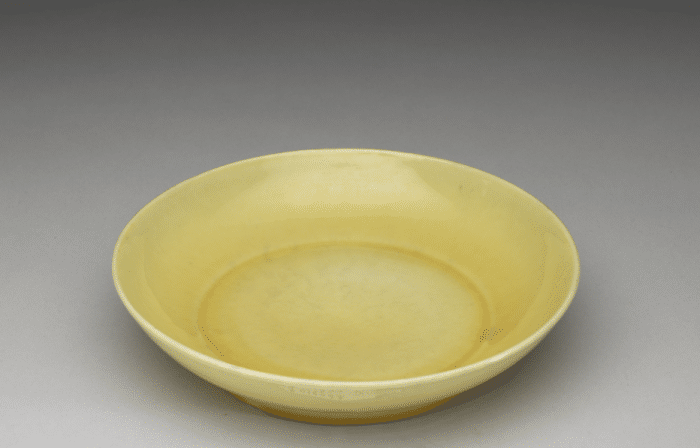
The most celebrated yellow glaze is jiaohuang — "tender yellow," often called "chicken-fat yellow" for its rich, glossy resemblance to rendered chicken fat. First fired during the Xuande period, it was brought to full fruition in the Hongzhi era. The colour is vivid yet restrained, luminous yet soft, and unmistakably luxurious.
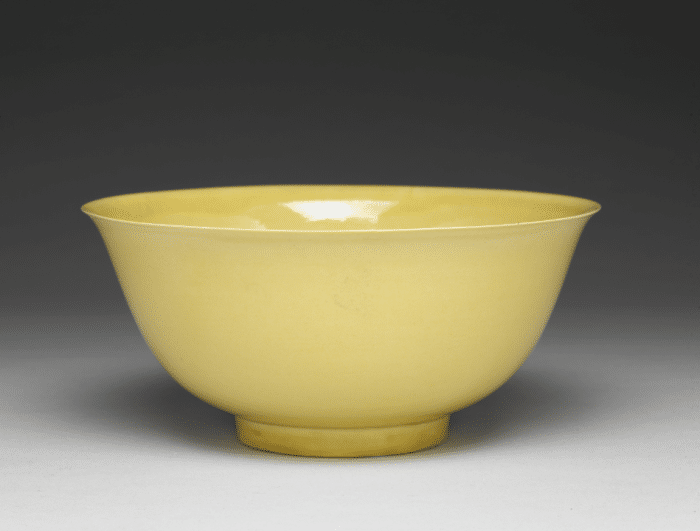
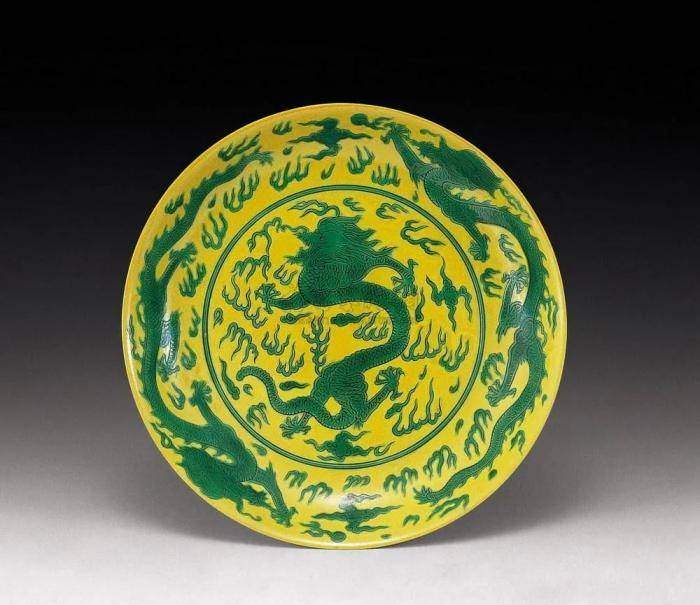
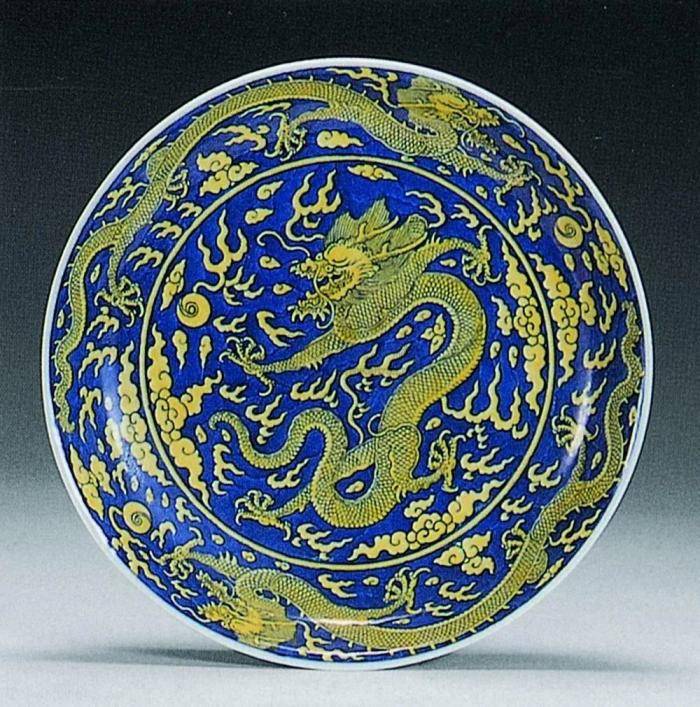
What makes this even more fascinating is that within the Forbidden City itself, yellow-glazed porcelain was subject to a rigid hierarchy codified in the Guochao Gongshi (Palace Regulations of the Qing Dynasty): vessels glazed entirely in yellow were exclusively for the emperor, the empress dowager, and the empress. An imperial noble consort could only use vessels that were yellow on the outside and white within. Noble consorts and consorts were allocated yellow-ground green-dragon wares. Concubines received blue-ground yellow-dragon designs. Everyone else — ladies of lower rank — would need a promotion before they could lay claim to yellow porcelain of any kind.
Red — the Colour That Burns Money
Red-glazed porcelain encompasses a dizzying range of varieties — "cowpea red," "sacrificial red," "Lang-kiln red," "drunken beauty" red — each with its own personality and each spectacularly expensive to produce. None of them ever cooperate with the potter.
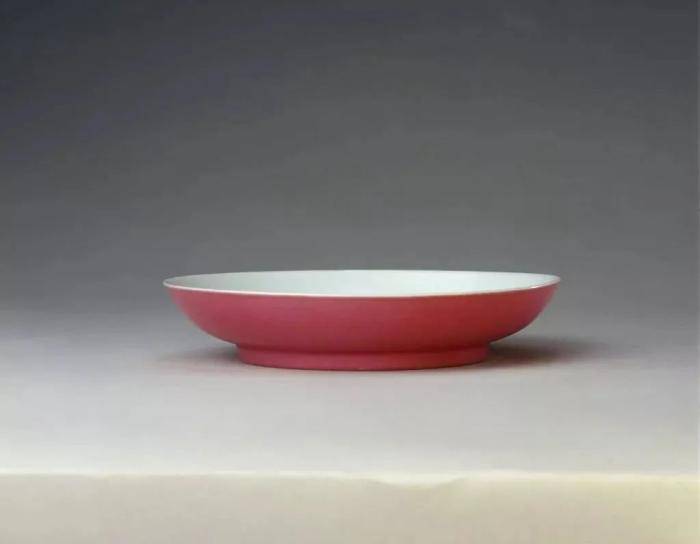
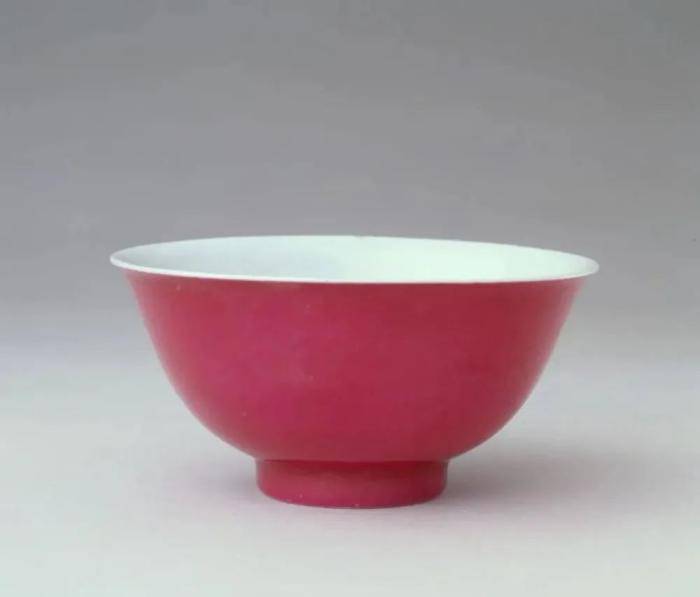
Rouge red — yanzhi hong — deserves special mention. Created only during the Qing Dynasty, it has been called the "Empress of Chinese Porcelain." The reason is as extravagant as the result: to produce this bewitching shade of pinkish-red, gold had to be added to the glaze as a colourant. The technique of dissolving gold into an enamel medium was invented in 1650 by a Dutchman named Andreas Cassius and reached China under the name "foreign red." Because of the eye-watering cost, rouge-red pieces are almost invariably small — dainty bowls, tiny vases, miniature stem-cups — delicate and jewel-like, at once coquettishly vivid and ethereally refined.
Beyond the Four Colours
China's ceramic repertoire includes many other celebrated glazes — tea-dust green, aubergine purple, peacock turquoise, mirror black, powder blue — each a masterpiece in its own right, each treasured by connoisseurs across the centuries. What elevates them all beyond mere objects is the same alchemy: astronomical cost, painstaking craftsmanship, and extreme rarity. These three forces conspired to make their colours not merely beautiful, but immortal. Even today, centuries after they emerged from the kiln, they have surrendered none of their aristocratic bearing.