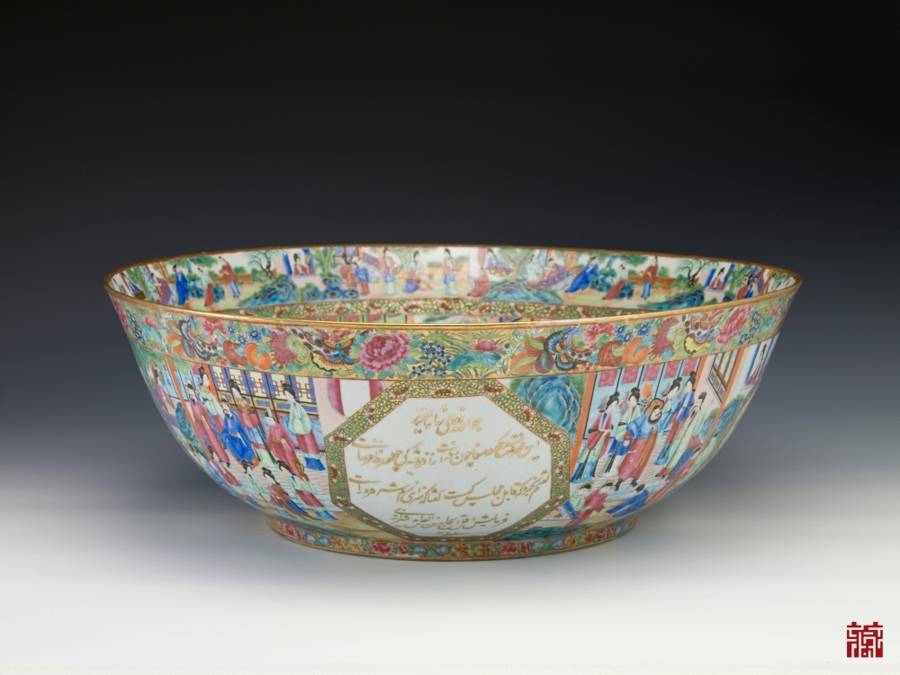
China's Maritime Porcelain Road — Shipwrecks, Trade, and Cross-Cultural Exchange
Heritage News
Editorial Team
Historical records tell us that the Silk Road — the great overland artery of Eurasian exchange — first opened channels of communication between China and the civilisations of West Asia, North Africa, and Europe as early as the Western Han dynasty. Less often celebrated but no less vital was the Maritime Silk Road: a sprawling network of sea routes through which culture and commerce flowed between China and the wider world. It flourished during the Tang dynasty, reached its zenith under the Song and Yuan, persisted through the Ming, and gradually waned under the Qing. The Tang poet Li Bai captured the spirit of this enterprise in verse: "The ocean voyager rides the celestial wind, steering his ship toward distant shores. Like a bird vanishing into the clouds, he leaves no trace behind." These "ocean voyagers" were the maritime merchants of their age.
Around the ninth century, merchants began sourcing ceramics from kilns scattered across Zhejiang, Hunan, Fujian, Jiangxi, Henan, Hebei, and Guangdong. The wares were collected, consolidated at river and lake ports, and transshipped to the great maritime hubs of Mingzhou (modern Ningbo), Quanzhou, and Guangzhou. From these quays, porcelain — travelling alongside silk, tea, and metalwork — embarked on voyages that would carry it to the ports of Asia, Europe, and Africa. In return, foreign merchants brought jewels, spices, ivory, hawksbill turtle shell, rhinoceros horn, Korean ginseng, and Japanese cedar. Underwater archaeologists, excavating shipwrecks across the globe, have recovered Chinese porcelain in staggering quantities — a testament to its historical reach and enduring appeal. So pervasive was this trade that the maritime routes have earned a fitting name: the Maritime Porcelain Road.
Shipwrecks That Map the Maritime Porcelain Road
As early as the 1920s, archaeologists surveying Fustat — the early medieval capital of Egypt, located just south of modern Cairo — together with port sites along the Red Sea coast, uncovered vast quantities of Chinese ceramic sherds. Founded in the seventh century, Fustat yielded between six and seven hundred thousand ceramic fragments. Among them, Chinese wares stood out for their abundance, quality, formal variety, and sheer chronological range. The site has been called an "underground museum of ceramics" and remains one of the most important locations for the study of Chinese ceramic trade. Similar discoveries have been made at ancient port sites across East Africa, Southeast Asia, the Arabian Peninsula, and Persia (modern Iran) — the latter a crucial transshipment point on the route into Europe. The sherds are the broken remnants of cargo unloaded across distant wharves. But far more dramatic evidence lies beneath the waves.
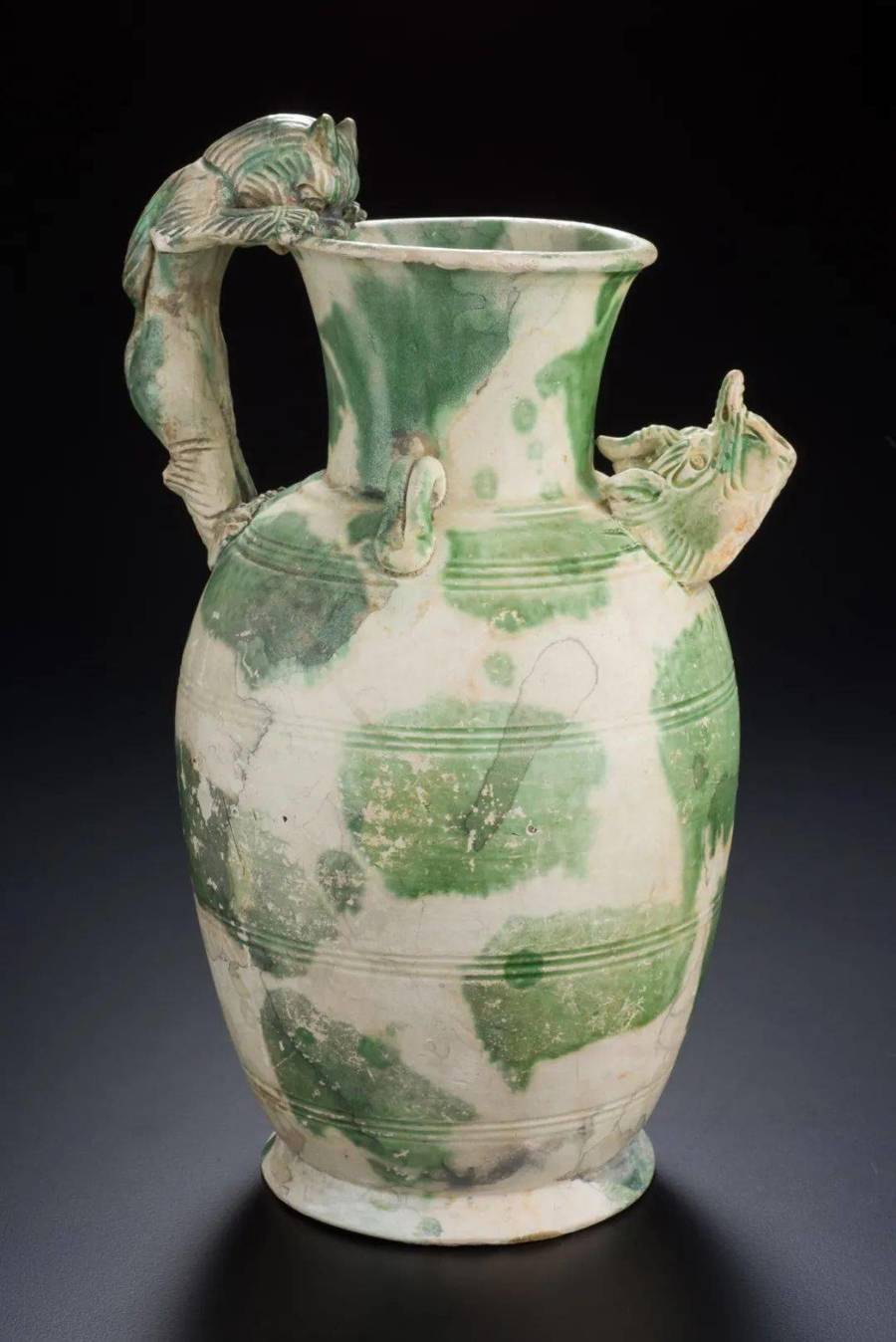
In 1998, divers working off Belitung Island in Indonesia discovered a ninth-century shipwreck resting on the seabed at a depth of 17 metres. Investigation revealed that the vessel had struck a large black reef and sunk — hence its evocative name, the Batu Hitam or "Black Stone" wreck. Underwater excavation recovered tens of thousands of Tang-dynasty ceramics, making it the earliest known shipwreck carrying Chinese trade porcelain. The cargo included celadon from the Yue kilns of Zhejiang, polychrome wares from the Changsha kilns of Hunan, white porcelain and early blue-and-white from the Gongxian kilns of Henan, white-glazed green-splashed ware, and white porcelain from the Xing kilns of Hebei — a remarkable catalogue of Tang ceramic production in microcosm.
Decades of systematic underwater survey by China's national maritime archaeology teams off the coasts of Guangdong, Fujian, and Hainan have yielded extraordinary results. The most celebrated discovery came in 1987 off the coast of Yangjiang, Guangdong: a Southern Song dynasty wreck designated Nanhai No. 1. In 2008, the entire vessel was lifted from the seabed in a single, unprecedented operation. The cargo proved staggering: roughly 160,000 ceramic pieces, including Longquan celadon from Zhejiang, Dehua white porcelain and greenish-white wares from Fujian, Minqing Yi-kiln white wares, Cizao-kiln black-glazed and green-splashed ceramics, Jingdezhen greenish-white porcelain, and products of the Shuiche and Beiguan kilns of Guangdong. The scale and significance of the find led to the establishment of the Guangdong Maritime Silk Road Museum on Hailing Island in Yangjiang, where the wreck and its treasures are now housed.
In 1975, archaeologists discovered a fourteenth-century shipwreck in the waters off Sinan, in South Jeolla Province, Korea — now known as the Sinan wreck. Between 1976 and 1984, eleven seasons of excavation brought to the surface over 20,000 ceramic pieces. The cargo included not only the full spectrum of renowned Chinese wares but also significant quantities of Korean Goryeo celadon, testifying to the complex, multi-directional nature of East Asian maritime trade.
In the early seventeenth century, the Dutch East India Company intercepted a Portuguese merchant vessel — the Carrack — in the Strait of Malacca. The ship's hold was filled with Chinese blue-and-white porcelain. Ever since, this class of wares has been known in Europe as Kraak porcelain. Kraak ware flourished from the late Ming Wanli reign through the early Qing, after which production gradually declined. The voracious European appetite for these wares, however, prompted the Zhangzhou kilns of Fujian to produce imitations on a massive scale, which they traded through the Dutch East India Company to markets in Europe, Southeast Asia, and beyond.
The shipwrecks scattered across the world's oceans bear silent witness to a truth larger than any single vessel: for over a thousand years, the routes of the Maritime Porcelain Road wove China into the fabric of global civilisation. Chinese porcelain, more than any other commodity, tells the story of that profound and enduring cultural exchange.
Foreign Flavours in Chinese Porcelain
The ceramics recovered from shipwrecks span centuries and exhibit dazzling variety. What is most striking about many of them is their unmistakably foreign character — vivid evidence that Chinese potters adapted their craft to serve the tastes of distant markets.
As early as the Tang dynasty, the Changsha kilns had established themselves as the preeminent producers of export porcelain, and their output offers a concentrated portrait of cross-cultural fusion at its most creative. Changsha celadon was decorated in black, blue, green, yellow, and brown pigments, with a repertoire of motifs that ranged from the makara (mythical Hindu sea creature) and curly-haired female busts to Arabic inscriptions in green and applied relief figures of Persian men, alongside vegetal patterns associated with various religious traditions. The vivid palette and richly heterogeneous ornamentation radiate an unmistakably cosmopolitan aura.
During the Yuan dynasty, two categories of trade porcelain demonstrated an especially sharp responsiveness to overseas demand: Longquan celadon and blue-and-white ware. In Longquan celadon, we see the sudden appearance of large, magnificently crafted dishes — some measuring around 40 centimetres in diameter — whose broad, flattened rims are without precedent in Song-dynasty production. These were almost certainly made for the Arab world, where communal dining and the custom of eating with the hands called for wide platters on which diners could arrange condiments alongside balls of rice. To this day, embedded Longquan celadon dishes can be found set into the lintels of ancient mosques in Turkey. During the Crusades, Longquan celadon swept across Europe under the name celadon — derived, according to one theory, from the character Céladon in a French pastoral romance whose costume colour the glaze was thought to resemble. European royalty competed to acquire it; it became a symbol of wealth, power, and refined taste, subtly reshaping the aesthetic sensibilities of the European aristocracy.
Blue-and-white porcelain reached full maturity in the mid-Yuan period, and its aesthetic is unmistakably Islamic. The cloud-collar bands, the framed reserves, the dense, all-over floral patterning, and the lobed, multi-faceted vessel forms all speak the visual language of Islamic art. Blue was never a colour favoured in the native Han Chinese decorative tradition; the peoples of the Islamic world, by contrast, cherished the dramatic contrast between pure white and deep cobalt blue. At the same time, the Mongol Yuan rulers practised shamanism, in which blue symbolised Heaven and white symbolised Goodness — a colour symbolism aligned with the Mongols' own origin myth of the Blue Wolf and White Deer. This unlikely convergence of aesthetic and spiritual preferences may well have been the critical catalyst for blue-and-white's rapid maturation in the Yuan. The ornamental scheme of Yuan blue-and-white is famously dense: large dishes often bear five concentric bands of decoration, with the central medallion filled by a ruyi-shaped reserve or six fan-shaped panels enclosing auspicious emblems, all rendered in rich, saturated cobalt. This taste — for layered, crowded ornament, for bold colour contrasts, for sculptural rather than understated form — stands in dramatic opposition to the quiet, monochromatic elegance that Chinese scholar-elites had long prized in celadon and white wares.
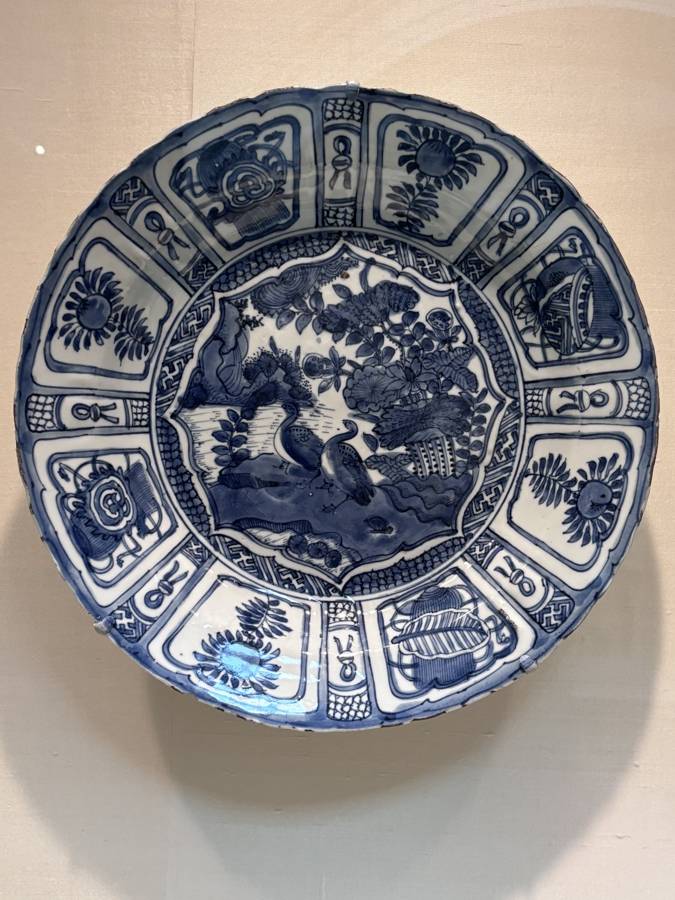
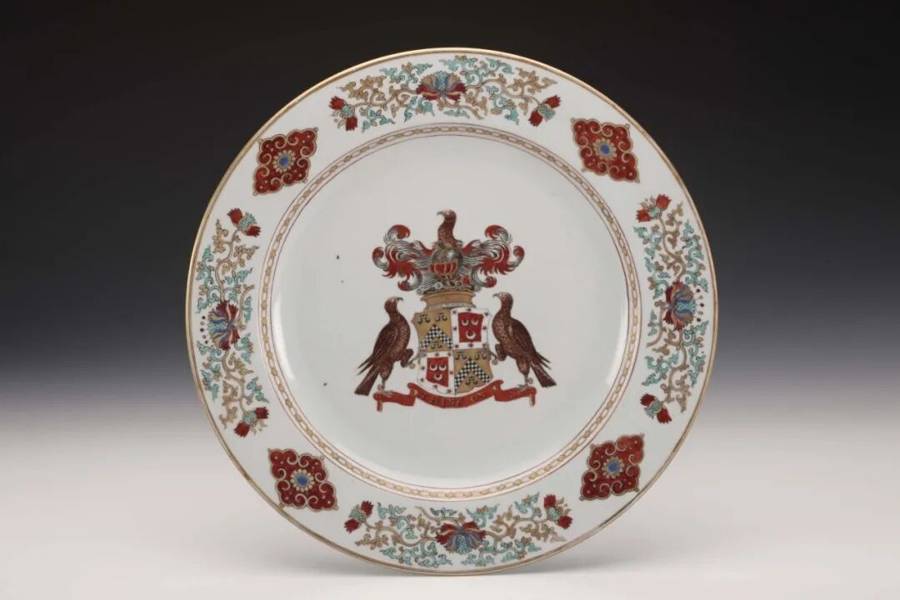
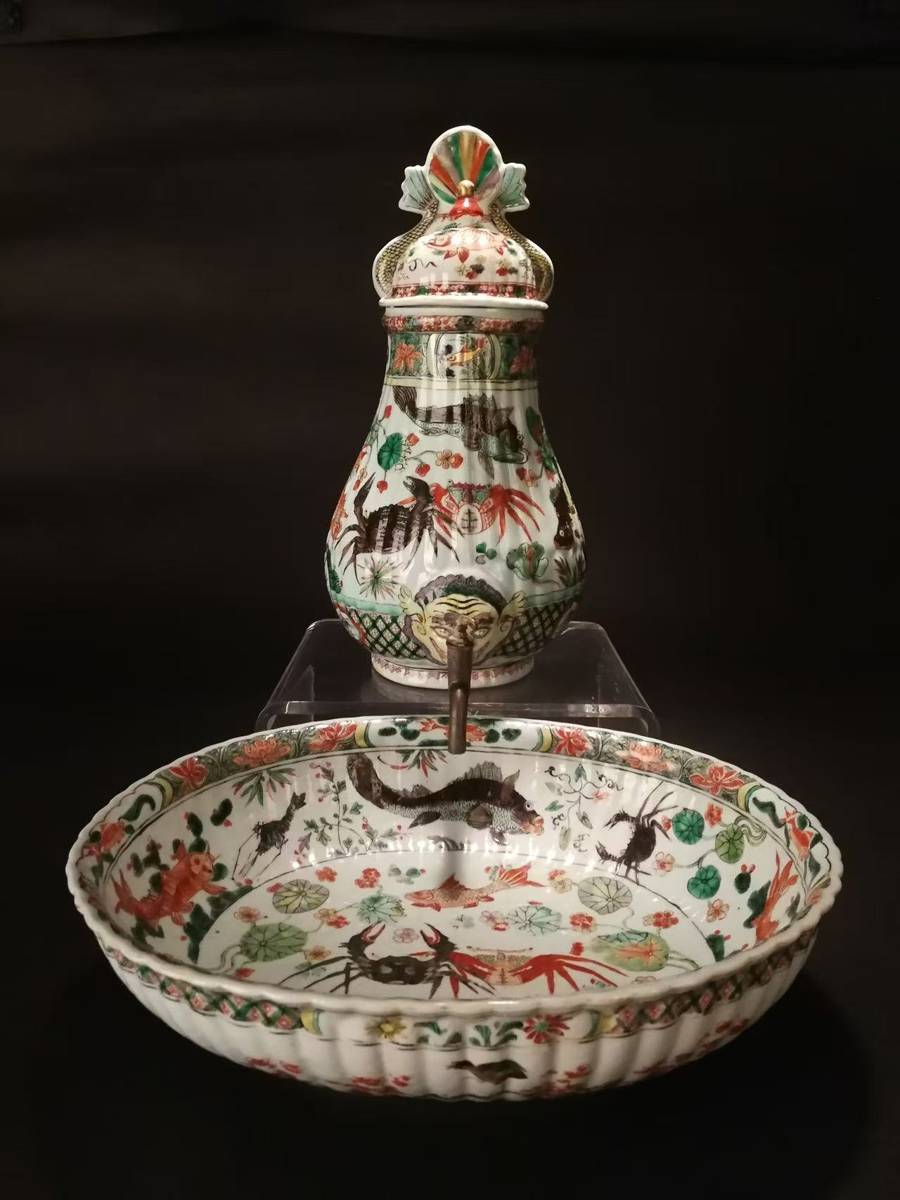
Among Ming trade ceramics, the Jingdezhen kilns produced a fascinating category of porcelains bearing Christian crosses, Islamic crescents, Greek and Latin lettering, and European armorial bearings — decorative devices utterly foreign to Chinese tradition and specific to export. This phenomenon coincided with the arrival of Portuguese missionaries in China, who both preached and placed orders for porcelains adorned with religious and national insignia. New vessel forms also appeared: twin-spouted ewers, covered cups, and other novelties that reflected the divergence between Chinese and Western dining customs. Kraak porcelain became the most abundant class of Ming export ware. Its defining decorative formula divides the broad rim of a dish into alternating round, fan-shaped, and petal-form panels, each filled with traditional Chinese motifs of birds, flowers, landscapes, and figures. The effect — late Ming blue-and-white painting, fractured into compartments — may dilute the spontaneous lyricism of the unsegmented original, but it also represents a uniquely hybrid visual language, a genuine fusion of Chinese and Western sensibilities.
At the end of the Ming period, the Japanese market began commissioning custom polychrome porcelains from Jingdezhen — blue-and-white, wucai (five-colour), famille rose, doucai (contrasting colours), and red-and-green wares. Japanese dietary customs and aesthetic preferences gave rise to shapes never seen in Chinese domestic production: irregularly shaped dishes, geometrically precise covered boxes, fan-shaped plates, incense boxes, and tiny fish-shaped saucers. Although the decorative themes were broadly similar to those of contemporaneous Chinese wares, the facial expressions of figures, costume details, compositional arrangements, and the use of framed, segmented, or partitioned ornamental schemes — including the style known as ko-sometsuke — all reflect a distinctly Japanese aesthetic sensibility.
The Meaning of Objects Across Space
During the Song and Yuan dynasties, Quanzhou stood as the greatest commercial port in the world — a place where, as one contemporary observer wrote, "foreign merchants swarm like ants, and exotic goods gather in abundance." The beauty, elegance, and sheer brilliance of Chinese porcelain drew traders from every corner of the maritime world to its quays. The flourishing of overseas trade, in turn, expanded the Chinese imagination of what lay beyond the horizon.
Maritime trade is, at its heart, the movement of objects through space. The Chinese porcelains that today grace the palaces and castles of Turkey, Iran, Egypt, and Europe were once the ultimate status symbols of their aristocratic owners. When we encounter, in a foreign land, porcelain dishes arrayed above a mantelpiece, mounted on walls, arranged inside cabinets, or even embedded in the ceiling of a dome, the shock of recognition is almost involuntary: Yuan blue-and-white! Jiajing! Kangxi! Chinese porcelain! When an object crosses from one cultural space into another, its colours, forms, and ornamentation carry with them the thought and feeling of the hands that made it — and together with the ancient architecture that now houses it, they create a unique mode of dialogue between two otherwise distant civilisations. The geographer Yi-Fu Tuan once remarked: "Once one thinks of Hamlet having lived in this castle... the walls and battlements seem suddenly to speak a completely different language." For over a thousand years, Chinese porcelain — having crossed mountains and oceans — has been speaking just such a transformed language within the ancient castles of distant lands, endowing those buildings with the profound significance of cultural exchange and fusion between China and the world.