The Hidden Epidemic of Sleeplessness
It is 3 AM. The world is silent, but you lie awake staring at the ceiling, your mind churning through work stress and daily worries. You count sheep, adjust your pillow, try deep breathing — yet sleep remains elusive. If this sounds familiar, you are far from alone. According to the Chinese Sleep Research Society, 38.2% of Chinese adults experience insomnia — over 300 million people — and the numbers are rising sharply among younger generations.
The Domino Effect of Poor Sleep
Insomnia is far more than just feeling tired. It triggers a cascade of consequences: reduced concentration and memory the next day, impaired work performance, and heightened accident risk. Long-term, it disrupts the endocrine system, weakens immunity, and places chronic stress on the cardiovascular system. Studies show long-term insomniacs have a 48% higher risk of heart disease and a 15% higher risk of stroke. Psychologically, sleeplessness fuels anxiety, which worsens sleep — a vicious cycle that can spiral into depression.
The TCM Understanding of Sleep
TCM views sleep through the lens of yin-yang dynamics. The Ling Shu classic states: "When yang qi is exhausted and yin qi is abundant, the eyes close. When yin qi is exhausted and yang qi is abundant, one awakens." In healthy sleep, yang energy peacefully submerges into yin at night. Insomnia occurs when this transition fails — yang remains restless and cannot settle into yin.
Different organ imbalances produce different sleep patterns. Heart-spleen deficiency causes shallow sleep with frequent waking and vivid dreams. Liver fire flaring upward creates difficulty falling asleep with irritability and a bitter taste in the mouth. Heart-kidney disconnection produces restless sleep with lower back soreness, night sweats, and tinnitus.
Key Herbs for Sleep
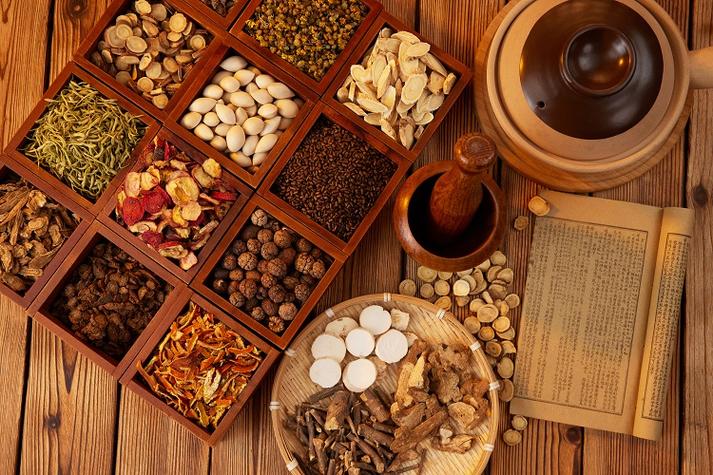
Suanzaoren (Sour Jujube Seed)
Sweet and sour, neutral in nature, it enters the liver, gallbladder, and heart meridians. The Compendium of Materia Medica records that prepared suanzaoren treats gallbladder deficiency with insomnia, while raw suanzaoren treats gallbladder heat with excessive sleep. It is the single most important herb for nourishing heart and liver blood to calm the spirit.
Shouwuteng (Fleeceflower Stem)
Also called "night-crossing vine," it nourishes blood, calms the spirit, and unblocks wind from the collaterals. It is particularly suited for blood-deficiency insomnia accompanied by numbness or aching in the limbs, often combined with dragon bone and suanzaoren for enhanced calming.
Classic Herbal Formulas
Wen Dan Tang (Warm the Gallbladder Decoction)
Composed of pinellia, bamboo shavings, immature bitter orange, tangerine peel, licorice, and poria. It transforms phlegm, clears heat, harmonizes the stomach, and benefits the gallbladder. This formula is ideal for the phlegm-heat disturbing the heart pattern, characterized by restless insomnia with chest fullness, nausea, bitter taste, and dizziness.
Chai Hu Jia Long Gu Mu Li Tang (Bupleurum Plus Dragon Bone and Oyster Shell Decoction)
From the Treatise on Cold Damage, this formula harmonizes the shaoyang, unblocks yang, and heavily sedates the spirit. It addresses complex presentations combining thoracic fullness, palpitations, irritability, and insomnia — especially when emotional distress is a prominent feature.
Suan Zao Ren Tang (Sour Jujube Decoction)
From the Essentials from the Golden Cabinet, this formula features suanzaoren as the chief herb, supported by poria, anemarrhena, ligusticum, and licorice. It nourishes blood, calms the spirit, and clears deficiency heat — the classic prescription for liver blood deficiency with deficiency heat disturbing sleep.
Practical Sleep Hygiene from TCM
Establish a consistent sleep-wake schedule — your body thrives on rhythm. Create a sleep sanctuary: dark, quiet, and slightly cool at 20-24°C. One hour before bed, put away all screens — blue light suppresses your natural melatonin. Soak your feet in warm water for 15 minutes, then massage Yongquan on each sole. Practice mindful breathing: slow inhales filling your belly, even slower exhales releasing tension. These small habits, practiced consistently, work in harmony with herbal treatment to restore the natural transition from waking yang to sleeping yin.