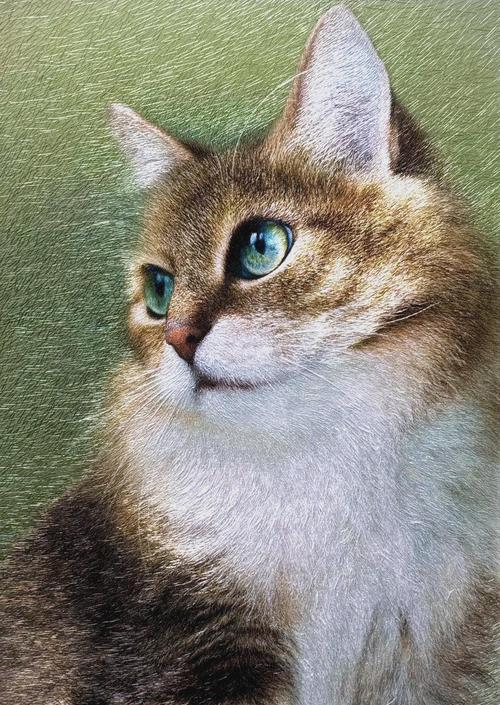
Suzhou embroidery (Su Xiu) is the collective name for embroidery products from the Suzhou region of Jiangsu Province. As one of China's Four Great Embroideries, it was inscribed on the first batch of the National Intangible Cultural Heritage list in 2006, with heritage number VII-18.
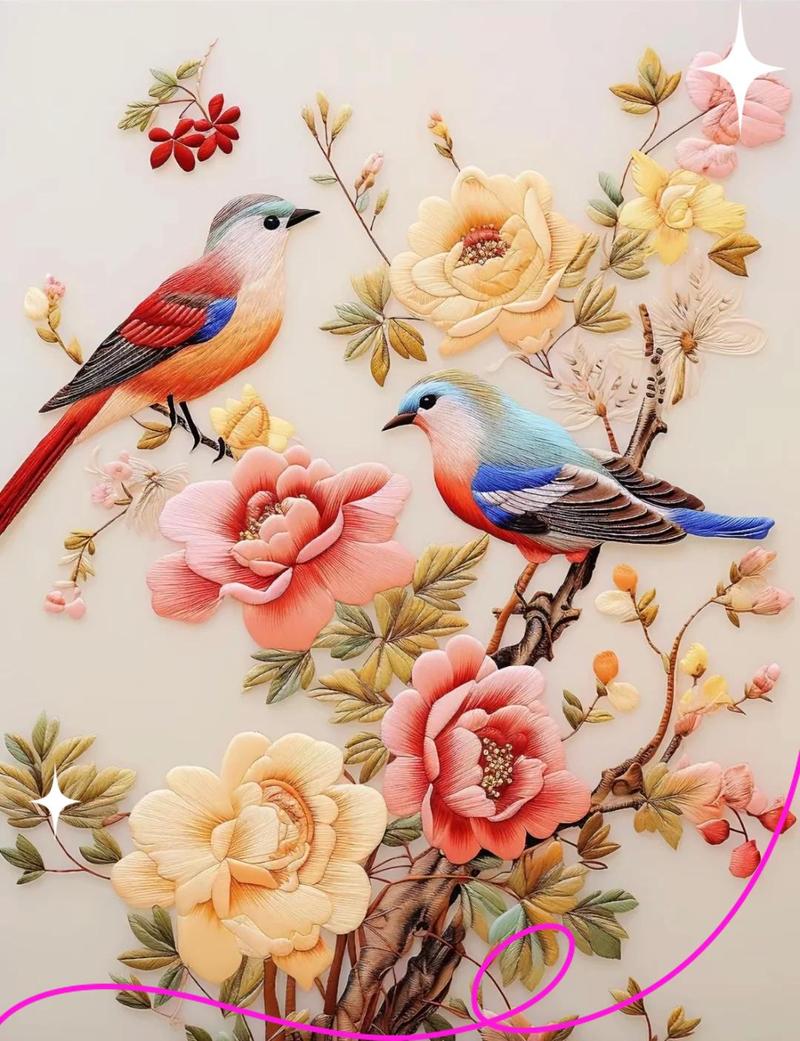
The Ancient Origins of Suzhou Embroidery
Suzhou embroidery has a history spanning over 2,000 years. Legend traces its origin to Nuhong, the granddaughter of Zhongyong who lived during the Western Zhou period. According to folklore, when Zhongyong became the ruler of the Wu Kingdom (in present-day Suzhou), he sought to abolish the local custom of tattooing. While sewing, his granddaughter Nuhong overheard the elders' discussion. Distracted, she accidentally pricked her finger with a needle and a drop of blood fell onto the fabric, spreading into the shape of a flower. This inspired her to embroider dragon patterns onto clothing as a substitute for tattoos. To commemorate this invention, women's textile and embroidery work is still called "nuhong" (needlework) to this day.
Historical records of Suzhou embroidery date back to the Three Kingdoms period (220-280 AD). The craft matured during the Sui and Tang dynasties, established its fundamental techniques during the Song and Yuan, and reached its artistic peak in the Ming and Qing dynasties. The fertile lands of Jiangsu, with its temperate climate and prosperous silk industry, provided the ideal conditions for Suzhou embroidery to flourish.
The Golden Age and Imperial Recognition
During the Qing Dynasty, Suzhou embroidery entered its golden age. The city earned the title "Embroidery Market" (Xiu Shi), and the "Four Great Embroideries" — Suzhou, Hunan (Xiang), Guangdong (Yue), and Sichuan (Shu) — were formally established, with Suzhou embroidery recognized as the foremost among them. The nine dragons on imperial dragon robes were embroidered using Suzhou techniques, earning it the distinction of "Emperor's Embroidery."
The Legend of Double-Sided Embroidery
One famous legend tells of Liu Nuhong, a skilled embroiderer in Qing Dynasty Suzhou. A county magistrate, seeking a unique tribute for Empress Dowager Cixi's birthday, discovered a tavern banner embroidered on both sides by Liu Nuhong. Impressed, he commissioned her to create a double-sided portrait of the Empress Dowager. After a month of meticulous work, Liu produced an exquisite double-sided embroidered portrait. The Empress Dowager was so delighted that the magistrate was promoted three ranks, and Liu Nuhong was summoned to the imperial court.
Artistic Characteristics and Legacy
Suzhou embroidery is characterized by elegant patterns, ingenious composition, meticulous stitching, lively needlework, and pure, refined colors. The craft's defining principles are summarized as "flat, neat, fine, dense, harmonious, lustrous, smooth, and even" (ping, qi, xi, mi, he, guang, shun, yun). Suzhou embroiderers use the needle as their brush, silk threads as their pigments, creating artworks of extraordinary beauty. A single masterwork may employ hundreds or even thousands of silk thread colors, with threads split to one-forty-eighth of their original thickness for the finest details.
Today, the main production center for Suzhou embroidery is Zhenhu Town (also known as Xiupinjie or "Embroidery Street") in Suzhou's High-Tech District, where approximately eighty percent of all Suzhou embroidery is produced. The craft continues to evolve while preserving its ancient heritage, adapting to contemporary tastes while maintaining its timeless beauty.