


 Posted an update: 2026-4-1 14:25:05 104
The golden breath of the harvest. Straw weaving (Cao-bian) is the art of the humble field grass, where the leftovers of the crop are turned into the jewelry of the rural house.
The Golden Fields: An Introduction to the Ancient Art of Chinese Straw Weaving
Straw weaving is one of China"s most widespread and resilient traditional crafts. For thousands of years, farmers have used the stalks of wheat, rice, and other grasses to create everything from practical hats and baskets to delicate artistic figures. It is an art of resourcefulness, turning the waste of the harvest into a valuable resource for daily life. Each region of China has its own unique style, reflecting the different grasses and the local spirits of the people who weave them.
1. The Soul of the Harvest: A Craft of the Earth
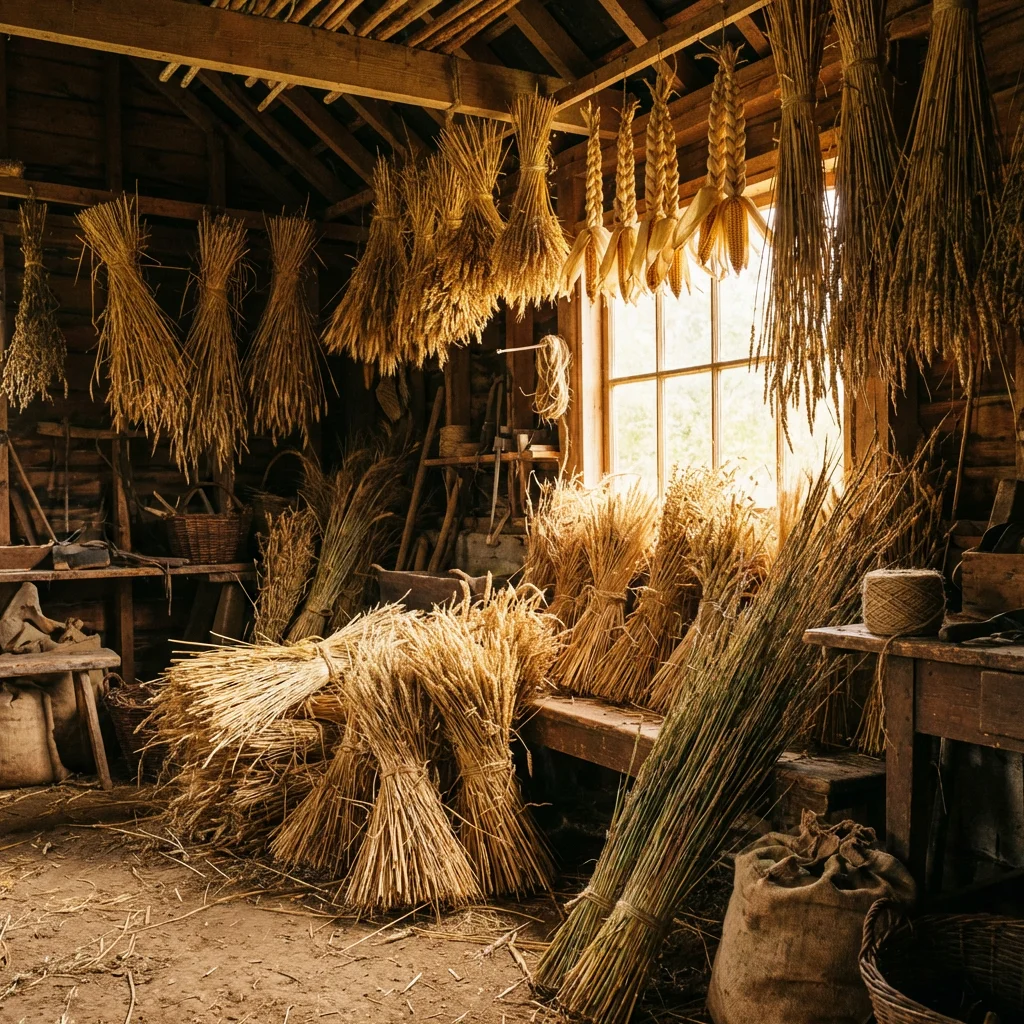
Straw weaving is deeply rooted in the agricultural cycle. It is a "seasonal art" that follows the rhythm of the harvest. When the wheat or rice is gathered, the best stalks are set aside for the weavers. Unlike the hard wood of the tree or the rigid pole of the bamboo, straw is soft and forgiving, allowing for a level of speed and spontaneity in the weave that makes it a perfect medium for folk art. It is the golden thread that connects the farmer"s hands to the spirit of the earth.
2. From Field to Finger: The Lifecycle of the Straw
The journey of a piece of straw from the field to a finished basket is a process of refinement. The stalks must be cleaned, soaked to restore flexibility, and often bleached or dyed to achieve the desired aesthetic. Despite its humble origins, high-quality straw weaving requires a master"s eye to select the stalks with the most uniform color and strength. It is a masterpiece of transformation, where the common is made extraordinary through the power of the hand.
3. Regional Identities: A Tapestry of the Provinces
From the delicate wheat-straw fans of **Guangdong** to the sturdy corn-husk mats of **Shandong**, straw weaving reflects the diversity of China"s landscape. In the south, where rice is king, rice straw is the primary medium, resulting in a softer, more flexible weave. In the north, the taller and stronger wheat stalks allow for more structural items like hats and large storage containers. Each province has developed its own "weave language," turning local grass into a symbol of regional pride.
4. Symbolic Meaning: Prosperity and Connection to the Land
In Chinese culture, straw weaving is more than just a craft; it is a symbol of **Abundance** and **Resourcefulness**. Because it uses the remains of the harvest, it represents the wisdom of "using every part of the gift." Straw items are often used in traditional festivals to represent the hope for a good harvest next year. To carry a straw-woven bag or wear a straw hat is to maintain a physical connection to the cycle of the seasons and the ancient heritage of the field.
5. FAQ: Understanding Straw Weaving Traditions
Is straw weaving different from bamboo weaving?
Yes! While both use natural fibers, straw is much softer and more flexible than bamboo. Straw weaving often involves braiding or plaiting the stalks before they are woven into the final shape, whereas bamboo is usually split into thin, flat strips. Straw is lighter and more temporary, making it perfect for seasonal items.
How long does a straw-woven item last?
With proper care, a high-quality straw item like a basket or a hat can last for many years. However, because it is a natural grass, it is biodegradable. This is part of its beauty—it is a material that comes from the earth and eventually returns to it without leaving a trace.
Can anyone learn straw weaving?
Straw weaving is one of the most accessible crafts! Because the materials are often free or very cheap, and the basic techniques are easy to learn, it has always been a "craft of the people." However, reaching the level of a master artisan who can weave realistic animal figures or complex lace patterns takes many years of dedicated practice.
6. Conclusion
Straw weaving is the art of the golden fields. It reminds us that there is beauty and utility in even the most humble parts of our world. As we hold a piece of straw-woven art, we are holding the sun and the rain of the harvest season. It is a quiet, resilient art that continues to thrive in the modern world. Straw is the grass of life, woven into the spirit of China.
From the art to the material: Next, we explore the Harvest of the Sun—The Materials and Seasonality of Straw!