


 Posted an update: 2026-4-1 14:20:42 106
The forest is a living memory, and like all living things, it needs care. Bamboo preservation is the science of keeping the grass flexible and beautiful for generations, ensuring that the work of the master never fades.
Preservation of Bamboo: Keeping the Grass Flexible for Centuries and the Art of Heritage Conservation
Unlike stone or bronze, bamboo is a living material that can be sensitive to the environment. Without proper care, it can become brittle, lose its color, or be attacked by insects. However, by using a blend of traditional methods and modern science, we can ensure that bamboo masterpieces—from the ancient scrolls of the Han Dynasty to the delicate baskets of today—remain intact for the future. This is the story of how we fight the erosion of time to keep the forest soul alive.
1. The Enemy of the Grass: Dryness and the Beetle
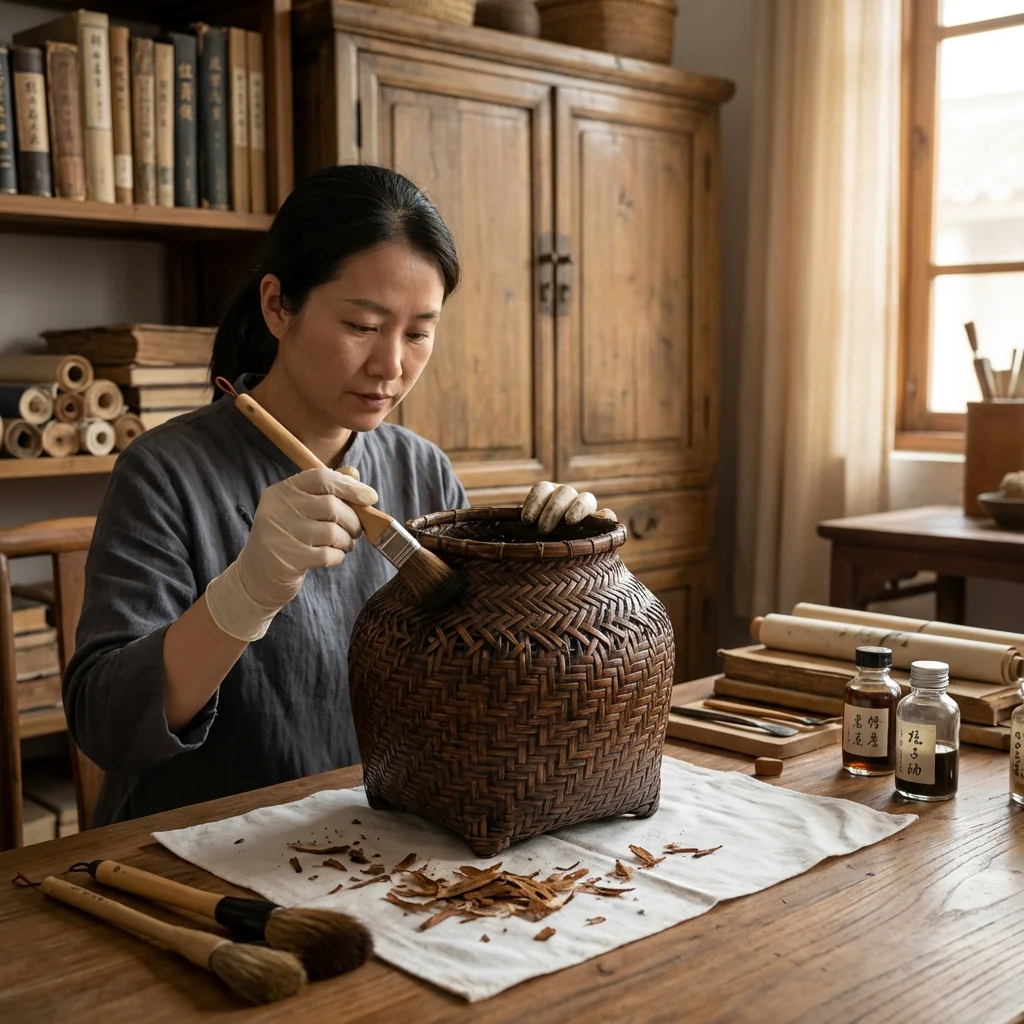
The greatest threat to ancient bamboo is **Extreme Dryness**. Bamboo is made of long, flexible fibers held together by natural sugars and moisture. When the air becomes too dry, these fibers lose their elasticity and the bamboo begins to crack and splinter. Furthermore, bamboo is a delicious food for many insects. For the restorer, the first task is always to "seal" the bamboo against these silent enemies, protecting the internal structure while maintaining the outward beauty.
2. Traditional Protection: Smoking and Natural Oils
Ancient bamboo weavers had their own effective methods of preservation. **Smoking** (Xun-zhu) the bamboo over a fire not only removes the sugars that attract insects but also creates a protective layer of carbon that prevents rot. Treating the finished weave with natural **Tung Oil** or **Camellia Oil** helps to keep the fibers hydrated and flexible, allowing the bamboo to "breathe" while repelling moisture. These traditional methods are why many bamboo baskets in southern villages have lasted for over 100 years of daily use.
3. Modern Conservation: Humidity Control and Nano-Coating
In the museum, we use 21st-century technology to save the oldest bamboo. High-resolution **Digital Sensors** monitor the humidity and temperature of display cases to a fraction of a percent. For the most fragile pieces, scientists are developing invisible **Nano-Coatings** that can penetrate the bamboo fibers and reinforce them from the inside without changing the weight or appearance of the art. This "invisible shield" ensures that the 2,000-year-old bamboo slips of the Han Dynasty remain as flexible today as the day they were written.
4. Restoring the Weave: Mending the Broken Thread
When a bamboo weave is damaged, it requires a master"s touch to repair. The restorer must identify the exact variety of bamboo used and create new threads that match the original in width, thickness, and color. By carefully "weaving in" the new threads into the existing pattern, the master can restore the structural integrity of the piece without leaving a trace. It is a slow, meditative task that respects the original artist"s vision while ensuring the piece can survive for another century.
5. FAQ: How You Can Help Save Bamboo Heritage
How can I protect my own bamboo collections?
Keep your bamboo items away from direct sunlight and heaters. If you live in a dry climate, occasionally wipe the bamboo with a soft, slightly damp cloth or apply a tiny amount of natural furniture oil. Handling your bamboo items with clean hands also helps, as the natural oils from your skin are the best preservation for the grass.
Can moldy bamboo be saved?
Yes! If you find mold, clean the bamboo immediately with a mixture of vinegar and water, then dry it thoroughly in a cool, well-ventilated place. Do not use bleach, as it will destroy the bamboo fibers and ruin the natural color of the piece.
Where can I learn more about bamboo conservation?
The China Silk Museum in Hangzhou and the various regional bamboo museums in Zhejiang and Sichuan have excellent educational programs. Supporting these institutions through visits and donations helps to fund the research and the masters who are working to save our bamboo heritage.
6. Conclusion
The preservation of bamboo is the preservation of our resilience. It shows us that even the most humble grass can be made eternal if we have the wisdom and the care to protect it. As we admire the honey-colored luster of an ancient bamboo basket, we are connecting with the spirit of the masters who have come before us. Bamboo is the soul of the forest—let"s keep it flexible and forever green.
We hope you enjoyed our 10-article series on Bamboo Weaving! Explore our next category, Straw Weaving, to see the incredible beauty of the humble field grass!