The Colored Beauty of Shoushan Stone
Shoushan stone carving, originating from Shoushan village in Fujian Province, is a unique Chinese art form that dates back to the Southern and Northern Dynasties. Known for its wide variety of colors and its smooth, "jelly-like" texture, Shoushan stone is considered one of the most precious materials for fine carving.
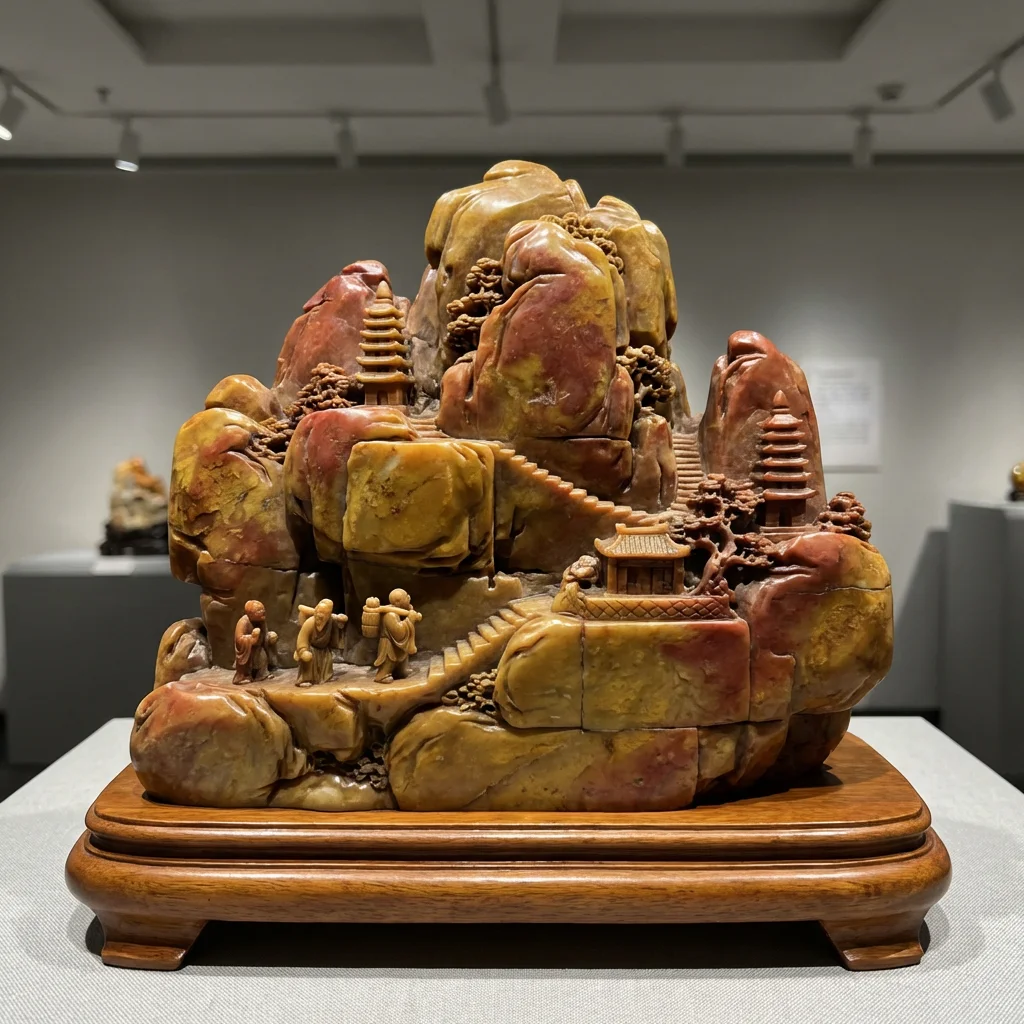
The Unique Qualities of Agalmatolite
Shoushan stone is a type of agalmatolite that comes in over 100 varieties. The most famous is "Tianhuang" (Field Yellow) stone, which was historically more valuable than gold and was used to make the seals of emperors. The stone is valued for its warmth, smoothness, and the way it seems to glow from within.
Miniature Landscapes and Figures
Shoushan carvers are masters of "working with the stone." They use the natural colors and veins of the rock to determine the subject—a red vein might become a blooming flower, while a grey patch might be carved into a rugged mountain. This harmonious collaboration between man and nature is the core of the Shoushan aesthetic.
Shoushan Stone and Seal Carving Art
Beyond sculptures, Shoushan stone is the premier material for Chinese seal carving. Its fine grain allows for incredibly precise calligraphy to be carved into the base, making it a favorite among scholars and calligraphers who want their personal seals to be both functional and beautiful.
Frequently Asked Questions
Why is Tianhuang stone so rare?
Tianhuang stone is only found in a small area of rice fields in Shoushan. The supply has been nearly exhausted for centuries, making antique pieces and rare finds extremely valuable to collectors.
How do I maintain Shoushan stone?
Shoushan stone loves oil. It is traditional to occasionally wipe the stone with a tiny amount of white mineral oil to keep it from drying out and to maintain its translucent, "oily" luster.
Can Shoushan stone be scratched easily?
Shoushan stone is relatively soft compared to jade, which is why it is so good for detailed carving. However, it should be protected from sharp objects and hard impacts to prevent scratching or chipping. | 



 Posted an update: 2026-4-3 11:59:47 89