


 Posted an update: 2026-4-2 11:05:00 29
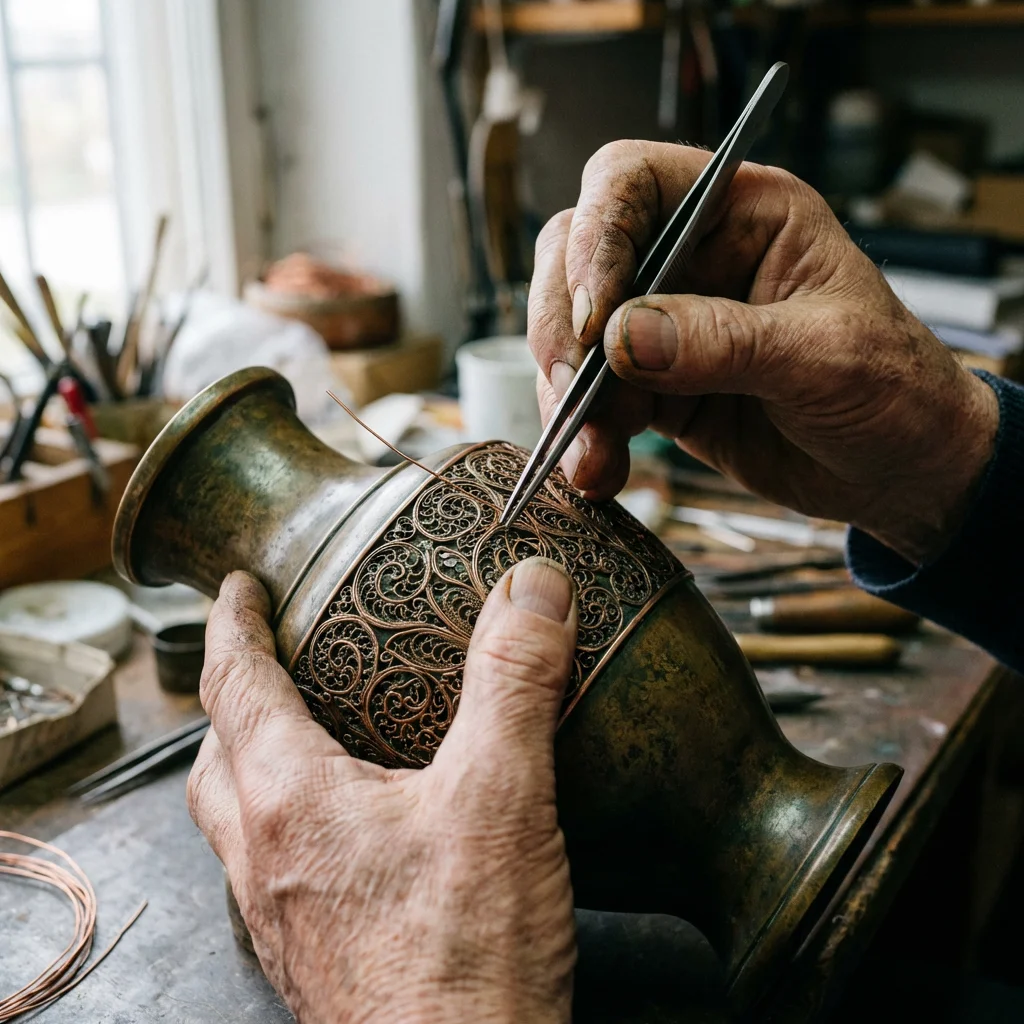
The first step in creating a cloisonne masterpiece is the fabrication of the "胎" (Tai) or copper body. This foundation determines the final shape, weight, and structural integrity of the object, requiring the skills of a master metalworker.
Table of Contents
1. Why Copper?
Copper is the preferred material for cloisonne because of its excellent malleability, its high thermal conductivity (which ensures even firing), and its chemical affinity for enamel glazes. High-quality red copper is used to provide a stable foundation that won"t warp or melt during the multiple high-temperature firings that follow.
2. Shaping the Body: Hammering and Joining
A master coppersmith takes a sheet of pure copper and hammers it into shape over various anvils. For complex forms like vases or incense burners, the piece is made in sections—the body, the foot, the handles, and the neck—which are then meticulously joined using high-temperature silver solder. The joins must be perfectly seamless to prevent air pockets from ruining the enamel later.
3. Surface Preparation and Degreasing
Once the shape is finalized, the copper body must be thoroughly cleaned. Even the slightest hint of oil from a human finger or a drop of soldering flux will prevent the enamel from bonding to the metal. The surface is pickled in acid and then neutralized, leaving a perfectly clean, slightly textured surface ready for the next stage.
4. Frequently Asked Questions
Q: Can other metals like silver or gold be used?
A: Yes, silver and gold have been used for exceptionally high-end cloisonne (often called "Shippo" in Japan), but copper remains the standard for traditional Chinese Jingtailan due to its cost-to-performance ratio.
Q: How do you prevent the copper from oxidizing during firing?
A: The enamel glaze itself acts as a protective barrier, sealing the copper away from the oxygen in the kiln once it melts.