


 Posted an update: 2026-4-1 13:22:45 93
Hidden for over 3,000 years in the fertile plains of modern-day Sichuan, the discovery of the Sanxingdui sacrificial pits has fundamentally altered our understanding of Chinese civilization. While the Shang Dynasty was flourishing in the Central Plains, a separate, advanced, and profoundly mysterious culture was casting bronzes that look almost "alien" in their design and scale.
Sanxingdui: The Otherworldly Bronze Masks of Ancient Sichuan
The Sanxingdui culture (c. 1200–1000 BC) represents a peak of bronze-age metallurgy and artistic imagination. Unlike the ritual vessels common in northern China, the Sanxingdui findings are dominated by massive masks, towering bronze trees, and life-sized human figures. These artifacts suggest a society centered on complex religious rituals, shamanism, and a fascination with the celestial world.
1. The "Longitudinal Eye" Masks: Visions of the Divine
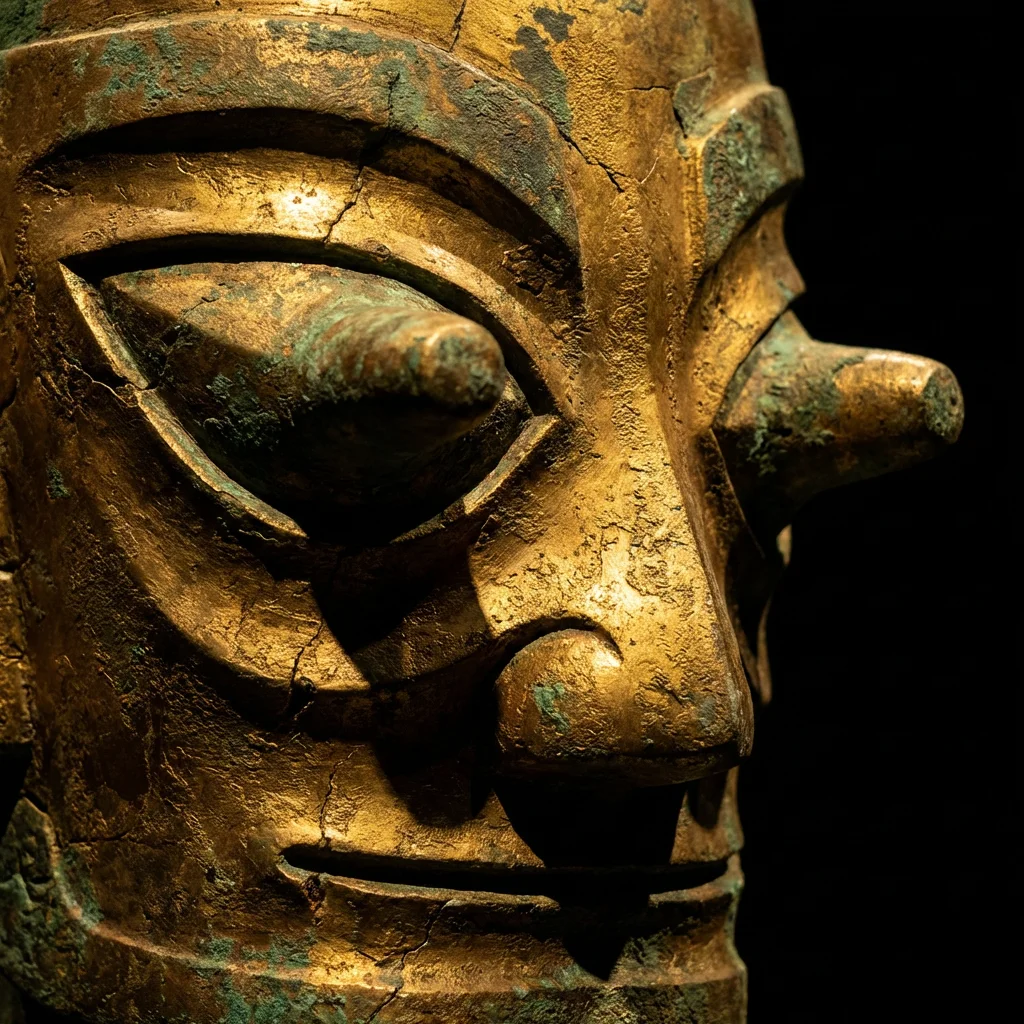
The most striking artifacts from the site are the "longitudinal eye" masks. Some of these bronze masks feature pupils that protrude outward like cylinders, often several inches long. Scholars believe these represent Cancong, the legendary first king of the Shu State, who was said to have "bulging eyes." These masks likely served as ritual totems, allowing worshippers to "see" into the spiritual realm or represent the god-like vision of their ancestors.
2. The Golden-Faced Kings: Symbolism of Power
Among the hundreds of bronze heads discovered, several were covered with a thin layer of gold foil. This rare combination of bronze and gold indicates a high level of social stratification and the special status of these figures—likely kings or high-ranking shamans. The gold-leaf application technique at Sanxingdui demonstrates a sophisticated understanding of both metalworking and the symbolic value of brilliance and immortality.
3. Craftsmanship and Metallurgy of the Shu State
The sheer scale of Sanxingdui bronzes is unprecedented. The "Bronze Standing Figure" is over 2.6 meters tall (including the pedestal), and the "Bronze Spirit Tree" stands nearly 4 meters high. The casting of such massive, complex structures required a highly organized workforce and advanced knowledge of piece-mold casting and alloy composition, proving that the Shu people were metallurgical equals to the Shang artisans of the Yellow River valley.
4. Why the "Alien" Look? Exploring Cultural Origins
The elongated ears, exaggerated pupils, and sharp features of the masks have led to sensationalist theories about "alien" influence. However, archaeologists emphasize that these are artistic exaggerations meant to convey divine power. They reflect a distinct Sichuan Basin aesthetic that was influenced by local wildlife (like birds and tigers) and a unique spiritual worldview that prioritized the communication between heaven and earth.
5. FAQ: Understanding Sanxingdui Bronzes
When were the Sanxingdui pits found?
The first major pits were discovered accidentally by a local farmer in 1929, but the most significant excavations occurred in 1986 and again in 2021.
Was Sanxingdui part of the Shang Dynasty?
No, it was a separate contemporary civilization (the Shu State). While they traded with the Shang, their art style and religious practices were entirely different.
What happened to the Sanxingdui people?
The city was mysteriously abandoned around 1000 BC. Some believe it was due to an earthquake, flood, or political upheaval that forced the population to move south to Jinsha (modern-day Chengdu).
6. Conclusion
Sanxingdui remains one of the greatest archaeological mysteries of the 20th century. Its bronze masks challenge the traditional "one-origin" theory of Chinese history, showing that ancient China was a mosaic of diverse, brilliant cultures. Today, these masks continue to stare out from the past, inviting us to rediscover the forgotten glory of the ancient Shu State.
Awestruck by the mysterious Shu State? Don"t miss our next post on the Houmuwu Ding, the largest bronze vessel ever discovered!