


 Posted an update: 2026-4-1 14:11:13 63
In the forbidden halls of the Qing Dynasty, the color of the heart was emerald. Qing Dynasty Jadeite (Fei-cui) is the green brilliance of the south that captured the imagination of the court and changed the world of jade forever.
Qing Dynasty Jadeite: The Green Brilliance of the Imperial Court and the Rise of Fei-cui
While Hetian jade (Nephrite) ruled China for 3,000 years, the 18th century saw the arrival of a new king: **Jadeite** from Burma (Myanmar). Known in China as **Fei-cui** (after the brilliant green feathers of the kingfisher bird), jadeite was initially ignored by scholars but soon became the absolute obsession of the Qing court, especially Empress Dowager Cixi. Its vibrant green color and glassy translucency created a new aesthetic of luxury that continues to dominate the jade market today.
1. Imperial Green: The Color of Cixi
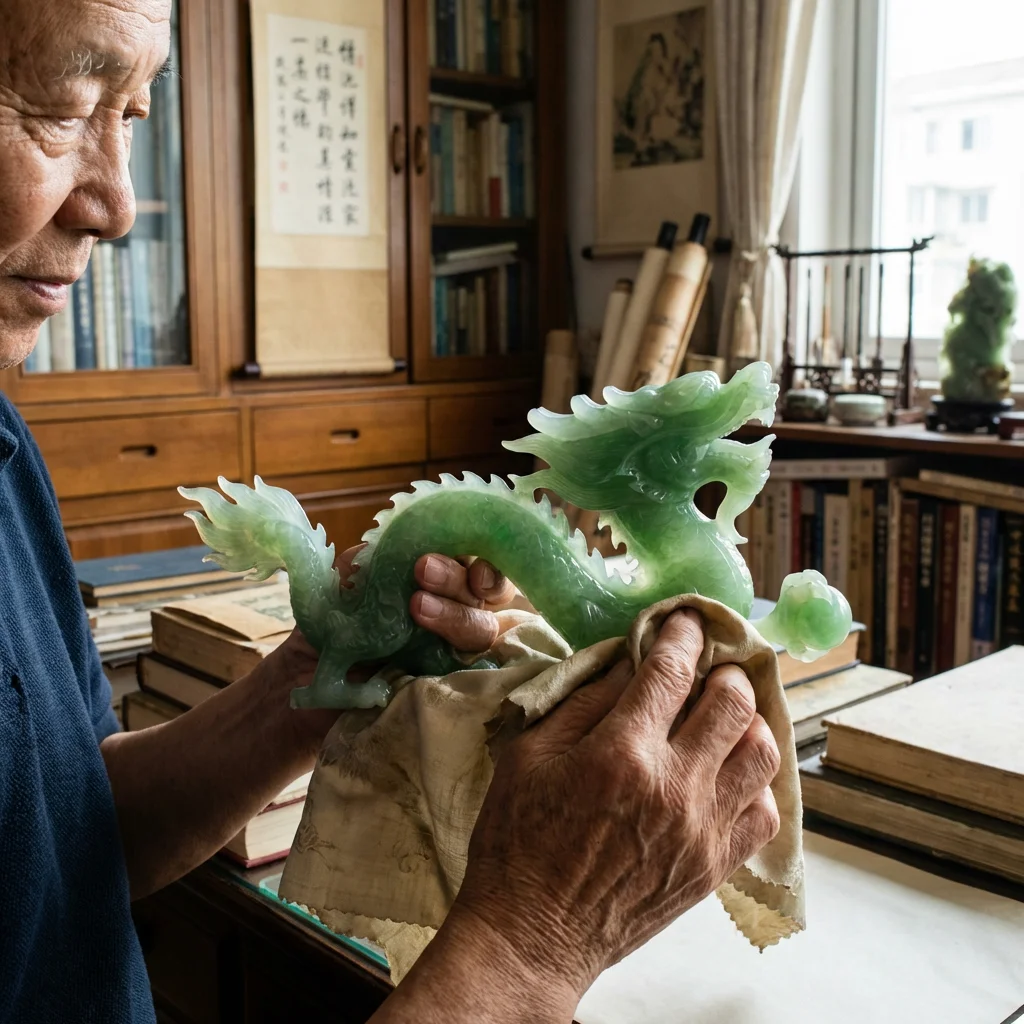
The most valuable variety of jadeite is **Imperial Green**—a deep, vibrant emerald green that is perfectly even and highly translucent. This color was the personal favorite of Empress Dowager Cixi, who owned thousands of jadeite pieces, including her famous "Jadeite Cabbage" and her emerald nail guards. Because of her patronage, jadeite went from a "foreign curiosity" to the most prestigious material in the empire, surpassing even the traditional white Hetian jade in value.
2. Translucency and Light: The Glassy Beauty
Unlike the "greasy" and opaque Hetian jade, high-quality jadeite is prized for its **Water Content** (Shui-tou) or translucency. The best pieces, known as "Glassy Variety" (Bo-li-zhong), allow light to pass through almost as clearly as water. This gives jadeite a brilliance and a "fire" that is much closer to Western gemstones. For the Qing elite, this clarity represented a new kind of elegance—one that was bold, luxurious, and modern.
3. The Rise of the Jewelry Art: From Court to Commoner
The arrival of jadeite led to a revolution in Chinese jewelry. Because of its hardness and its vibrant colors, jadeite was perfect for bangles, rings, and elaborate hair ornaments. This was the period when the "Jade Bangle" became the essential accessory for every Chinese woman, a symbol of family harmony and protection. The carvers of the Qing Dynasty developed new techniques to showcase the color of the jadeite, often carving scenes where the green veins became leaves and the white sections became flowers.
4. Symbolism: The Kingfisher and the Phoenix
The name "Fei-cui" is deeply symbolic. "Fei" is the red feather of the male kingfisher, and "Cui" is the green feather of the female. This name reflects the multi-colored nature of jadeite, which can also be lavender, red, yellow, and black. However, green remains the soul of Fei-cui, representing life, growth, and the eternal spring. For the Qing people, wearing jadeite was like wearing a piece of the living forest, a connection to the vibrant energy of nature.
5. FAQ: Appreciating Qing Dynasty Jadeite
Is jadeite more valuable than Hetian jade?
In the modern international market, high-quality "Imperial Green" jadeite is the most expensive jade in the world. However, among traditional Chinese collectors, top-quality "Mutton-fat White" Hetian jade is equally respected and valuable. It depends on whether you value the "brilliance" of jadeite or the "virtue" of nephrite.
How can I tell natural jadeite from treated stone?
Natural jadeite is known as "Type A." "Type B" has been bleached with acid, and "Type C" has been dyed. Treated stones will often look "too perfect" and will lose their luster and color over time. Always ask for a professional laboratory certificate when buying high-end jadeite to ensure its authenticity.
Why is some jadeite called "Ice Variety"?
"Ice Variety" (Bing-zhong) refers to jadeite that is translucent but not completely clear, resembling a piece of ice. It is highly sought after for its cool, elegant look and its unique "sparkle" under the light.
6. Conclusion
Qing Dynasty jadeite is the emerald crown of Chinese history. It shows us that even an ancient culture can embrace new beauty and turn it into a tradition. As we admire the brilliant green of a Fei-cui bangle, we are connecting with the luxury of the Qing court and the eternal vibrancy of the natural world. Jadeite is the green heart of China, glowing with the light of the south.
From the court to the workshop: Next, we explore the Technique of the Suzhou School—The "Floating" Carving!