


 Posted an update: 2026-4-1 13:30:04 89
The rise of the first unified empires in China was built on the foundation of bronze weaponry. From the precision-engineered crossbow trigger to the iconic "Ge" halberd, these tools of war were the high-tech superiority that shaped history.
Bronze Weapons of War: The Technology That Unified Ancient China
In the millennia before the dominance of iron, the battlefield of ancient China was a sea of bronze. During the Warring States (475–221 BC) and Qin dynasties, metallurgy was pushed to its limits to create weapons that were sharper, stronger, and more lethal than those of their neighbors. This technological edge was the decisive factor in the unification of China under the First Emperor.
1. The Crossbow Trigger: Precision Engineering
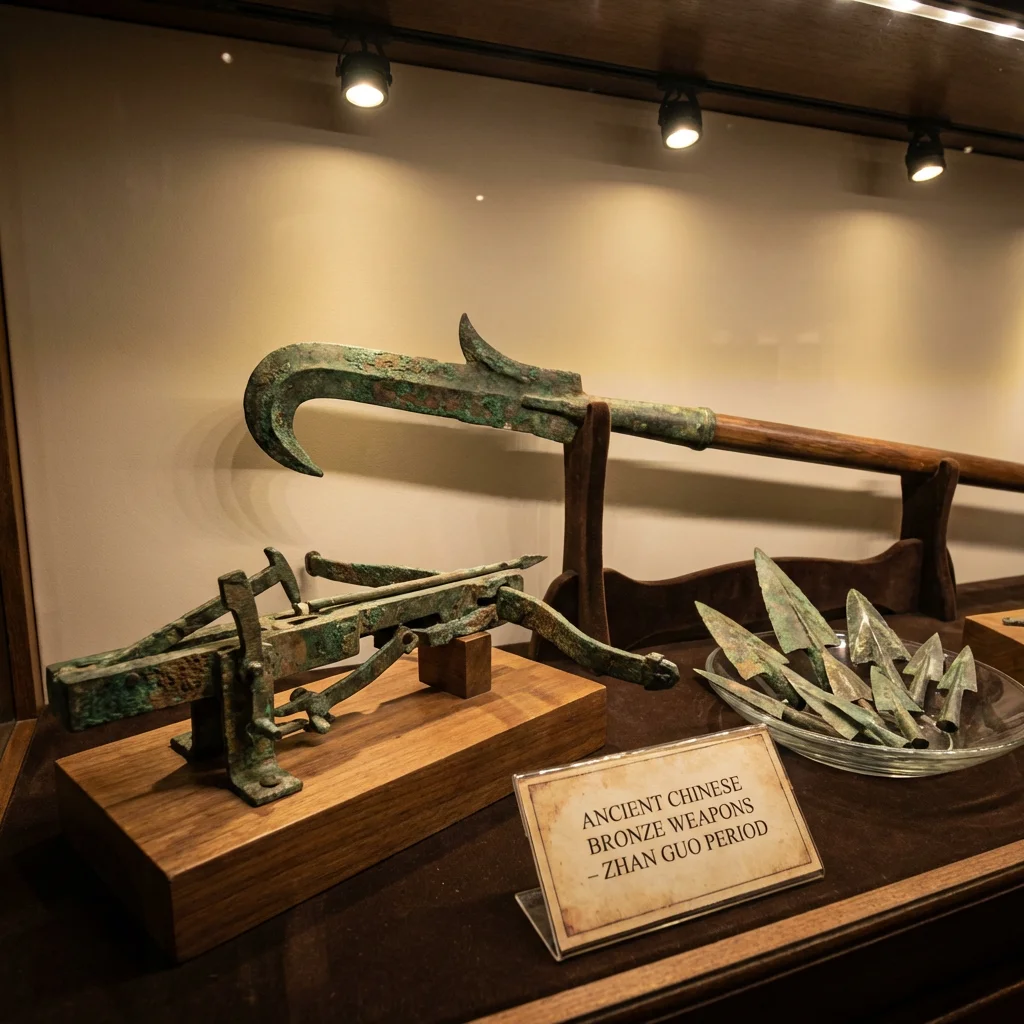
The most advanced piece of military equipment in the ancient world was the bronze crossbow trigger. These three-part mechanisms were cast with such precision that they were interchangeable between weapons. This modular design allowed the Qin army to quickly repair weapons on the battlefield, a logistical advantage that overwhelmed their opponents. The trigger allowed for a high-tension release, making the Chinese crossbow a formidable "sniper" weapon long before the invention of gunpowder.
2. The "Ge" Halberd: The Iconic Weapon of the Soldier
The Ge (dagger-axe) was the standard weapon for infantry for over a thousand years. It featured a pointed bronze blade mounted perpendicular to a long wooden shaft. This design was perfect for "hooking" and "pecking" enemies from chariots or in tight formations. As warfare evolved into the Warring States period, the Ge was combined with a spear tip to become the Ji (halberd), the versatile weapon of choice for the elite guards.
3. Standardized Arrowheads: The First Mass Production
Archaeological evidence from the Terracotta Army pits shows that Qin arrowheads were cast to a single, standardized design. Each of the three edges was exactly the same, creating an aerodynamic shape that ensured stability and accuracy. These were produced in massive foundries that used quality control marks (the name of the foreman) to ensure that every arrow in the millions of sets produced was combat-ready.
4. Metallurgy: Toughness vs. Sharpness
Ancient smiths knew that a pure bronze weapon would be too soft to hold an edge. By carefully controlling the ratio of copper to tin, they could create different qualities in a single weapon. For example, a sword would have a low-tin core for flexibility (so it wouldn"t snap) and high-tin edges for razor-sharpness. This sophisticated understanding of alloys gave Chinese warriors a lethal advantage on the battlefield.
5. FAQ: Understanding Ancient Bronze Weapons
Were bronze weapons better than iron?
In the early stages, high-quality bronze was actually superior to early "wrought" iron because it could be cast into more complex and precise shapes, like the crossbow trigger.
How sharp were they?
As seen with the Sword of Goujian, ancient bronze weapons could be exceptionally sharp and remained so for centuries due to advanced anti-corrosion treatments.
Who made the weapons?
Weapons were manufactured in state-run foundries. In the Qin Dynasty, every weapon was inscribed with the name of the workshop and the artisan responsible for its quality.
6. Conclusion
The history of ancient China is written in bronze. The technological leaps made by the smiths and engineers of the past were not just for ritual beauty but for the survival and unification of a nation. These weapons of war are the silent ancestors of modern precision engineering, reminding us that even in the art of battle, there is a profound beauty in craftsmanship.
We hope you enjoyed our 10-article series on the Bronze Ware of Ancient China. Explore our categories for Hanfu, Porcelain, and Jade to continue your journey through history!