


 Posted an update: 2026-4-2 10:58:42 34
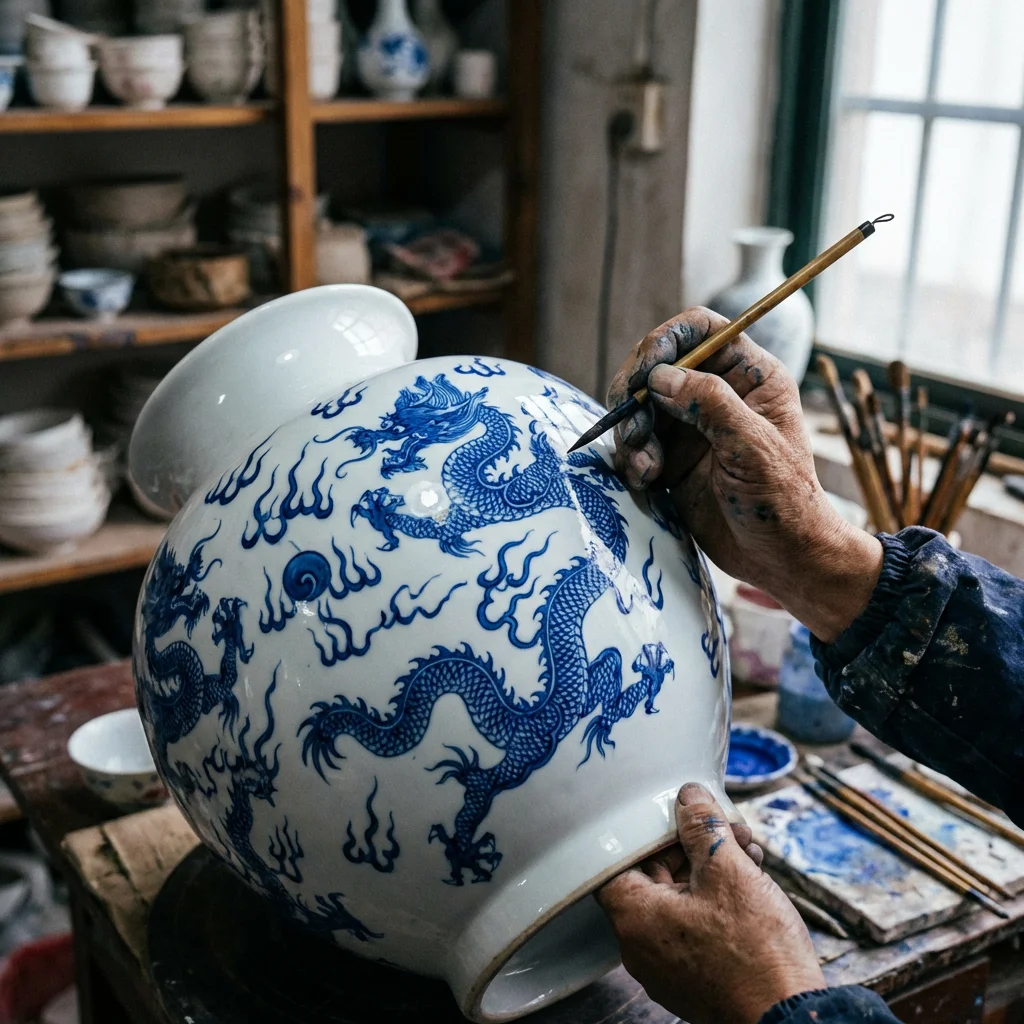
Porcelain is one of China"s most significant contributions to world culture. For centuries, the secret of making true porcelain was a closely guarded mystery, earning it the moniker "white gold." From its humble origins as "proto-porcelain" to the refined masterpieces of the Ming and Qing dynasties, Chinese porcelain is the pinnacle of ceramic art.
Table of Contents
1. Ancient Origins and Development
The history of Chinese porcelain spans over 2,000 years. It evolved from primitive stoneware through a gradual refinement of materials and firing temperatures. By the Tang Dynasty, the northern Xing kilns were producing white porcelain "as silver and snow," while the southern Yue kilns were famous for their celadon. The art reached its zenith during the Song and Ming dynasties, setting global standards for quality and aesthetics.
2. Why it’s called "China"
In the West, porcelain is often referred to as "China" because the country was the sole source of this high-quality ware for centuries. European potters spent hundreds of years trying to replicate the translucent, hard-paste porcelain that China exported along the Maritime Silk Road. It wasn"t until the early 18th century that European alchemists finally discovered the secret ingredients: kaolin clay and petuntse stone.
3. The Marriage of Clay and Fire
True porcelain is made from a blend of kaolin and petuntse, fired at temperatures exceeding 1,200°C. This extreme heat vitrifies the clay, turning it into a glass-like substance that is hard, non-porous, and resonant when struck. The artistry lies in the balance between the plastic clay, the chemical composition of the glazes, and the precise control of the kiln"s atmosphere.
4. Frequently Asked Questions
Q: What is the main difference between pottery and porcelain?
A: Porcelain is fired at much higher temperatures, uses specific clays (kaolin), and is translucent and vitrified, whereas pottery is opaque, porous, and fired at lower heat.
Q: Is all Chinese porcelain handmade?
A: Historically, yes. Traditional workshops in places like Jingdezhen still utilize the ancient division-of-labor system, where dozens of masters collaborate on a single piece.