


 Posted an update: 2026-4-1 14:07:57 99
In the silence of the temple, the wood becomes the divine. Religious wood sculpture is the sacred art of carving the Buddha, the Bodhisattva, and the ancestor, turning a tree into a bridge to the heavens.
Religious Wood Sculpture: Carving the Divine and the Spiritual Aura of Sacred Timber
For thousands of years, wood has been the preferred material for religious icons in China. More intimate and portable than stone, wood allows for a level of realism and emotional depth that is essential for devotion. From the massive temple guardians to the small statues on a family altar, religious wood sculpture is a masterpiece of spiritual focus and technical skill. It is an art where every stroke of the chisel is a form of prayer.
1. The Face of Compassion: Carving the Guanyin
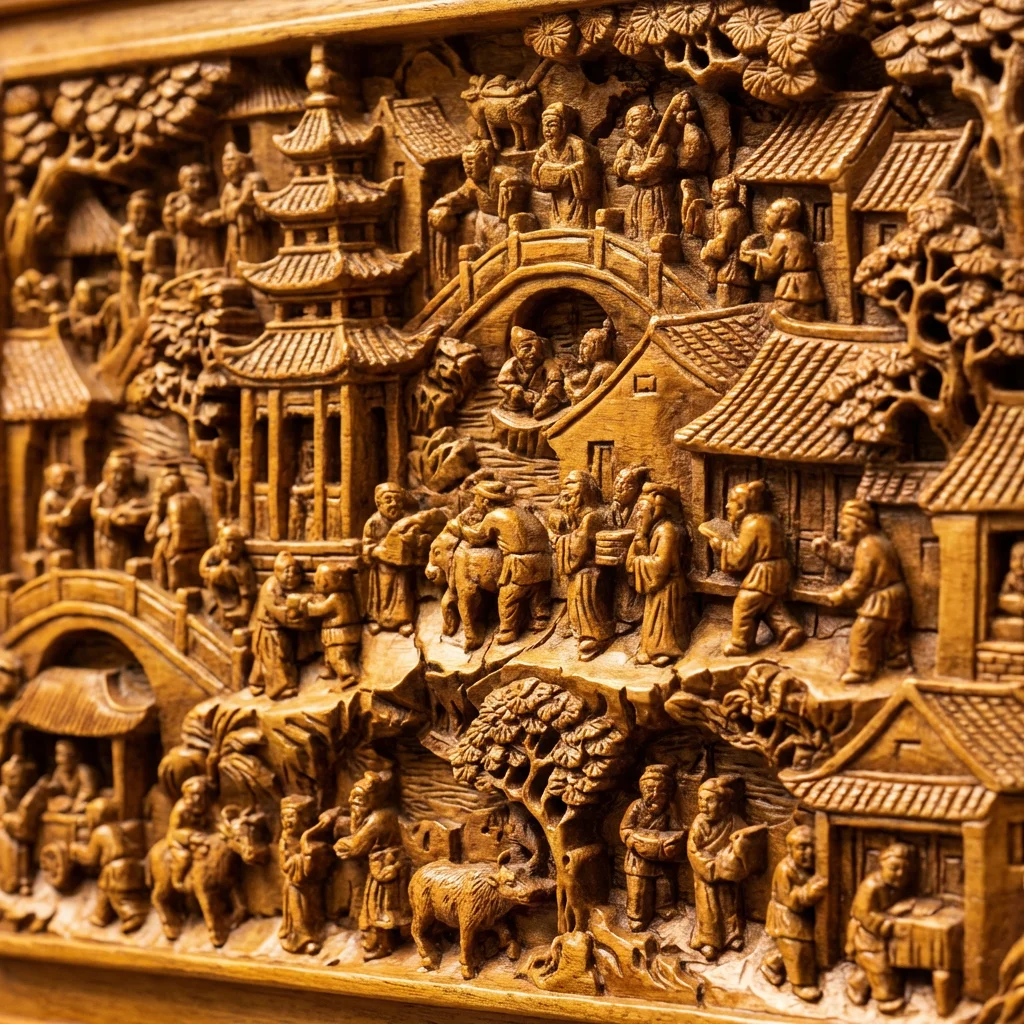
The most beloved subject of religious wood sculpture is Guanyin, the Bodhisattva of Compassion. Carving a Guanyin requires the artist to capture a sense of "Ethereal Serenity." The robes should appear to flow like water, and the expression should be one of profound peace and kindness. This requires a mastery of "Floating Carving" (Fu-diao) and a deep spiritual connection to the subject, as the artisan is not just carving a figure, but a manifestation of divine love.
2. The Gilded Spirit: The Use of Gold and Lacquer
While many statues are left in their natural wood state to show the grain, many temple statues are finished with **Gold Leaf** and **Lacquer**. This serves a dual purpose: it protects the wood from the smoke of incense and the humidity of the temple, and it creates a "divine light" that glows in the dim interior of the sanctuary. The gold represents the "unbreakable" nature of the truth, while the lacquer provides a base that is as smooth and durable as history itself.
3. Sacred Woods: Sandalwood and Camphor
The choice of wood for a religious statue is deeply symbolic. **Sandalwood** (Tan-xiang) is the most sacred wood in Buddhism, prized for its eternal scent and its ability to calm the mind during meditation. **Camphor wood** is also widely used because its scent acts as a natural guardian against insects, ensuring that the divine figure remains untouched by decay. In the temple, the scent of the wood is as much a part of the worship as the statue itself.
4. The Ceremony of "Enlightenment": Awakening the Statue
A religious wood sculpture is not considered "complete" until the **Kai-guang** (Enlightenment) ceremony. This ancient ritual involves painting the "eyes" of the statue, symbolically "awakening" its spirit and allowing the divine power to inhabit the wood. For the artisan, this is a moment of profound responsibility, as they are providing the vessel for the people"s faith. From that moment on, the wood is no longer just a craft; it is a sacred presence.
5. FAQ: Understanding Religious Wood Art
Can I collect religious statues as art?
Many people collect ancient Buddhist statues for their incredible artistic and historical value. However, it is important to treat them with respect—placing them in a high, clean location and understanding the cultural and spiritual context in which they were created.
How do I tell an ancient statue from a modern one?
Ancient statues will show natural signs of age, such as fine cracks in the lacquer or a subtle darkening of the wood. The carving style of earlier dynasties (like the Song or Ming) is often more robust and less "sweet" than modern versions. If the statue has a strong chemical smell, it is likely a modern reproduction.
Why do some statues have a hole in the back?
Many traditional wooden statues have a small cavity in the back used for "Consacrating" the icon. Items such as small scrolls, medicinal herbs, or symbolic grains were placed inside during the dedication ceremony to give the statue its "internal" life and power.
6. Conclusion
Religious wood sculpture is the art of the heart"s devotion. It shows us that with faith, even a fallen tree can be turned into a light for the world. As we stand before a wooden Buddha, we are connecting with the thousands of people who have found peace in its gaze. The wood is silent, but its presence is a chorus of compassion and hope. In the sacred timber, the divine is forever present.
The final grain: Next, we conclude our series with a look at how we are fighting rot and time in the Preservation of Wood!