


 Posted an update: 2026-4-1 13:54:47 26
In the ancient capital of Nanjing, they weave the sky. Yun Brocade (Yun-jin), or "Cloud Brocade," is the most magnificent and royal of all Chinese textiles, once reserved exclusively for the robes of emperors.
Yun Brocade: The Royal "Cloud Silk" of Nanjing and the Mastery of the Draw-Loom
With a history of over 1,500 years, Yun Brocade represents the absolute pinnacle of Chinese weaving technology. It is named for its beauty, which is said to be "as brilliant and diverse as the clouds at sunset." This is the only fabric that still cannot be replicated by modern machines. To create it, two weavers must work together on a massive, two-story "Draw-Loom" (Hua-lou), placing every gold, silver, and peacock-feather thread by hand.
1. The Fabric of Emperors: A Royal Monopoly
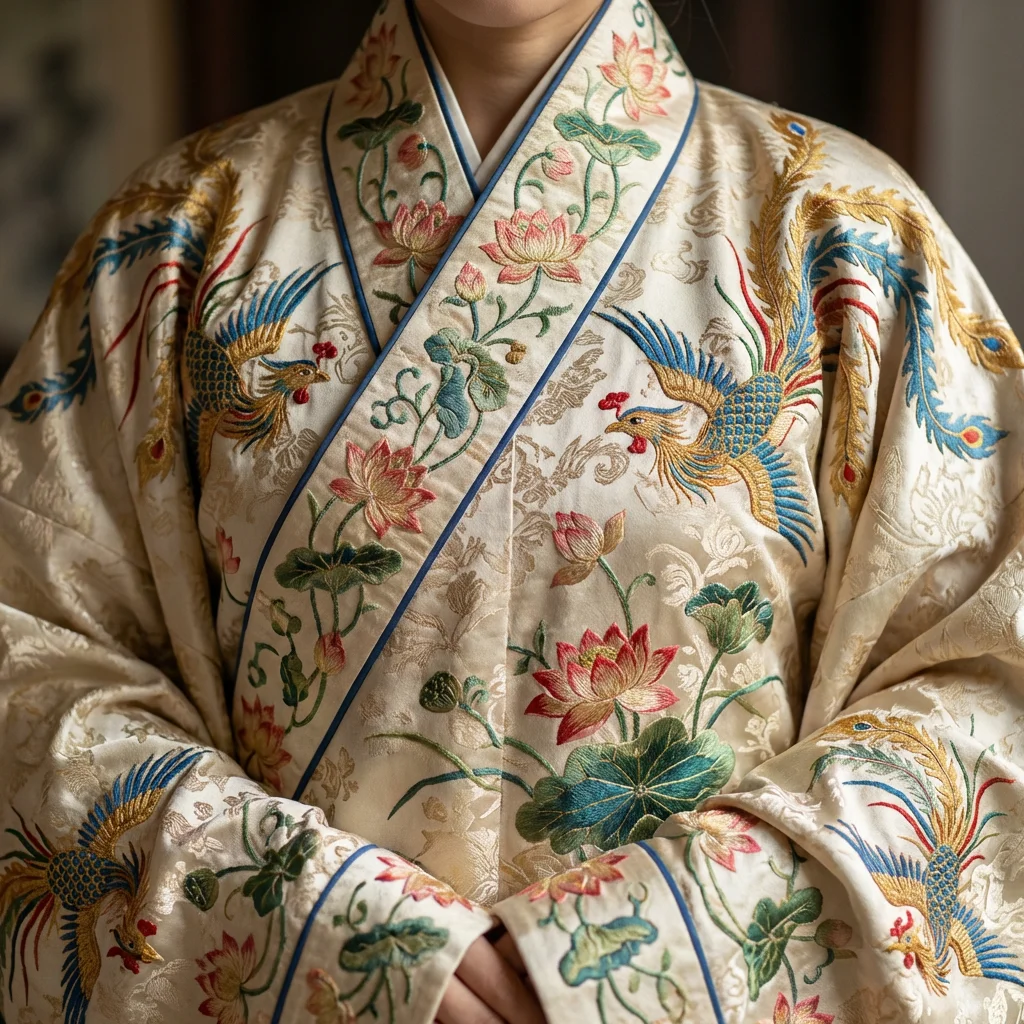
During the Yuan, Ming, and Qing dynasties, the production of Yun Brocade was a state secret. It was used for the "Dragon Robes" of the Emperor and the "Rank Patches" of the highest officials. The designs are incredibly bold and opulent, featuring five-clawed dragons, lucky clouds (Xiang-yun), and Buddhist symbols. For centuries, anyone caught wearing or selling Yun Brocade without royal permission faced the most severe penalties.
2. The Draw-Loom: The World"s First "Computer"
The secret of Yun Brocade lies in the Draw-Loom. This massive machine stands nearly four meters high. One weaver, the "Puller," sits at the top and pulls thousands of individual threads according to a complex "program" recorded on a system of silk strings. The "Weaver" sits at the bottom and passes the shuttles of color. This system of "binary" thread control is why many historians call the ancient Chinese draw-loom the first mechanical ancestor of the modern computer.
3. Exotic Materials: Gold, Silver, and Peacock Feathers
What gives Yun Brocade its legendary shimmer is the inclusion of exotic materials. Master weavers use fine gold and silver foil wrapped around silk cores, and even peacock feathers which are split into microscopic strands and woven into the patterns. This creates a "changing color" effect—when the wearer moves, the golden dragons seem to fly and the feathers shift from emerald to sapphire blue.
4. Intangible Heritage: The Last Hand-Woven Brocade
Because of the extreme complexity of its patterns and the unique way the materials are handled, Yun Brocade is the only major Chinese textile that cannot be made by a machine. Every inch must be hand-woven. Today, it is recognized as a UNESCO Intangible Cultural Heritage of Humanity. In Nanjing, the tradition is kept alive by a few dozen masters who continue to weave the sunset into silk for future generations.
5. FAQ: Understanding Yun Brocade
How fast can they weave it?
A pair of master weavers can produce only about 5 to 10 centimeters of Yun Brocade in a single day of intense work. This is why a complete dragon robe can take several years to finish.
Can I buy Yun Brocade today?
Yes, but be prepared for the price! Authentic, hand-woven Yun Brocade is extremely expensive and is usually sold as small decorative pieces, ties, or as fabric for high-end wedding Hanfu.
How do I tell it apart from other brocades?
Look for the "shimmer." If the colors change significantly as you move it, and if you can see real gold or peacock feather strands, it is likely Yun Brocade. It is also significantly more structured and heavier than other silk fabrics.
6. Conclusion
Yun Brocade is more than just a fabric; it is a miracle of human coordination and artistic vision. It represents the very peak of Chinese royal culture, where no material was too expensive and no effort was too great in the pursuit of beauty. To see a piece of Yun Brocade is to see the glory of the ancient emperors, preserved forever in the threads of time.
Refining the art: Next, we head to Suzhou to explore the scholarly and delicate patterns of Song Brocade!