


 Posted an update: 2026-4-1 13:27:26 174
The Mao Gong Ding is not famous for its size or gold, but for what is written inside it. With 497 characters of ancient script, it holds the record for the longest bronze inscription in history, providing a rare and direct voice from the Western Zhou Dynasty.
Mao Gong Ding: The Library of Bronze and the Voice of the Western Zhou
Cast during the reign of King Xuan (c. 827–782 BC), the Mao Gong Ding is a simple, elegant three-legged cauldron. However, its interior walls are a masterpiece of Jinwen (Bronze Script). This inscription is a formal royal decree, preserving the political wisdom, warnings, and hopes of a king to his loyal minister, Duke Mao (Mao Gong).
1. 497 Characters: A Political Manifesto in Bronze
The inscription is divided into seven sections. It records the King"s appointment of Duke Mao to handle state affairs and offers a solemn warning against corruption and negligence. It is essentially a "code of conduct" for high officials, emphasizing the Mandate of Heaven and the heavy responsibility of ruling justly. For historians, this is like finding a perfectly preserved political contract from nearly 3,000 years ago.
2. The Art of Jinwen: Ancestor of Chinese Calligraphy
The script inside the Mao Gong Ding is considered the "standard" for Western Zhou bronze script. It is noted for its balanced structure, powerful strokes, and rhythmic flow. Calligraphers throughout Chinese history have studied the Mao Gong Ding to master the transition from primitive pictographs to the structured characters used in later dynasties. It is truly the "foundational text" of Chinese writing.
3. The Simple Aesthetic: Western Zhou Design
Unlike the flamboyant and high-relief masks of Sanxingdui or the dense Taotie of the Shang, the Mao Gong Ding features a restrained, dignified aesthetic. Its surface is decorated with subtle wave patterns (Huan-dai-wen) and ring motifs. This shift reflects the Western Zhou"s focus on ritual order and moral restraint, moving away from the more supernatural and shamanistic themes of earlier periods.
4. Historical Value: A "Primary Source" for Ancient Law
Because it was cast in bronze, the text of the Mao Gong Ding has survived without being edited or misinterpreted by later historians. It serves as a vital cross-reference for the Classic of History (Shangshu), confirming that the formal language used in ancient texts was indeed used in the royal courts of the time.
5. FAQ: Understanding the Mao Gong Ding
How many characters are there exactly?
The count is usually cited as 497, though some scholars count 499 depending on how compound characters are interpreted.
Where is the Mao Gong Ding now?
It is one of the "Three Treasures" of the National Palace Museum in Taipei.
Why is it called "Ding"?
A "Ding" is a cauldron. In ancient China, the Ding was the ultimate symbol of state power. To "inquire about the weight of the dings" was an idiom meaning to challenge the king"s authority.
6. Conclusion
The Mao Gong Ding proves that the pen—or in this case, the bronze stylus—is indeed mightier than the sword. It preserved the ethics and law of a civilization long after the palaces had crumbled to dust. To read its inscriptions is to hear the echoed advice of a king across the ocean of time.
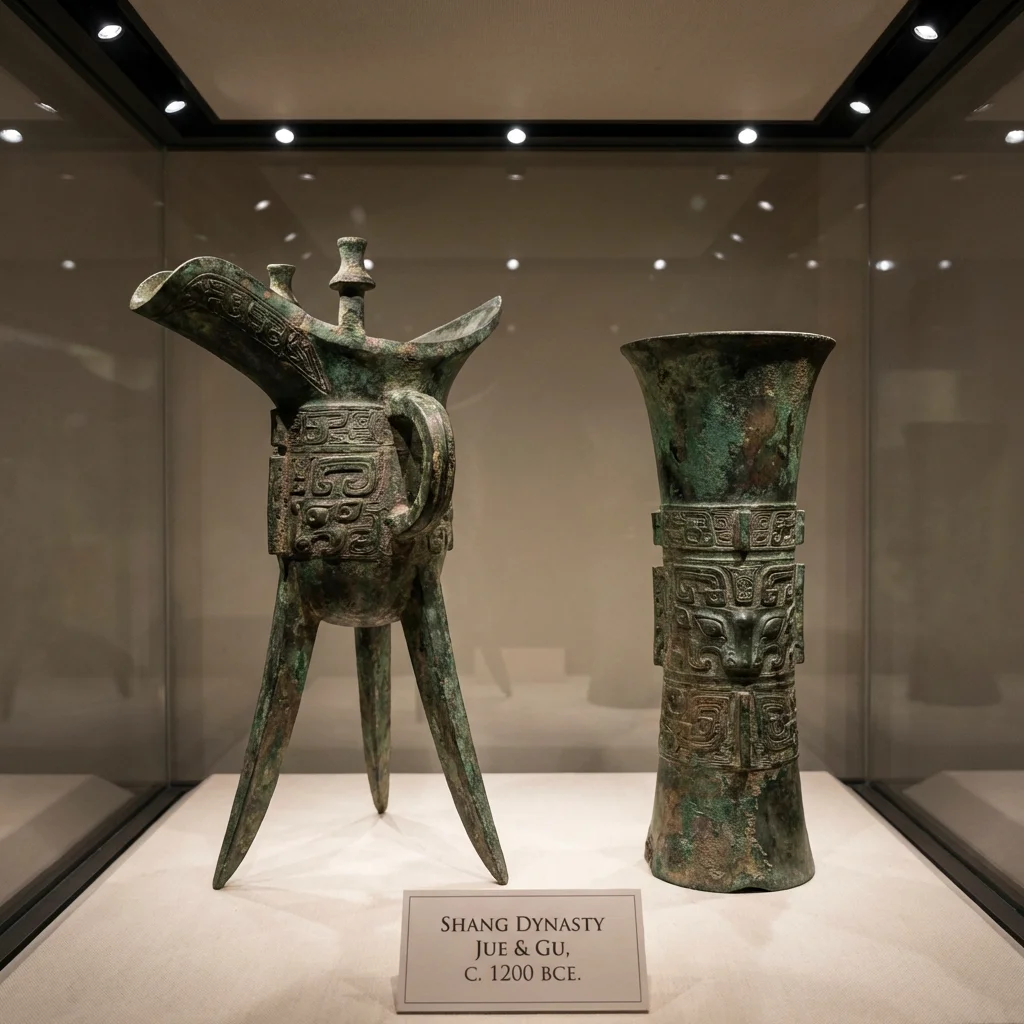
From the laws of kings to the wine of rituals: Next, we explore the incredible variety of the Shang Dynasty"s ritual wine vessels!