When Zhang Daqian and His Wife Visited Picasso - An Awkward First Encounter That Turned into a Lifelong Friendship
Heritage News
Editorial Team
Communication is the wellspring of success. This adage, familiar to many, has even become a personal motto for countless people. Indeed, reflecting on the wisdom of Dale Carnegie or the strategists of Romance of the Three Kingdoms, it is not difficult to see that the achievements of many successful individuals are inseparable from their mastery of eloquence. A few well-chosen words, a clever retort - these can touch the heart, break the ice, and even alter the course of destiny. More often than not, success seems to reside in the space between a few phrases.
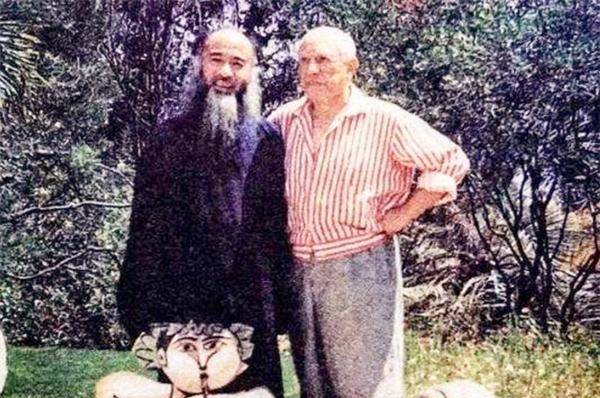
There is a fascinating story that unfolded between Zhang Daqian, the great master of Chinese painting, and Pablo Picasso, the titan of Western modern art. When these two world-class artists met, language barriers nearly plunged their encounter into awkward silence - and almost caused them to part on bad terms. Fortunately, Zhang Daqian's wife, Xu Wenbo, intervened with a few deft words that not only dissolved the tension but also turned the two masters into close friends. How did it happen? Let us take a closer look.
Picasso and Zhang Daqian: Worlds Apart
When it comes to Picasso, most people are familiar with him. His masterpiece Guernica remains profoundly moving to this day, its depiction of the horrors of war etched deeply into the collective consciousness. In our textbooks, Picasso stands as one of the founding fathers of modern art - his influence spanning time and space, vast and enduring.

As for Zhang Daqian, he may not be a household name in the West to the same degree as Picasso. Yet once you learn about his life, you discover that he was not only a giant in the history of Chinese painting but an artist of global stature. Zhang's meticulous copies of the Dunhuang cave murals won the admiration of countless art critics, including master painters in Japan, where he even held solo exhibitions.
There is a telling anecdote: Zhang Daqian was once preparing to board a Nationalist government flight to Taiwan. Seats were limited and Zhang had no reservation. Upon learning that Zhang was present, a high-ranking Nationalist officer immediately set down his luggage and personally escorted Zhang onto the plane ahead of himself - a gesture that spoke volumes about Zhang's artistic stature and social standing at the time.
Despite both being titans of the art world, the two came from vastly different artistic traditions: Picasso represented the avant-garde of Western modernism, while Zhang Daqian was steeped in the centuries-old tradition of Chinese ink wash painting. On the surface, their paths seemed unlikely to intersect - yet fate had other plans.
The Awkward Encounter
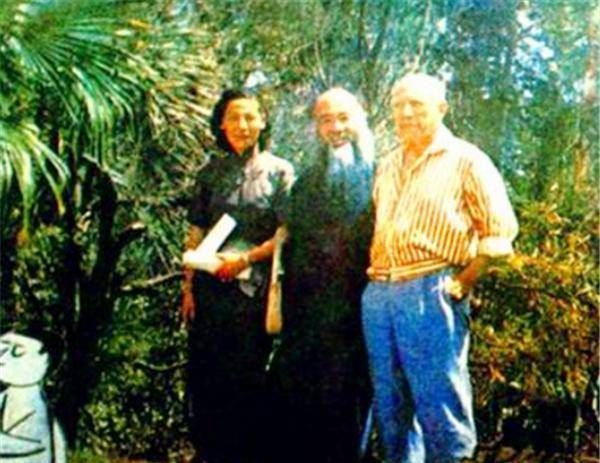
At the time, Zhang Daqian was residing in Brazil and preparing for a solo exhibition, traveling widely and engaging with the international art community. Some Japanese scholars suggested: why not have the Eastern and Western masters meet and exchange ideas? As it happened, Picasso also came to Brazil. Though past seventy, he remained a commanding presence in the art world - influential, prestigious, and larger than life.
In accordance with traditional etiquette, Zhang Daqian and his wife paid a visit to Picasso as juniors calling upon a senior, intending to engage in a genuine artistic dialogue. Yet no one could have anticipated that the moment they met, they would stumble into a linguistic impasse. Picasso spoke no Chinese, and Zhang's Spanish was far from fluent. For the nuanced and deeply abstract discussions they hoped to have, they were forced to rely on a translator. Art, being abstract and emotionally charged by nature, proved exceedingly difficult to convey through the filter of language.
Picasso looked at Zhang's explanations with visible confusion in his eyes, while Zhang struggled to express himself, constantly feeling that his words fell short. At last, in a moment of bewilderment, Picasso mentioned a name - Qi Baishi. Picasso assumed that Qi Baishi must be the most important figure in Chinese art, and perhaps discussing Qi would create a bridge between them.
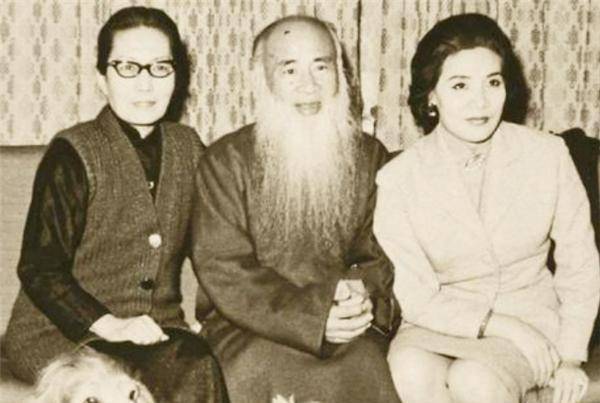
But Zhang Daqian's heart sank. In the Chinese art world of that era, Qi Baishi was indeed a universally acknowledged master. Yet to talk about Qi Baishi in this setting would make Zhang appear as though he were saying: Qi is the truly important artist here, and I am merely a bystander. This subtle awkwardness thickened the tension in the room. At that critical moment, Zhang's wife, Xu Wenbo, stepped forward and deftly broke the deadlock.
Xu Wenbo's Brilliant Mediation
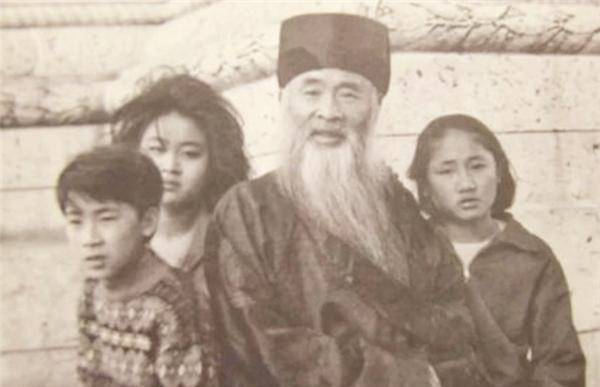
Xu Wenbo rose and, with a few simple sentences and a single painting, effortlessly dissolved the awkwardness that was on the verge of derailing the entire encounter. Knowing full well that Picasso held Qi Baishi in high esteem, she deliberately played up Qi Baishi's artistic achievements - then mentioned that Qi Baishi himself greatly admired Zhang Daqian's paintings, even calling him a rising star. She went on to recount how Qi Baishi had once painted a shrimp, to which Zhang Daqian added a lotus flower - a collaborative piece known as Daqian's Lotus Complement, which received Qi Baishi's highest praise.
When Picasso heard this story, a gleam of respect appeared in his eyes. So this seemingly reserved painter was, in fact, an artist whom even the great Qi Baishi acknowledged as a peer. Gradually, the communication between them began to flow. Though the language barrier remained, their mutual understanding of art and growing respect for one another dissolved the distance between them. In the end, Picasso and Zhang Daqian became fast friends despite the age gap, building a bridge between Eastern and Western art and embarking on deeper exchanges and collaborations.
Reflections on Cross-Cultural Encounter
This story, seemingly ordinary on the surface, carries profound implications. Cultural differences between East and West - especially linguistic barriers - often cause confusion in communication, sometimes even leading to embarrassment. After all, even masters of the caliber of Picasso and Zhang Daqian could not avoid the difficulties inherent in cross-cultural exchange. Imagine the situation during the ancient Silk Road era, when Eastern and Western civilizations first came into contact: the barriers of language, culture, and ethnicity would have been even more formidable. Yet even under those conditions, our ancestors overcame every obstacle and ultimately achieved a fusion of civilizations and a flowering of cultural exchange.
This story teaches us that while the exchange of civilizations is inevitably fraught with conflict and misunderstanding, it ultimately always moves toward understanding and integration. For no matter the time or place, the foundation of all civilizations is the pursuit of truth, goodness, and beauty - the longing for a higher plane of existence.
Thus, the road ahead is not merely one of peaceful progress but of civilizational fusion and artistic pursuit. Zhang Daqian and Picasso may not have foreseen the far-reaching impact their meeting would have on the world, but the art in their hands was already quietly guiding us toward new directions for the future.
In closing: Looking back through history, we have traversed countless trials and triumphs, through the flames of war and the calm of peace. The path forward may still hold challenges, but I firmly believe that the fusion of civilizations and the pursuit of art will remain our eternal themes. After all, truth, goodness, and beauty will forever be the deepest longings of the human soul. In this process, we must understand that a beautiful beginning is often accompanied by misunderstanding and conflict - and only through tolerance and wisdom can we transform these differences into the treasures of art.