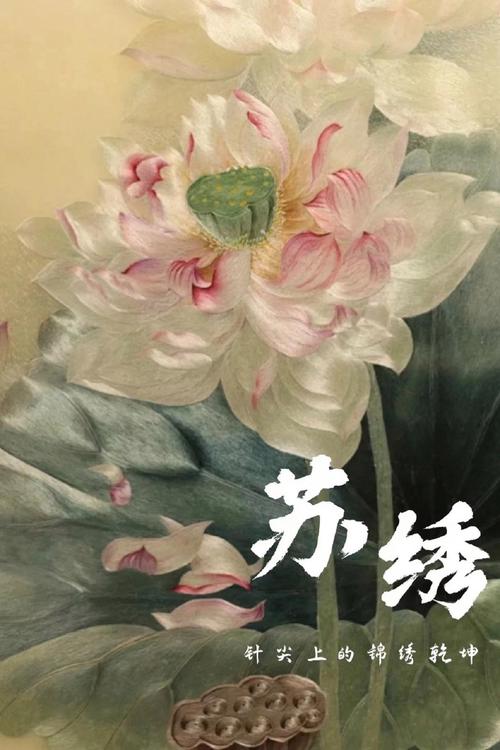
Suzhou embroidery is the calling card of Suzhou, a brilliant star in China's cultural firmament. As the foremost of the Four Great Embroideries, it differs from the bold color palettes of Sichuan embroidery, the ornate splendor of Guangdong embroidery, and the diverse complexity of Hunan embroidery. Its refined elegance is like the gentle melodies of Jiangnan pingtan storytelling — soft, graceful, and unforgettable at first glance.
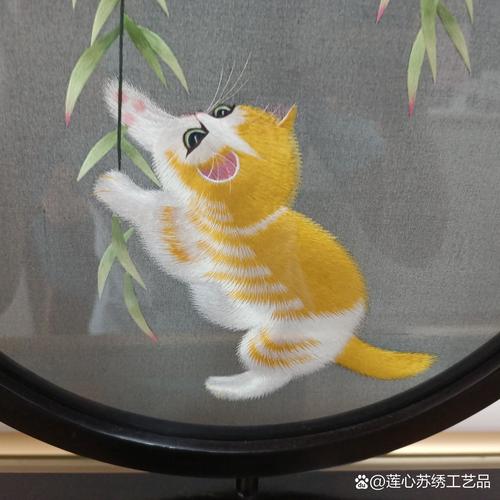
The Aesthetic Principles
Suzhou embroidery is governed by eight aesthetic principles: flatness (ping), neatness (qi), fineness (xi), density (mi), harmony (he), luster (guang), smoothness (shun), and evenness (yun). "Flatness" means the embroidered surface lies perfectly level; "neatness" refers to crisp, well-defined pattern edges; "fineness" denotes the use of extremely fine needles and thread; "density" describes tight, closely packed stitches that conceal needle marks; "harmony" signifies appropriate color matching; "luster" means brilliant, vivid coloring; "smoothness" indicates fluid silk grain flow; and "evenness" ensures uniform stitch density throughout.
From Household Craft to Imperial Art
The earliest excavated Suzhou embroidery dates to the Five Dynasties period (907-960 AD), discovered at the Yunyan Temple Pagoda on Tiger Hill in Suzhou in 1956. Throughout history, Suzhou embroidery was an essential skill for women — mothers taught daughters, sisters-in-law taught younger sisters, generation after generation. A young woman's embroidery samples were presented to prospective in-laws as evidence of her dexterity and virtue.
During the Ming Dynasty, the emergence of the Wu School of painting — led by masters such as Tang Yin (Tang Bohu) and Shen Zhou — profoundly influenced Suzhou embroidery. Embroiderers began to recreate famous paintings with needle and thread, achieving what came to be known as "painting with the needle" and "surpassing nature's craftsmanship" (qiao duo tian gong).
The Innovation of Shen Shou: Realistic Embroidery (Fang Zhen Xiu)
In the late Qing Dynasty, the brilliant embroiderer Shen Shou revolutionized the craft by incorporating Western painting techniques into traditional embroidery. She studied Western oil painting's principles of light, shadow, and perspective, fusing them with Chinese embroidery traditions to create "Realistic Embroidery" (fang zhen xiu). Her masterpiece, the portrait of Queen Elena of Italy, was presented as a state gift and caused a sensation internationally. Her work "The Crucifixion of Jesus" won the gold medal at the 1915 Panama-Pacific International Exposition. Shen Shou also authored "The Xuehuan Embroidery Manual," the first comprehensive treatise on embroidery tools, techniques, and principles.
Yang Shouyu and Random Stitch Embroidery (Luan Zhen Xiu)
In the late 1920s, Changzhou native Yang Shouyu created "Random Stitch Embroidery" (luan zhen xiu), which broke from the traditional method of closely aligned parallel stitches. Instead, she employed stitches of varying lengths that crossed and overlapped one another to build form, color, and texture. While both Shen Shou and Yang Shouyu absorbed Western artistic influences, Shen used "new ideas with old methods," whereas Yang employed "new ideas with new methods." Yang's portrait of President Franklin D. Roosevelt was collected by the National Gallery of Art in the United States, cementing the international reputation of this innovative technique.
Preservation and Modern Revival
Suzhou embroidery faces significant challenges in the modern era. Each piece can take years to complete, and fewer young people are willing to undertake the lengthy apprenticeship required. In response, the Suzhou Embroidery Art Museum was established in 1986, and in 2013 the Zhenhu Embroidery Art Museum became China's first 4A-rated embroidery cultural tourism destination. In 2018, Suzhou embroidery was included in the first batch of the National Traditional Craft Revitalization Catalogue, ensuring governmental support for its continued preservation.