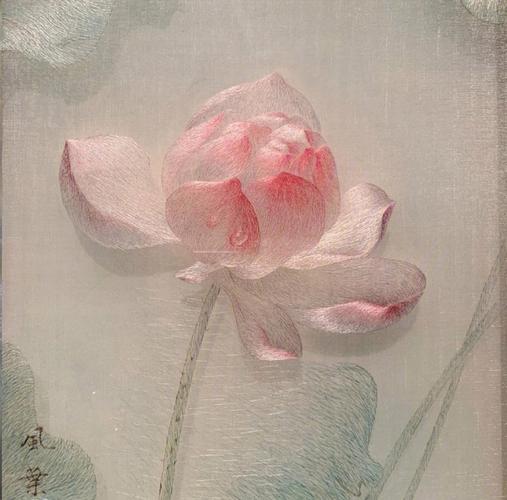
Shen Embroidery (Shen Xiu), also known as Nantong Realistic Embroidery, is a national-level intangible cultural heritage that evolved from Suzhou embroidery. Named after the legendary embroidery master Shen Shou (1874-1921), it represents one of the most significant innovations in the history of Chinese embroidery.
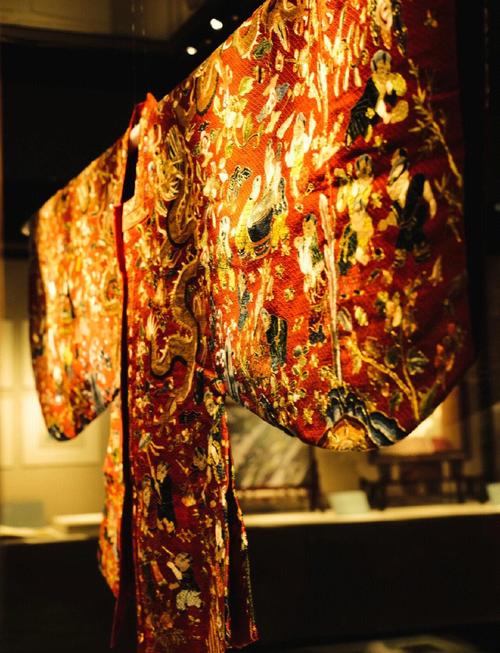
The Revolutionary Vision of Shen Shou
Shen Shou, originally named Shen Yunzhi, was born in Wu County (present-day Suzhou), Jiangsu Province. During the late Qing Dynasty, a period of profound social transformation, Shen Shou absorbed artistic ideas from both Eastern and Western traditions and combined them with classical Suzhou embroidery techniques. Her breakthrough came when she began studying Western oil painting's treatment of light, shadow, perspective, and color modulation. She incorporated these principles into embroidery, creating works of unprecedented realism — hence the term "Realistic Embroidery" (fang zhen xiu) or "Shen Embroidery."
For Empress Dowager Cixi's 70th birthday, Shen Shou and her husband embroidered "The Eight Immortals Offering Birthday Congratulations," which earned the Empress Dowager's favor and launched Shen Shou's career at the imperial court. Her 1911 portrait of Queen Elena of Italy, presented as a state gift, caused an international sensation. The Italian king and queen personally praised the exquisite artistry of Chinese embroidery, and Shen Shou's international reputation was firmly established.
Artistic Characteristics
Shen Embroidery's defining characteristic is the ingenious fusion of Western oil painting techniques with traditional Chinese embroidery. Through masterful handling of silk threads — varying their thickness, direction, and color — Shen Embroidery achieves the subtle light-and-shadow effects, depth, and three-dimensionality characteristic of oil painting while retaining the luminous, tactile quality unique to silk embroidery. Each piece appears remarkably lifelike, with colors that are soft, natural, and richly nuanced.
The Fourth Generation: Zhou Zhanxian
Zhou Zhanxian represents the fourth generation of Shen Embroidery inheritors. Her journey to mastery was unconventional — she began her career in Nantong's grain distribution system before venturing into entrepreneurship during China's economic reforms. Though she initially worked with computerized embroidery machines, a visit to the Nantong Craft Art Research Institute transformed her perspective. She realized that while machine embroidery was efficient, it could never replicate the unique charm and soul of hand embroidery.
After apprenticing under Shen Embroidery master Wu Yue, Zhou Zhanxian mastered the traditional techniques and learned to integrate multiple stitching methods organically. Her works have garnered more than 20 national awards and are sold both domestically and internationally. Recognizing the importance of collective transmission, she has established the Zhou Zhanxian Shen Embroidery Art Studio and a provincial-level talent master studio, training a new generation of embroiderers who understand both painting and embroidery.
The Next Generation: Bridging Tradition and Modernity
Zhou Zhanxian's daughter, Zhang Tianchi, represents the newest generation of Shen Embroidery practitioners. After graduating from the University of Birmingham in the UK in 2014, she chose to return to her mother's studio rather than pursue a conventional career. Bringing a young person's creative perspective, she has launched innovative products such as Shen Embroidery qipao dresses and contemporary fashion accessories, attracting a new generation of admirers to this traditional art.
To further promote Shen Embroidery, Zhou Zhanxian has opened an embroidery art gallery and training center, creating a cultural destination centered around the Shen Embroidery tradition. Through these efforts, the century-old Shen Embroidery legacy continues to flourish in the modern era, its unique artistic charm attracting ever more devotees.