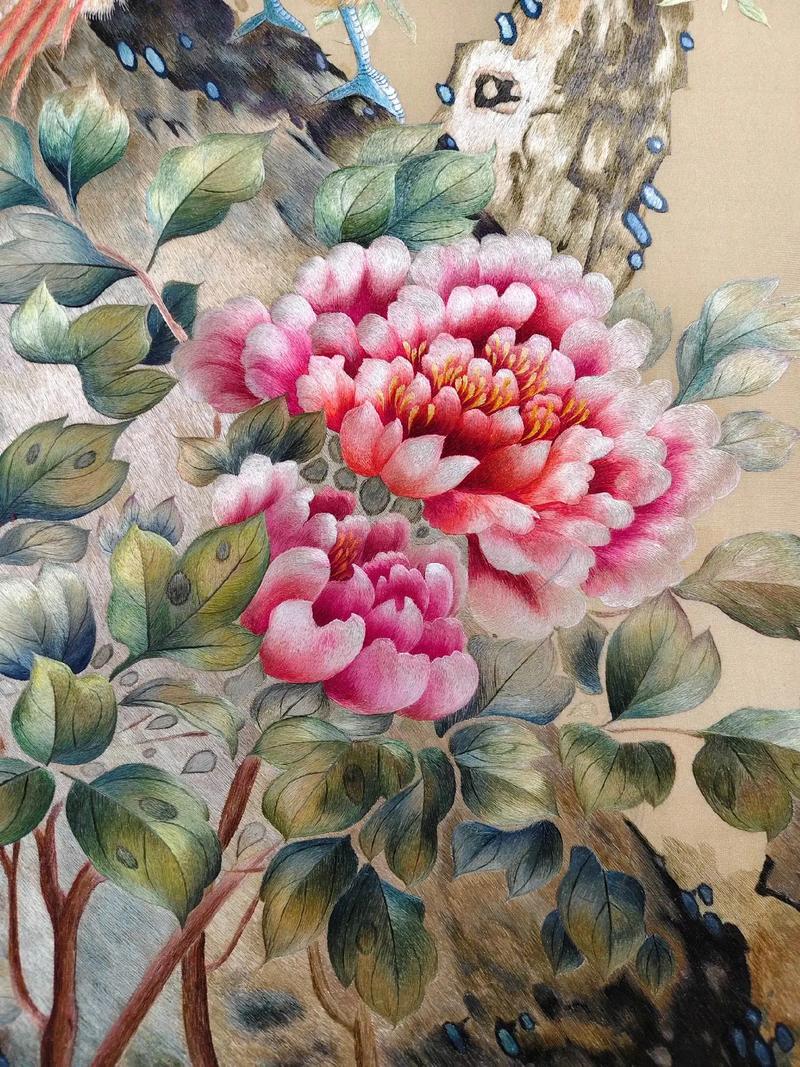
Among all the motifs in Suzhou embroidery — elegant landscapes, vibrant flowers, lifelike birds — one subject stands above the rest as the definitive emblem of the craft: the cat. The saying "Suzhou cats, Hunan tigers" (Su Xiu mao, Xiang Xiu hu) has become a widely recognized shorthand distinguishing the two great embroidery traditions. But how did the humble cat come to define an entire art form?
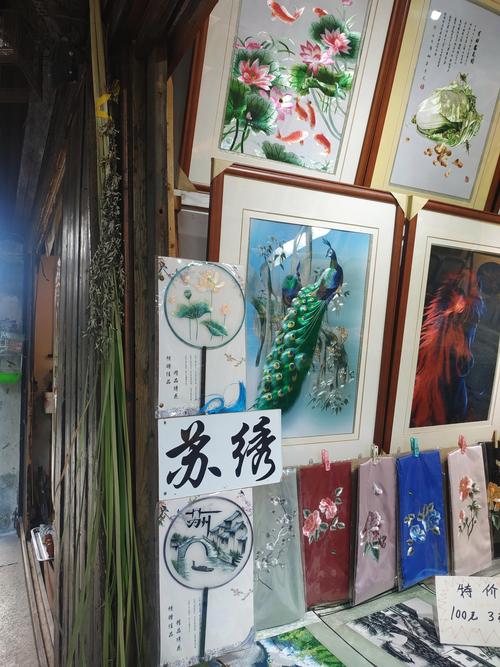
The Breakthrough in London, 1956
The Suzhou embroidery cat achieved worldwide fame through the skill of Gu Wenxia. In September 1956, Gu Wenxia traveled to London as China's first embroiderer to demonstrate her craft abroad, appearing at the International Handicrafts and Home Hobbies Exhibition held at the Olympia Royal Hall. Her demonstration piece — a double-sided embroidery titled "Kitten with Chinese Rose" (Yueji Xiao Mao) — caused a sensation. British newspapers and radio broadcasts hailed Suzhou embroidery as "magical art," "living still life," "a crystallization of genius," and "the artistic pearl of the Orient."
Gu Wenxia's innovation lay in her revolutionary approach to rendering the cat's fur. She developed a technique of sparse-stitch underpainting followed by layered color application, building up density stitch by stitch. This method simultaneously showcased the luminous sheen of silk thread and captured the fluffy, delicate texture of the cat's coat. Most remarkably, she split a single silk thread into twenty-four separate filaments to render the cat's eyes — creating highlights and shadows so precise that the eyes appeared wet, sparkling, and almost alive.
A Painter Joins the Embroidery Studio
Following this success, the Suzhou authorities invited Cao Kejia, a Beijing-based painter renowned for his cat paintings, to Suzhou to guide the embroiderers. A dedicated Cat Embroidery Research Group was formed, bringing together painters and embroiderers in collaborative creation. In 1962 alone, the group produced over eighty cat embroidery pieces, establishing the cat as the signature motif of modern Suzhou embroidery.
From Traditional to Photographic and Oil Painting Sources
The evolution of Suzhou cat embroidery reflects the broader modernization of the craft. Early works drew from traditional Chinese painting, as seen in "Kitten with Chinese Rose" and "Persian Cat." Later pieces adopted photographic references — "Double Cats on Sofa," "Three Cats," and "Double Cats on Carpet" — which allowed for more natural poses and lighting. Some works even used oil paintings as source material, such as "Cat's Head," demonstrating the versatility of the embroiderers in adapting to diverse artistic styles.
Beyond the Cat: Other Iconic Motifs
While the cat remains the most famous Suzhou embroidery subject, the goldfish is a close second. The translucent, flowing quality of goldfish tails and fins presents a perfect challenge for the split-thread technique — embroiderers split threads to forty-eight filaments to capture the ethereal, weightless quality of goldfish swimming through water. The double-sided embroidery of goldfish, where fish appear to swim on both sides of the transparent silk, is considered one of the highest expressions of the embroiderer's art.
The Enduring Legacy
The tale of the Suzhou embroidery cat is ultimately a story about how technical innovation, artistic collaboration, and creative ambition can elevate a traditional craft. Gu Wenxia did not simply refine an existing technique — she reimagined what embroidery could express. Her legacy lives on in every cat embroidered in Suzhou today, each one a descendant of that first kitten that captivated London and announced Suzhou embroidery to the world.