Understanding the Core of Gongbi Brushwork
Chinese Gongbi painting captivates with its extraordinary precision and expressive line work. The mastery of brush techniques lies at the heart of this refined art form, enabling artists to breathe life into every detail on silk or paper. Understanding these brush methods is essential for anyone who wishes to appreciate or practice this ancient tradition.
The Central Brush (Zhongfeng)
The central brush technique is the foundation of Gongbi painting. Here, the brush tip remains perpendicular to the paper, running exactly along the center of each line. This produces strokes that are round, full-bodied, uniformly thick, and gracefully elastic — ideal for depicting flower heads, leaves, and stems. Once mastered, central-brush lines possess a vitality and strength that animates the entire composition.
The Side Brush (Cefeng)
Side brush conveys an entirely different character. By slanting the brush handle at an acute angle to the paper, the artist creates sharper, more angular line effects. Although less versatile than the central brush, this technique excels at rendering the rugged hardness of rocks and cliffs. Its purpose is to capture form and posture, demanding careful attention to the transitions between dots and lines.
The Splayed Brush (Sanfeng)
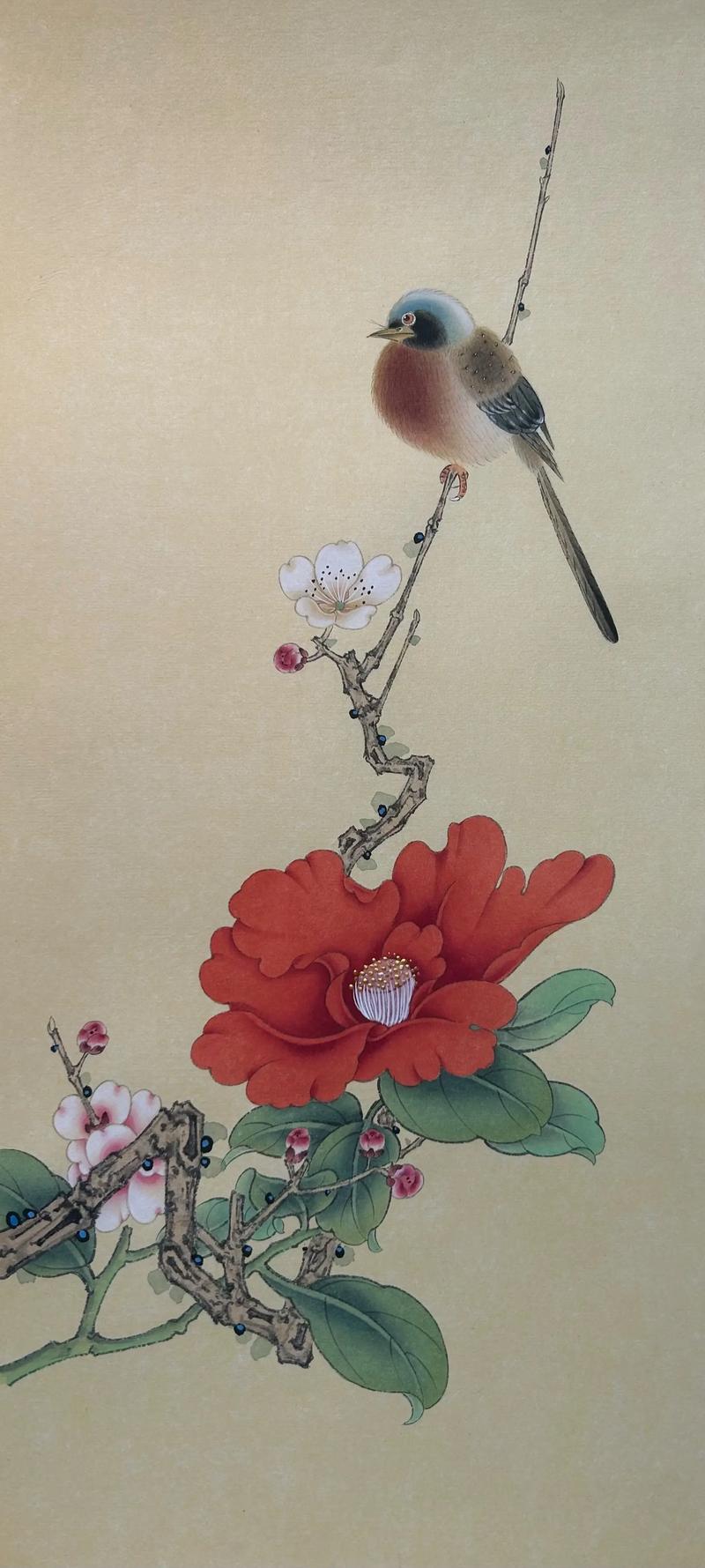
The splayed brush is a specialized technique achieved by flattening or spreading the brush tip — either neatly or irregularly. It is commonly used to depict withered trees or animal fur, fully exploiting the brush's unique textural qualities. This flexible, improvisational method injects energy and spontaneity into the painting.
Starting and Ending Strokes
The choice between revealed-tip (lufeng) and concealed-tip (zangfeng) brushstrokes depends on the subject matter. Revealed-tip starting strokes convey liveliness, suitable for petals and leaves, while concealed-tip strokes project solidity and strength, ideal for plant stems and branches. Equally important is the traveling stroke (xingbi), the longest section of each line, where variations in turning and pressure create a rich, dynamic quality.
Lifting and Pressing, Dry and Moist Brushes
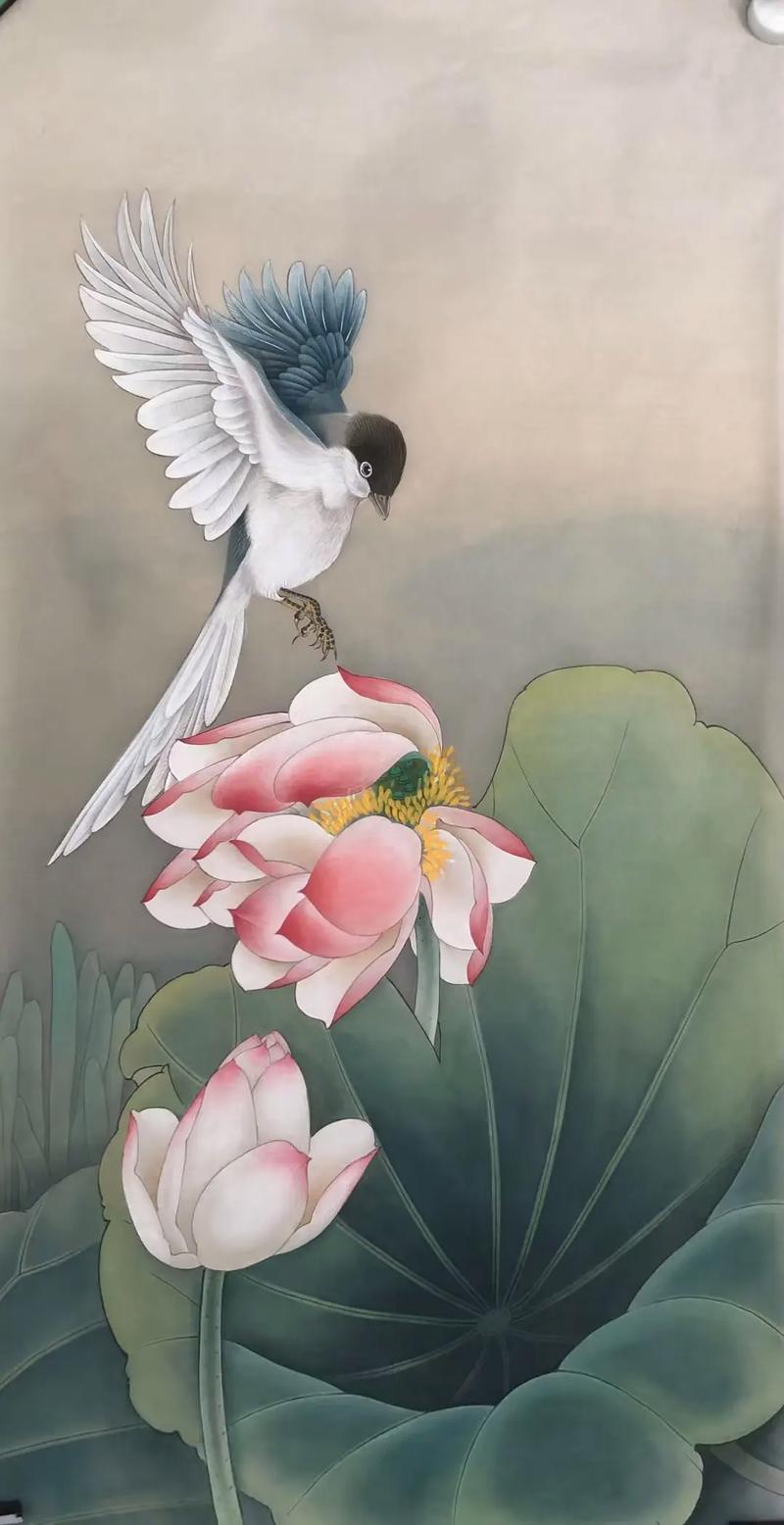
Lifting (tibi) and pressing (dunbi) work in tandem, their rhythmic alternation producing lines of remarkable depth and texture. The dry brush, with its crisp clarity, is favored for aged tree trunks, while the moist brush breathes life into blossoms. Employed in alternation, these techniques generate a visually compelling spectrum of effects.
Supplementary Techniques
Beyond fundamental brushwork, techniques such as dotting (dian), washing (ran), texturing (cun), and rubbing (ca) enrich the painting. The dot, though small, possesses great cohesive power and serves as the visual focal point; washing enhances atmosphere and depth. Together, these methods allow the artist to translate inner vision and emotion onto the paper with complete freedom.