


 Posted an update: 2026-4-1 14:01:46 114
History is a story written on the wind, but in the Stele Forest (Bei-lin), it is a story carved in stone. These black monoliths are the ancient hard drives of China, preserving the words of kings and the brushstrokes of masters.
The Stele Forest (Bei-lin): Calligraphy in Stone and the Eternal Library of Xi"an
Located in the ancient capital of Xi"an, the Stele Forest is the largest and oldest collection of stone steles in China. Since the Tang Dynasty, these stones have served as an indestructible library, preserving the most important Confucian classics, historical records, and masterpieces of Chinese calligraphy. For scholars and artists, the Stele Forest is a sacred ground where the weight of history and the beauty of the brush meet in eternal stone.
1. The Kaicheng Stone Classics: The Empire"s Textbook
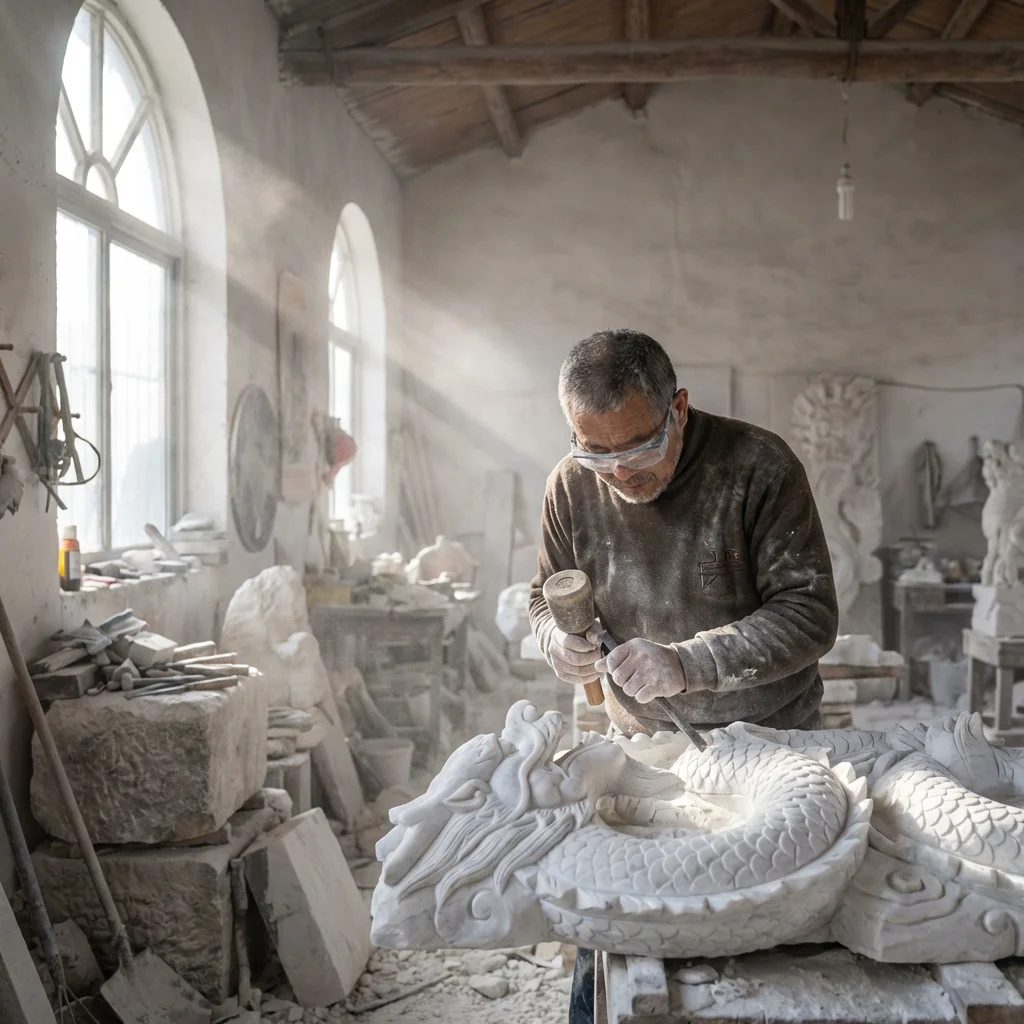
The core of the Stele Forest is the Kaicheng Stone Classics, a set of 114 steles carved during the Tang Dynasty. These stones contain the complete texts of the twelve Confucian classics. In a time before the printing press, these steles were the official standard for scholars throughout the empire. Students would travel from across the country to "read" the stones and ensure their own copies were correct, making the Stele Forest the most important educational center in the world.
2. Masterpieces of Calligraphy: The "Immortal" Brushstrokes
For calligraphy enthusiasts, the Stele Forest is a museum of the greatest masters. You can find original inscriptions by the "Four Masters of the Early Tang"—Ouyang Xun, Yu Shinan, Chu Suiliang, and Xue Ji—as well as the bold, powerful scripts of Yan Zhenqing. By carving these brushstrokes into stone, the ancients ensured that the "spirit" (Shen-yun) of the calligraphy would never fade, allowing us to see exactly how these masters moved their brushes 1,300 years ago.
3. Historical Records: Diplomacy and Religion
Many of the steles record critical historical events. The famous "Nestorian Stele" (Jing-jiao-bei), for example, documents the arrival of Christianity in China during the Tang Dynasty, showing the incredible religious diversity of ancient Xi"an. Other steles record foreign treaties, the building of great temples, and the deeds of national heroes. Each stone is a fragment of the empire"s memory, standing firm against the erosion of time.
4. Rubbing: The Art of Duplication
How were the words on the stones shared with the world? Through the art of Rubbing (Tuo-yin). By placing a piece of damp paper over the stone and gently dabbing it with ink, scholars could create an exact copy of the inscription. This process turned the Stele Forest into a "printing house," allowing the wisdom of the ancients and the beauty of the calligraphy to be distributed far and wide, influencing Chinese culture for centuries.
5. FAQ: Appreciating the Steles of Xi"an
Are the stones still readable today?
Many of them are! Because they were kept indoors or under pavilions for most of their history, the inscriptions are remarkably sharp. However, some have been damaged by wars or earthquakes, which only adds to their sense of historical weight and value.
Can I get a rubbing from the Stele Forest?
Original rubbings from the most famous stones are very valuable. However, the museum gift shop sells official reproductions that use traditional techniques, allowing you to bring a piece of the "Eternal Library" into your own home.
How many steles are in the forest?
There are over 3,000 steles in the collection today, covering a history of over 2,000 years. It is a dense, overwhelming landscape of stone that requires days to fully explore and appreciate.
6. Conclusion
The Stele Forest is a monument to the Chinese belief in the power of the written word. It shows us that while empires may crumble, the wisdom of the past and the beauty of the human hand can be preserved in stone forever. As we walk among the silent monoliths of Xi"an, we are not just looking at rocks; we are looking at the soul of a civilization that refused to be forgotten. The forest is quiet, but the stones are speaking.
From the library to the sky: Next, we explore the Symbols of Imperial Authority—The Imperial Pillars (Huabiao)!