


 Posted an update: 2026-4-1 13:50:56 91
For the Miao people of southwestern China, embroidery is not just a decoration—it is their library. Known as the "History Book on the Shoulders," Miao Embroidery (Miao-xiu) tells the epic legends of their ancestors in vibrant colors and bold geometric shapes.
Miao Embroidery: The Mythic Legends and Bold Artistry of the "History Book on the Shoulders"
Miao Embroidery is one of the most distinctive and culturally rich forms of textile art in the world. Carried by the Miao ethnic group through centuries of migration, this style uses no written language. Instead, every butterfly, dragon, and flower tells a part of the tribe"s history, their spiritual beliefs, and their relationship with the natural world. It is a raw, powerful, and deeply symbolic art form that continues to inspire global fashion today.
1. The Butterfly Mother: The Origin of All Life
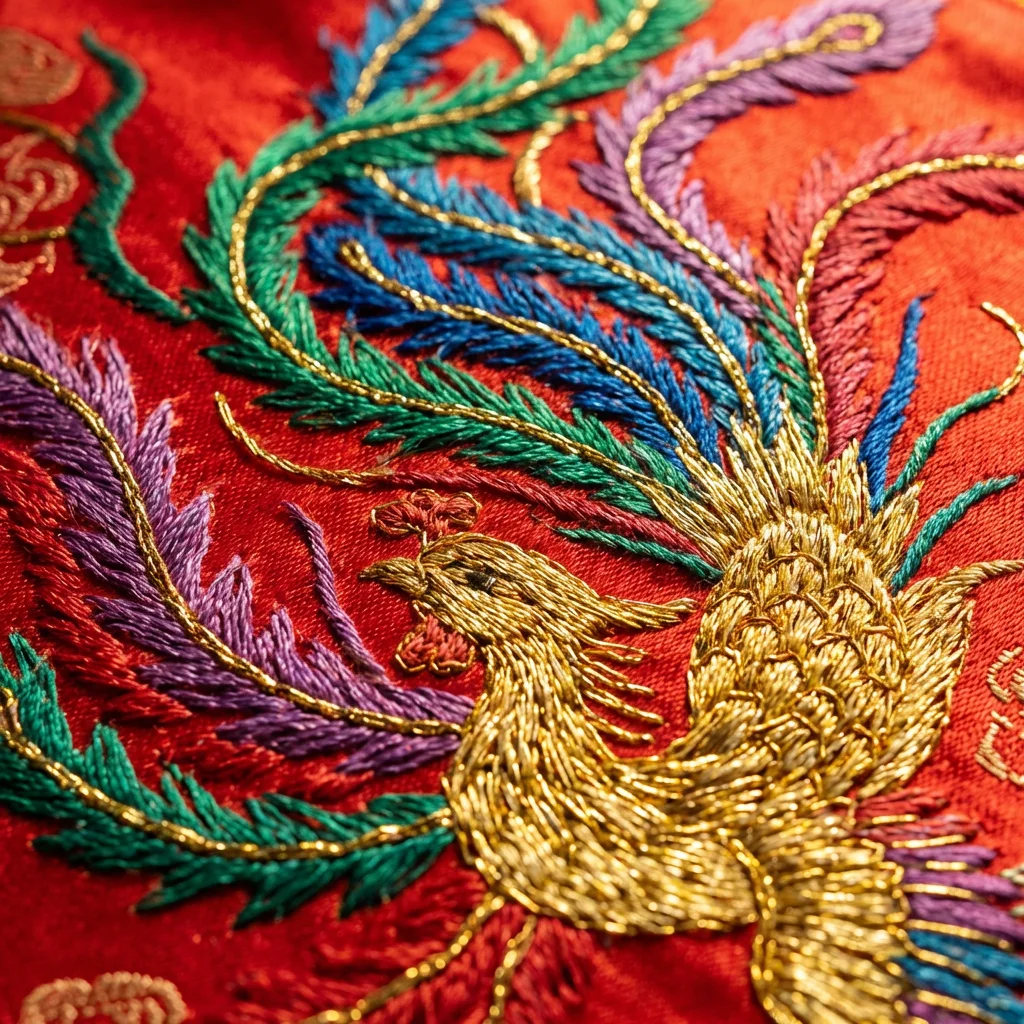
The most important symbol in Miao Embroidery is the Butterfly Mother (Mei Bang Mei Liu). According to Miao legend, the Butterfly Mother laid twelve eggs, from which the first humans, gods, and animals were born. You will find her in almost every piece of Miao embroidery—sometimes clearly depicted, and other times hidden within abstract patterns. Wearing the Butterfly Mother is a way for the Miao people to honor their creator and seek protection for their families.
2. Bold Geometrics and Mythical Creatures
Unlike the realistic styles of Su or Xiang, Miao Embroidery is highly abstract and geometric. It features mythical creatures like the "Fish-Dragon" or the "Centipede-Dragon," reflecting a spiritual world where everything is interconnected. The patterns often represent the rivers and mountains crossed by the Miao during their great historical migrations, turning every garment into a map of their ancestors" journey.
3. Techniques: Braid-Stitch and Tin Embroidery
Miao artisans use several unique techniques. The Braid-Stitch involves braiding silk threads before sewing them onto the fabric, creating a thick, rope-like texture that is incredibly durable. Another rare style is Tin Embroidery, where fine strips of tin foil are woven into the pattern, giving the garment a metallic shimmer that resembles silver—a metal that is deeply sacred to the Miao people.
4. Colors of the Heart: Indigo, Pink, and Gold
Miao embroidery is famous for its vibrant, high-contrast palette. Most pieces start with a base of dark indigo hand-dyed cloth. On top of this, artisans use brilliant shades of neon pink, turquoise, and gold. This combination reflects the "joy in hardship" of the Miao people and their love for the vibrant wildflowers and birds of their mountain homes.
5. FAQ: Understanding Miao Embroidery Symbols
Is Miao embroidery only for women?
Traditionally, it is the women who create the embroidery, often starting as young as six or seven years old. However, the finished pieces are worn by both men and women during festivals and important rituals.
Why is it called a "History Book"?
Because the Miao had no written language for a long time, they recorded their myths, migration routes, and social laws in the patterns of their clothes. A skilled elder can "read" an old jacket like a book.
Can I buy authentic Miao embroidery?
Yes, but be careful! Authentic Miao embroidery is handmade and very labor-intensive. Many tourist souvenirs use machine-made patterns. Look for irregular stitches and natural indigo dye as signs of authenticity.
6. Conclusion
Miao Embroidery is a living bridge to the ancient world. It is a testament to the resilience of a culture that refused to be forgotten. Every stitch is a story, and every color is a prayer. By appreciating Miao embroidery, we are not just looking at a craft—我们是在阅读一部关于人类精神的伟大史诗。
From the mountain villages to the looms of the ancients: Next, we begin our new series on Dyeing and Weaving with an introduction to the "Tapestry Silk"—Kesi!