


 Posted an update: 2026-4-1 13:12:12 105
Of all the treasures from China’s "Golden Age," none capture the elegance and cosmopolitan spirit of the era quite like the Tang Dynasty bronze mirror. Beyond their functional use, these mirrors were masterpieces of metalwork, carrying intricate symbols of luck, love, and the universe.
Reflecting the Golden Age: The Bronze Mirrors of the Tang Dynasty
The Tang Dynasty (618–907 AD) was a period of unprecedented prosperity and cultural exchange. This vitality is perfectly mirrored—literally—in the evolution of bronze craftsmanship. Tang mirrors moved away from the thin, geometric designs of the Han and Sui dynasties, embracing thicker, more luxurious forms with high-relief decorations that reflected the influence of the Silk Road.
1. The Art of the "Sea-Horse and Grape" Mirror
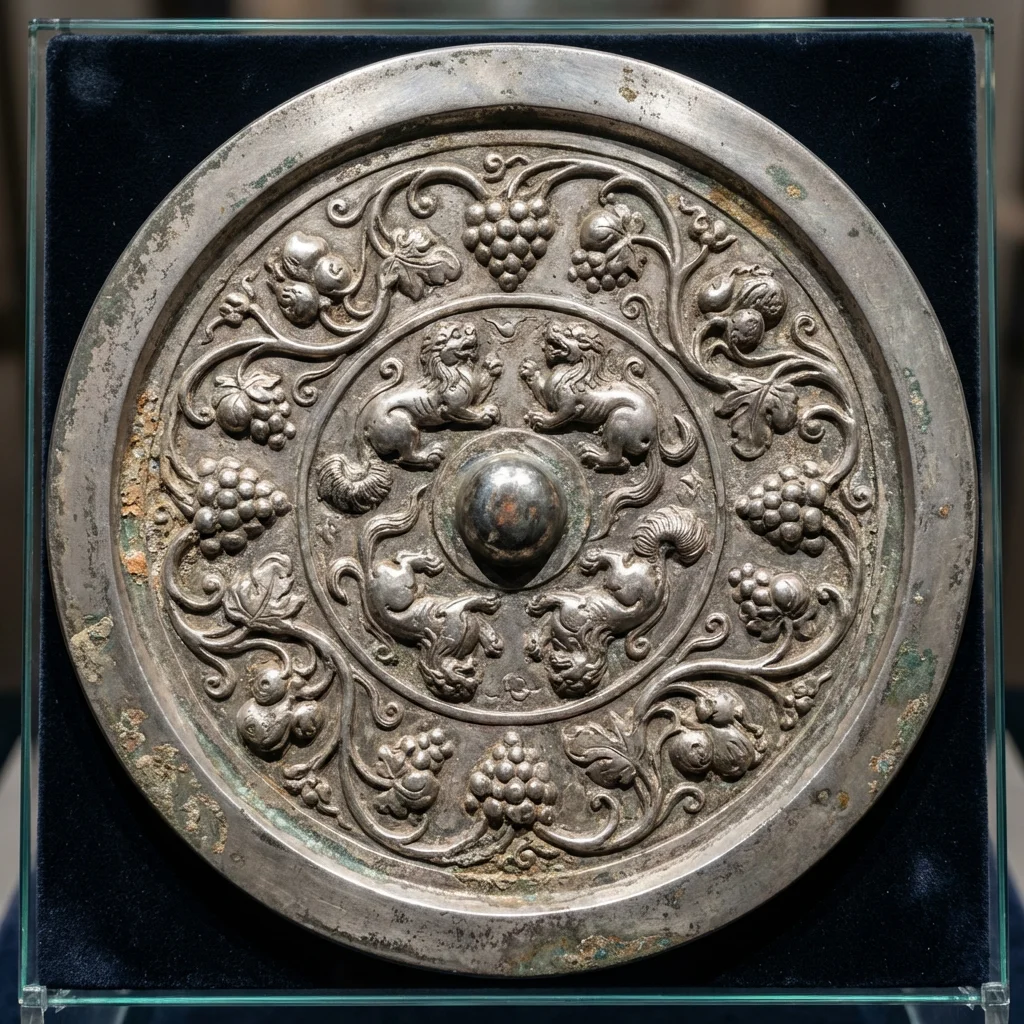
The most iconic design of the Tang period is the "Hai-ma-pao-tao" (Sea-Horse and Grape) mirror. These mirrors feature a central knob surrounded by lions (often called "sea-horses") playing among lush grapevines. Grapes were a relative novelty in China, introduced from Central Asia, making these mirrors a status symbol that signaled the owner"s sophisticated, international taste.
2. Cosmopolitan Influences: The Silk Road in Bronze
Tang artisans were not afraid to experiment. They incorporated patterns from Sassanid Persian silverware, such as floral medallions and pearl borders. The shapes also became more diverse; in addition to traditional round mirrors, Tang mirrors were cast in flower-petal shapes (eight-lobed) and square formats, reflecting a shift toward more naturalistic and fluid aesthetics.
3. Craftsmanship: The Silver-Grey Lustre
A hallmark of Tang mirrors is their high tin content (around 20-25%), which gave them a brilliant, silver-grey lustre after polishing. Many high-end mirrors were also silver-backed or gilded. Techniques like Jin-yin-ping-tuo (inlaying gold and silver foil into lacquer) reached their zenith during this time, creating mirrors of breathtaking complexity and value.
4. Symbols of Love and Immortality
Mirrors were often given as wedding gifts or tokens of affection. Common motifs included paired phoenixes or magpies, symbolizing marital harmony. Others featured Daoist imagery, such as the Queen Mother of the West or the Moon Goddess Chang"e, representing the quest for immortality and spiritual enlightenment.
5. FAQ: Tang Dynasty Bronze Mirrors
How were Tang mirrors used?
One side was polished to a reflective shine for daily grooming, while the decorated back was held or displayed. They were often kept in silk pouches or on decorative stands.
What makes a Tang mirror different from earlier ones?
Tang mirrors are generally thicker, have higher relief (3D-like) decorations, and feature more organic, international motifs compared to the flatter, geometric styles of earlier dynasties.
6. Conclusion
The bronze mirrors of the Tang Dynasty are more than just archaeological artifacts; they are windows into the soul of an empire that was confident, curious, and incredibly creative. Every vine and mythical beast captured in bronze tells the story of a civilization that stood at the heart of the world.
Enjoyed this look into Tang artistry? Check out our series on Tang San-cai pottery and the evolution of Chinese metallurgy!