
The Bronze Drums (Tonggu) are unique to the cultures of southern China and Southeast Asia. Far from the ritual tripods of the north, these drums served as instruments of war, symbols of wealth, and conduits for agricultural magic for over two millennia.IntroductionWhile the Shang and Zhou dynasties were casting massive Ding tripods in the Central Plains, the southern regions were developing their own distinct bronze tradition: the Bronze Drum. These drums represent a fusion of musical instrument and sacred object, used by the ancestors of the Zhuang, Dong, and Miao peoples to communicate with the heavens and call for rain.The Design of the Sacred DrumThe most important part of the bronze drum is its flat surface. The center typically features a solar motif (a star with multiple rays), representing the sun as the source of life. Surrounding the sun are concentric rings of decoration, including flying birds, dancing people, and geometric patterns. These motifs tell the story of the ancient maritime and agricultural life of the southern peoples.The Symbolism of FrogsA unique feature of many southern bronze drums is the presence of bronze frogs sitting on the edges of the surface. In ancient southern cultures, frogs were associated with the arrival of rain. It was believed that beating the drum would mimic the sound of thunder, causing the frogs to croak and the rain to fall, ensuring a bountiful harvest.The Evolution of Style: From Wanjiaba to Dong SonThe earliest bronze drums, the Wanjiaba style (dating to the 6th century BC), were simple and often used as cooking vessels before being flipped over to serve as drums. Over time, the designs became increasingly sophisticated, culminating in the world-famous Dong Son style. These later drums were massive, highly decorated masterpieces that served as the ultimate status symbol for tribal chieftains.ConclusionThe ancient bronze drums are a testament to the cultural diversity and technological ingenuity of ancient China”s southern regions. They remain a vibrant symbol of heritage today, continuing to resonate through the festivals and rituals of modern ethnic minority groups. By studying these drums, we hear the enduring rhythm of a civilization that lived in harmony with the natural world.
Similar Posts
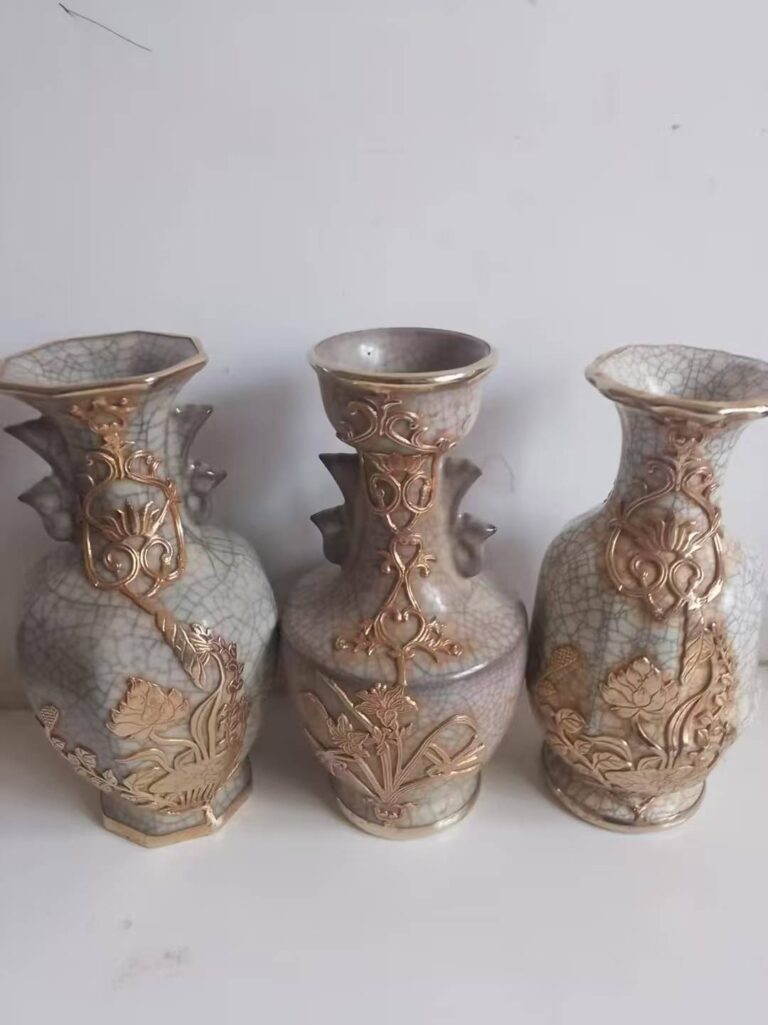
Gold-Inlaid Ge Ware Phoenix-Ear Vase: A Masterpiece of Classical Aesthetics Where Gold Meets Jade
In the magnificent tapestry of Chinese ceramic art, Ge ware (哥窑, Gē Yáo) holds an irreplaceable position, distinguished by its hallmark “golden wire and iron thread” crackle glaze and the characteristic “purple rim and iron foot.” The gold-inlaid Ge ware-style phoenix-ear vase represents an innovative creation that builds upon the classical aesthetics of Ge ware…