


 Posted an update: 2026-4-2 11:11:10 75
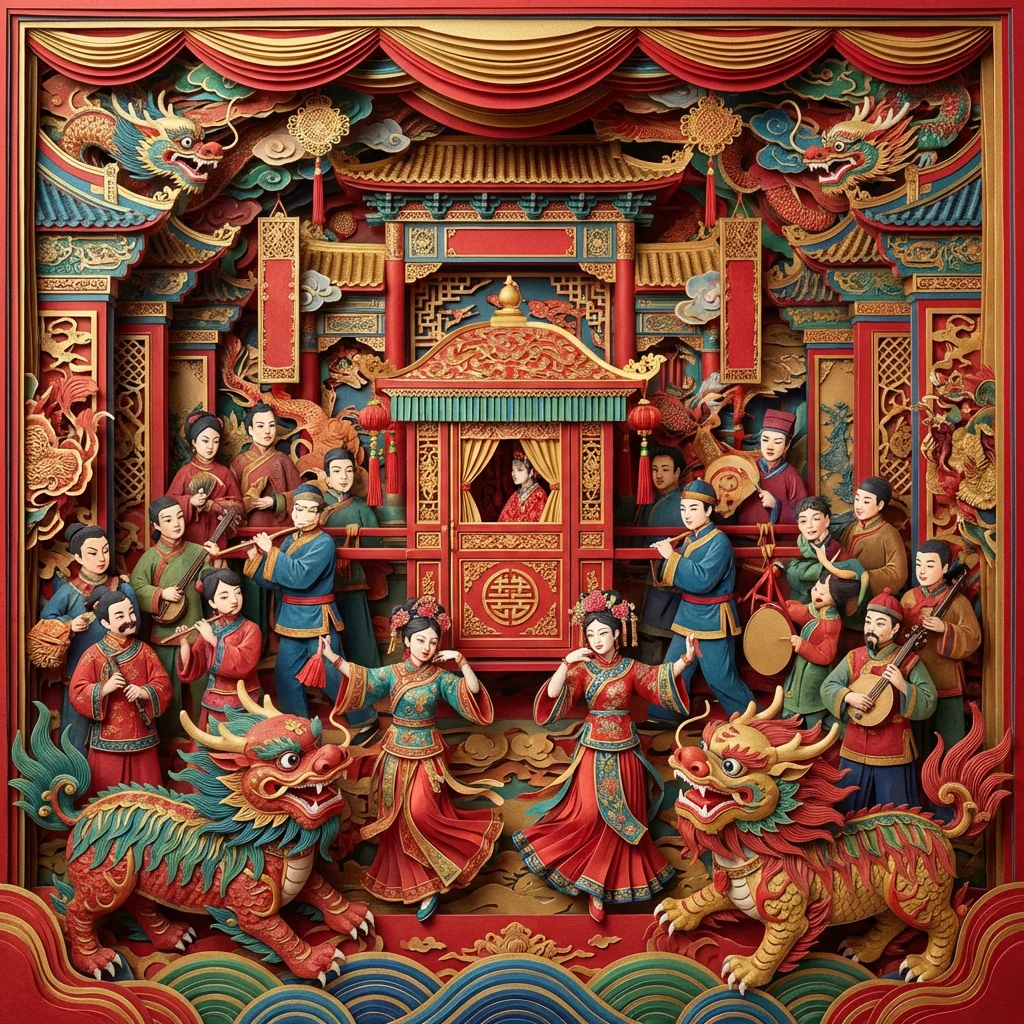
The geography of China is reflected in its paper cuts. Like the people themselves, the paper-cutting styles of the North and South have developed distinct "personalities"—one rugged and expressive, the other delicate and refined.
Table of Contents
1. The Northern Style: Bold and Earthy
Northern paper cutting (centered in Shaanxi and Shanxi) is characterized by its broad lines and powerful, exaggerated forms. These paper cuts are designed to be seen from a distance, pasted on the large windows of earthen "Yaodong" dwellings. The subjects are often related to farm life—fat pigs, powerful oxen, and scenes of harvest—rendered with a raw, primal energy.
2. The Southern Style: Intricate and Ethereal
In contrast, the Southern style (exemplified by the Yangzhou and Foshan traditions) is famous for its incredible delicacy. Yangzhou paper cuts are said to be "as fine as a hair," featuring microscopic detail in floral and bird motifs. Foshan paper cuts often incorporate gold foil and copper accents, reflecting the historical wealth and sophisticated merchant culture of the region.
3. Modern Regional Fusion
Today, the lines between regional styles are blurring. Modern paper-cutting artists often combine the bold, expressive energy of the North with the technical finesse of the South to create a "New Chinese" style that is suitable for modern architectural spaces and contemporary art galleries.
4. Frequently Asked Questions
Q: Which region is the "capital" of paper cutting?
A: Several regions claim the title, but Yuxian in Hebei and Yangzhou in Jiangsu are perhaps the most famous for their long history and highly specialized techniques.
Q: Why do Northern paper cuts use thicker paper?
A: The thicker paper is necessary to withstand the strong, dry winds of the Northern plains, ensuring the paper cut doesn"t tear or blow away from the window.