


 Posted an update: 2026-4-2 11:09:17 23
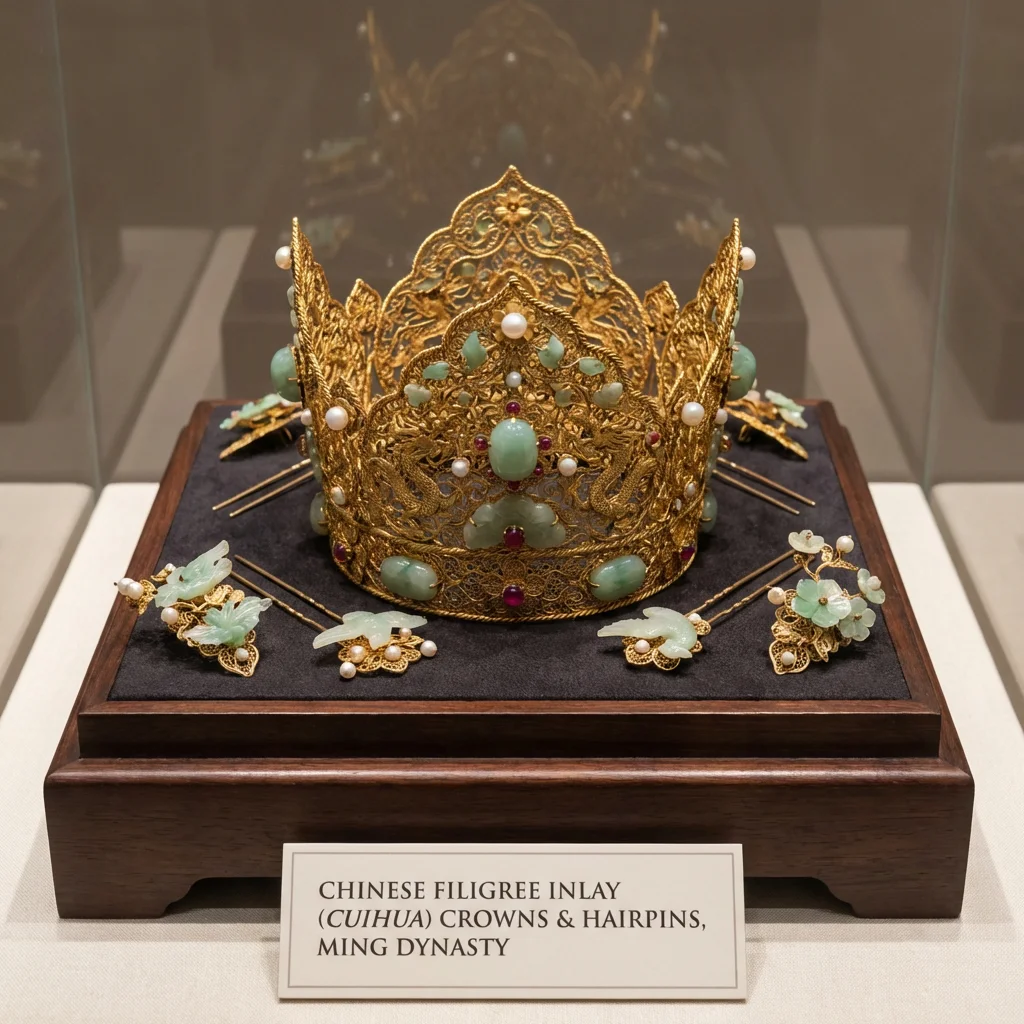
Every element in a piece of filigree inlay jewelry is chosen for its symbolic weight. In a culture where jewelry was often given as an amulet or a blessing, the patterns woven into the gold wire are a silent prayer for prosperity, longevity, and protection.
Table of Contents
1. The Dragon and Phoenix: Ultimate Harmony
In filigree inlay, the dragon (Long) and phoenix (Feng) are the most prestigious motifs. The dragon, woven from hundreds of microscopic gold scales, represents masculine energy (Yang) and the Emperor. The phoenix, with its gossamer-thin filigree wings, represents feminine energy (Yin) and the Empress. Together, they symbolize a perfect, harmonious union—making them the most popular choice for wedding jewelry.
2. The Bat and the Cloud: A Prayer for Fortune
The bat ("Fu") is a homophone for "Fortune" in Chinese. Filigree hairpins often feature tiny gold bats hidden among "Ruyi" clouds. This motif represents "Fortune coming from the heavens." The intricate, scrolling wirework used to create the clouds provides a sense of movement and ethereal lightness to the heavy gold piece.
3. Peonies and Lotuses: Prosperity and Purity
Flowers are the most common subject for the "filling" and "pinching" techniques. The peony (Mudanyuan) is the "King of Flowers," representing wealth and honor. The lotus (Lianhua) symbolizes spiritual purity and the ability to rise above worldly concerns. Each petal is a individual filigree structure, showcasing the artisan"s ability to mimic the delicate beauty of nature in metal.
4. Frequently Asked Questions
Q: Why is red coral often used with gold filigree?
A: Red is the color of joy and protection in Chinese culture. The vibrant red of coral provides a powerful visual and symbolic contrast to the golden filigree.
Q: Do modern filigree pieces still use these symbols?
A: Yes. While the designs may be more streamlined, the core symbols of the dragon, phoenix, and lotus remain central to the identity of Chinese filigree art.