


 Posted an update: 2026-4-2 11:05:50 31
The final stages of cloisonne production—polishing and gilding—are where the object achieves its breathtaking brilliance. This is the stage where the rough, fire-blackened piece is transformed into a shimmering treasure fit for a king.
Table of Contents
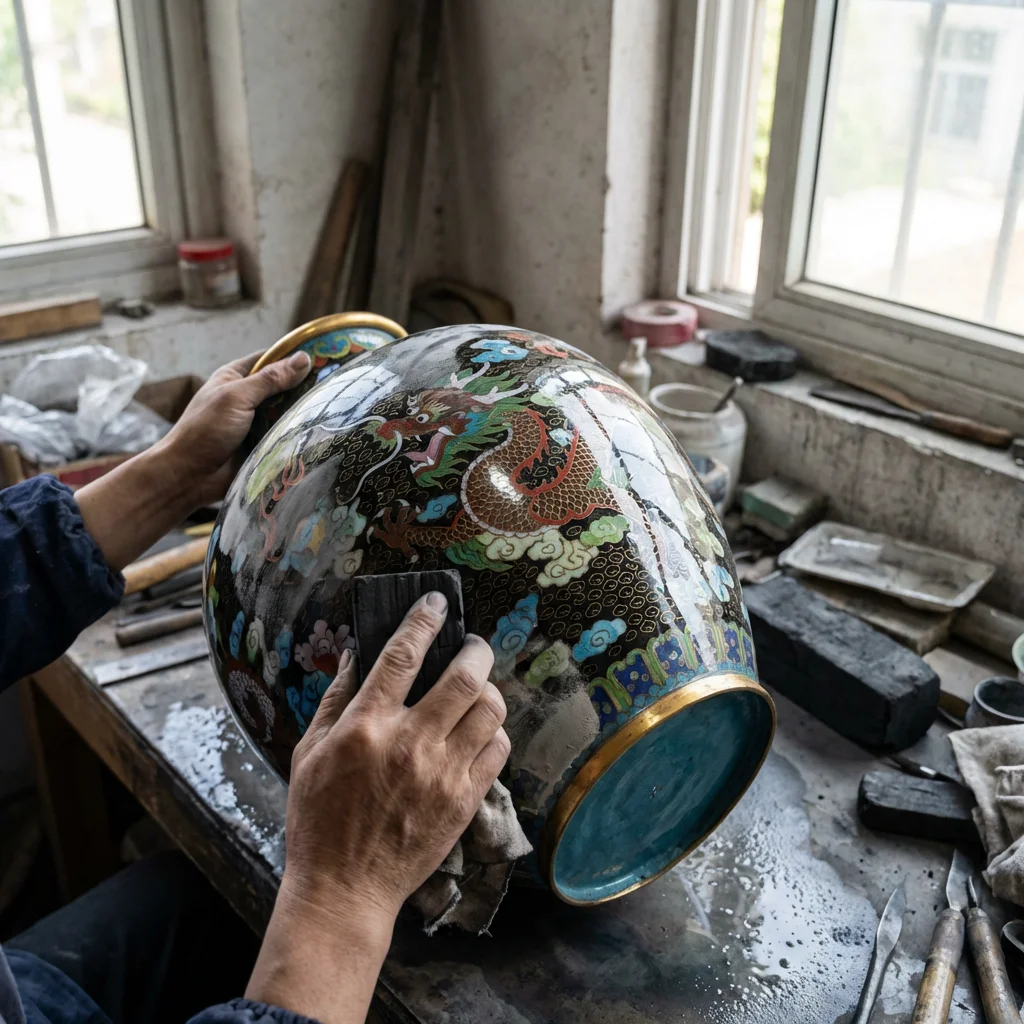
1. Polishing with Charcoal
After firing, the enamel surface is rough and the copper wires are oxidized black. The artisan must hand-polish the entire surface using a series of increasingly fine whetstones and specialized charcoals. This labor-intensive process grinds down the enamel until it is perfectly flush with the tops of the wires, revealing the intricate pattern for the first time.
2. The Alchemy of Gilding
Once polished, the exposed copper wires and any other copper parts (like the rim or base) are gilded. Historically, this was done using an "amalgam" of gold and mercury, which was applied to the metal and then heated to evaporate the mercury, leaving a thick layer of pure gold behind. Today, electro-gilding is more common for safety, but it still provides the signature opulent shimmer.
3. Achieving the Final Luster
The final step is a gentle buffing to bring out the brilliance of the gold and the clarity of the enamel colors. The contrast between the vibrant, glass-like enamel and the shimmering gold-plated wires is what gives cloisonne its unique and enduring appeal as a "luxury of the eyes."
4. Frequently Asked Questions
Q: Does the gold ever wear off?
A: High-quality imperial-grade gilding is very thick and can last for centuries. However, excessive cleaning with abrasive materials can slowly wear away the gold layer.
Q: Why use charcoal for polishing?
A: Specialized charcoal is abrasive enough to grind the glass enamel but soft enough not to leave deep scratches, resulting in a mirror-like finish.