


 Posted an update: 2026-4-2 11:05:49 32
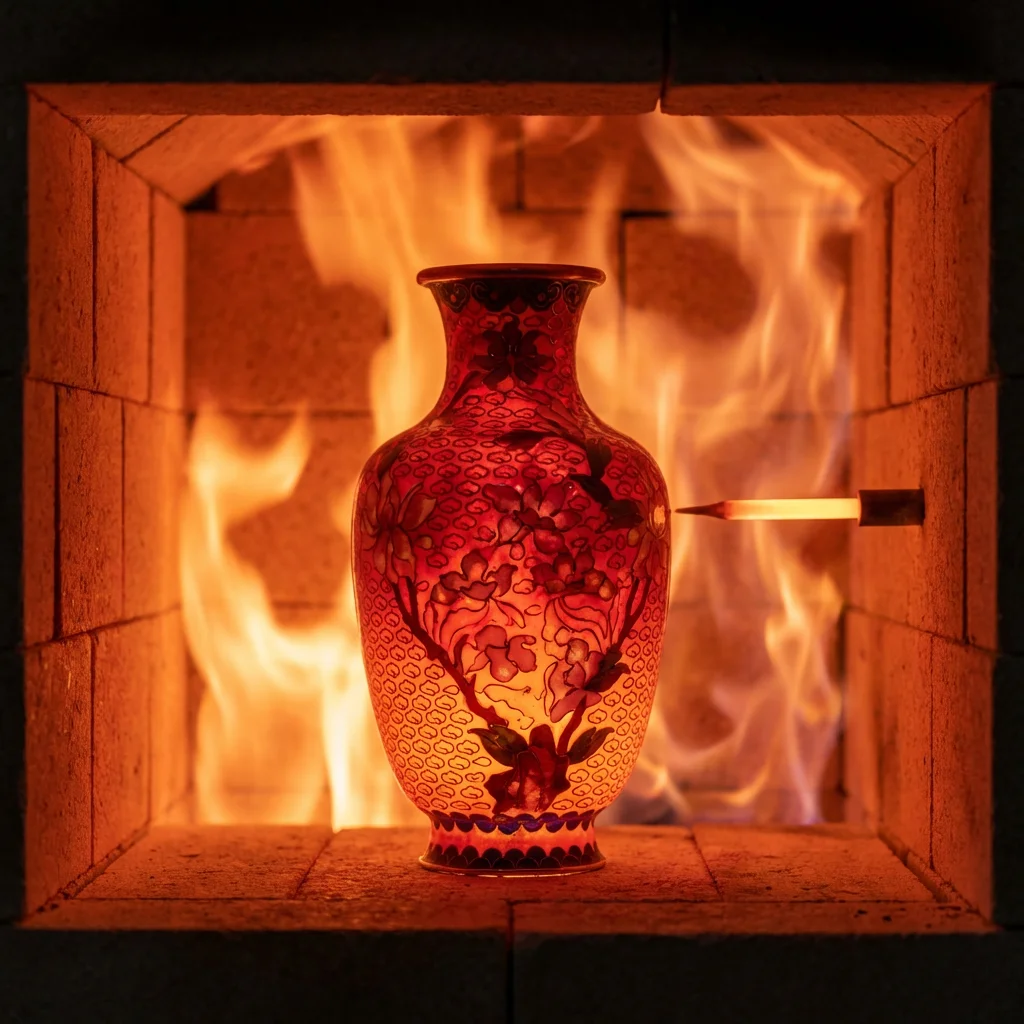
The heat of the kiln is where the magic of cloisonne truly happens. In this stage, the dull mineral pastes are transformed into vibrant, glowing glass, permanently bonded to the copper base in a process of intense thermal alchemy.
Table of Contents
1. The Sintering Process
Sintering is the process where the individual particles of the enamel powder fuse together into a solid, glass-like mass. As the temperature rises above 800°C, the minerals melt and flow into the corners of the cloisons, creating a perfectly smooth, hard surface. This transformation is permanent; once cooled, the enamel becomes a part of the vessel itself.
2. Precision Temperature Control
A master firer must understand the "thermal signature" of every color. For example, red enamel often requires a lower temperature to prevent the color from "burning out," while blues can withstand higher heat. The kiln"s atmosphere must also be carefully managed to prevent oxidation of the copper wires, which would cause the enamel to bubble or discolor.
3. The Risks of the Kiln
Firing is the most dangerous stage of production. If the temperature rises too quickly, the copper body can expand faster than the enamel, causing the glaze to shatter. If the temperature is too high, the silver solder holding the wires can melt, causing the entire pattern to shift or collapse. Each successful firing is a victory of skill over the volatile energy of the fire.
4. Frequently Asked Questions
Q: How many times is a cloisonne piece fired?
A: Usually between 3 to 10 times. Initial firings bond the wires and the first layers of enamel, while subsequent firings fill in the gaps and smooth the surface.
Q: Can traditional wood kilns still be used?
A: While many modern workshops use electric or gas kilns for better control, some high-end artisans still use traditional charcoal-fired kilns, believing the "living fire" produces a more vibrant color.