


 Posted an update: 2026-4-2 11:04:59 40
For most of its history in China, cloisonne was an art of the court. Its opulence, vibrant colors, and technical complexity made it the perfect symbol of imperial power and prestige, especially during the Qing Dynasty.
Table of Contents
1. The Imperial Workshop (Zaobanchu)
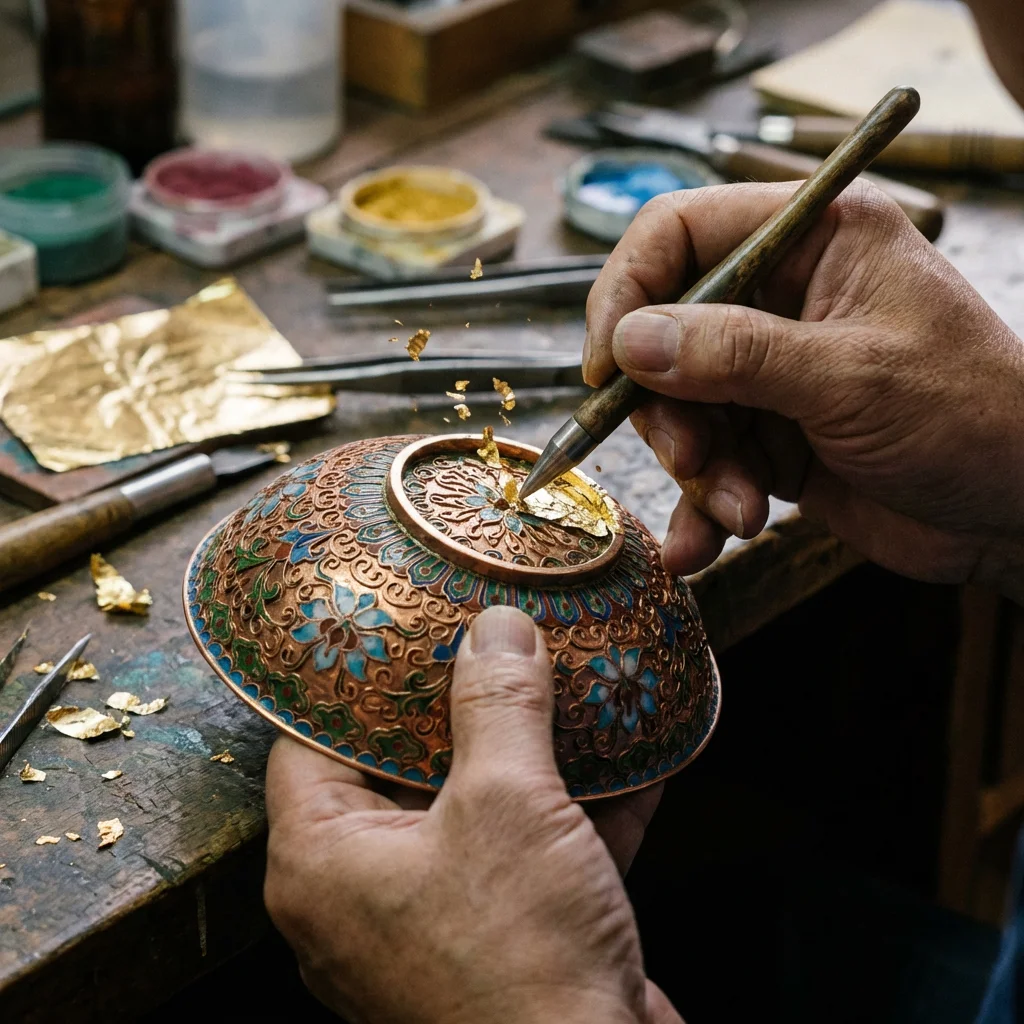
During the Qing Dynasty, the Kangxi, Yongzheng, and Qianlong emperors established dedicated workshops within the Forbidden City to produce cloisonne for the palace. These "Imperial Zaobanchu" were staffed by the finest masters in the country, who were given access to the highest-quality materials, including rare minerals and pure gold.
2. Cloisonne in Palace Rituals
Cloisonne was not just decorative; it was functional. Huge incense burners, altar sets (the "Five Offerings"), and throne screens were all made of cloisonne. Its vibrant "Jingtailan" blue was considered highly auspicious and was used extensively in state and religious ceremonies to emphasize the Emperor"s role as the Son of Heaven.
3. Qianlong’s Passion for Perfection
The Qianlong Emperor was perhaps the greatest patron of cloisonne. Under his reign, the craft reached its technical pinnacle. He demanded unprecedented complexity in wirework and the development of new enamel colors like "Famille Rose" and opaque whites. Qianlong-era cloisonne is often characterized by its heavy, stable forms and incredibly dense, fine-wired patterns.
4. Frequently Asked Questions
Q: Was cloisonne ever used by ordinary people?
A: Not really. For centuries, the cost of materials and labor made it prohibitive. It was only in the late 19th and early 20th centuries that cloisonne began to be made for a wider commercial market.
Q: Why does imperial cloisonne look so heavy?
A: Imperial pieces were built on thick copper bases to ensure stability and were heavily gilded with gold, adding to their physical and visual weightiness.