


 Posted an update: 2026-4-2 10:55:51 28
The journey from a green stalk to a wearable fiber is a labor-intensive process that requires patience and precision. Traditional Chinese hemp processing has remained largely unchanged for centuries, relying on natural elements and human touch.
Table of Contents
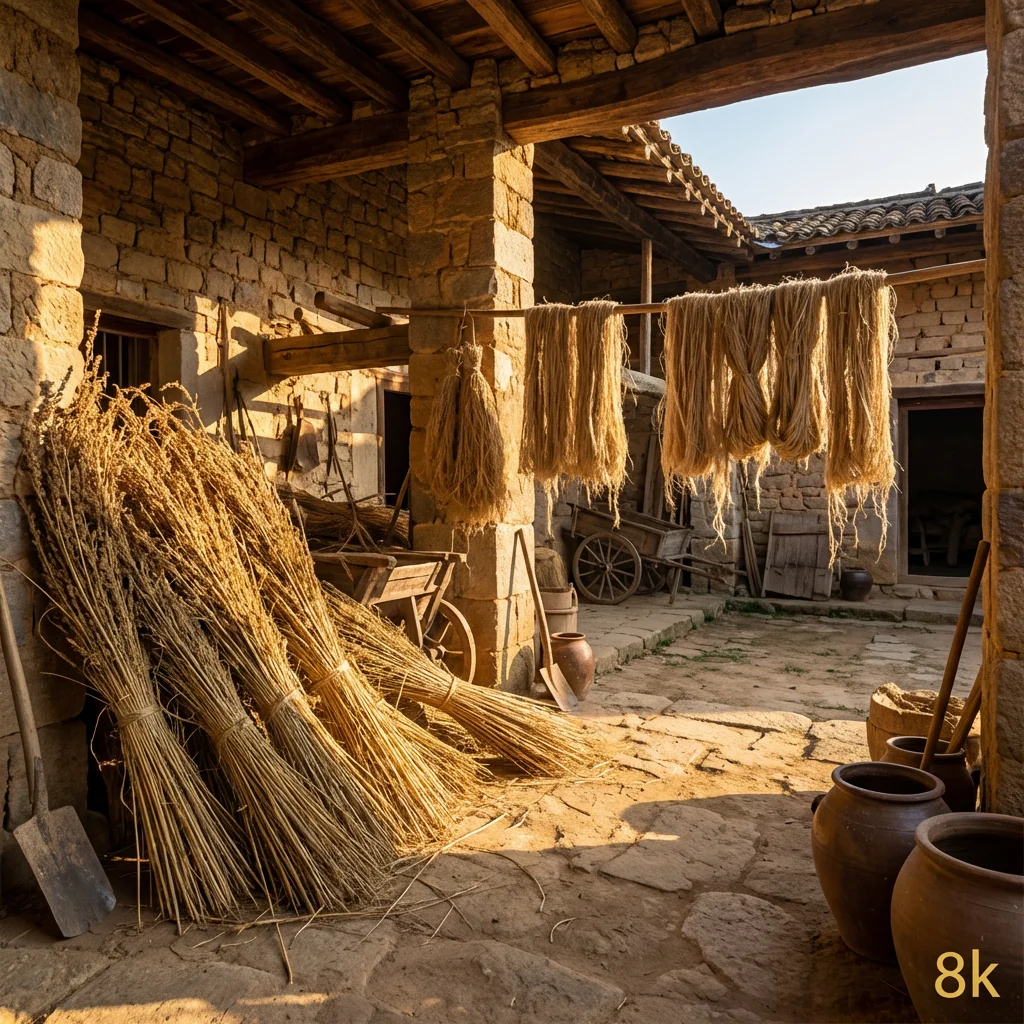
1. Harvesting and Retting
Hemp is typically harvested in late summer. After cutting, the stalks are bundled and placed in water (ponds or slow streams) for "retting." This biological process uses moisture and bacteria to break down the pectin that binds the fibers to the woody core. The quality of the water and the timing are crucial for the final fiber"s strength.
2. Stripping and Degumming
Once retted, the outer bark is stripped away by hand. These raw strips are then boiled in water with wood ash (a natural alkali) to "degum" them, removing remaining lignins and making the fibers soft and pliable. The fibers are then washed repeatedly in clean water and hung to bleach in the sun.
3. Spinning into Thread
The dried fibers are split into fine strands using fingernails or a small comb. These strands are then twisted together using a drop spindle or a spinning wheel. In many ethnic minority villages in Guizhou and Yunnan, women can be seen spinning hemp thread even while walking to the fields.
4. Frequently Asked Questions
Q: Why is wood ash used in the process?
A: Wood ash is rich in potassium carbonate, which acts as a gentle alkaline agent to dissolve natural resins without damaging the cellulose fibers.
Q: How long does the entire process take?
A: From harvest to a spool of thread, it can take anywhere from 3 to 6 weeks depending on weather conditions for retting and sun-bleaching.