


 Posted an update: 2026-4-1 14:05:14 107
In the city of Dongyang, the wood seems to grow into the sky. Dongyang wood carving is the "imperial" art of Zhejiang, where the depth of the forest meets the depth of the soul.
Dongyang Wood Carving: The Multi-layered Mastery and the "Imperial" Splendor of Zhejiang
Known as "Ba-mu-diao" (White wood carving), Dongyang wood carving is famous for its intricate, multi-layered relief style. Located in Zhejiang Province, Dongyang has been a center of wood carving excellence since the Tang Dynasty. Its specialty is "shallow relief," where the artisan creates a sense of immense depth and perspective within a relatively thin piece of wood. It is the art of the scholar and the emperor, a masterpiece of spatial storytelling.
1. The Multi-layer Relief: Weaving with Wood
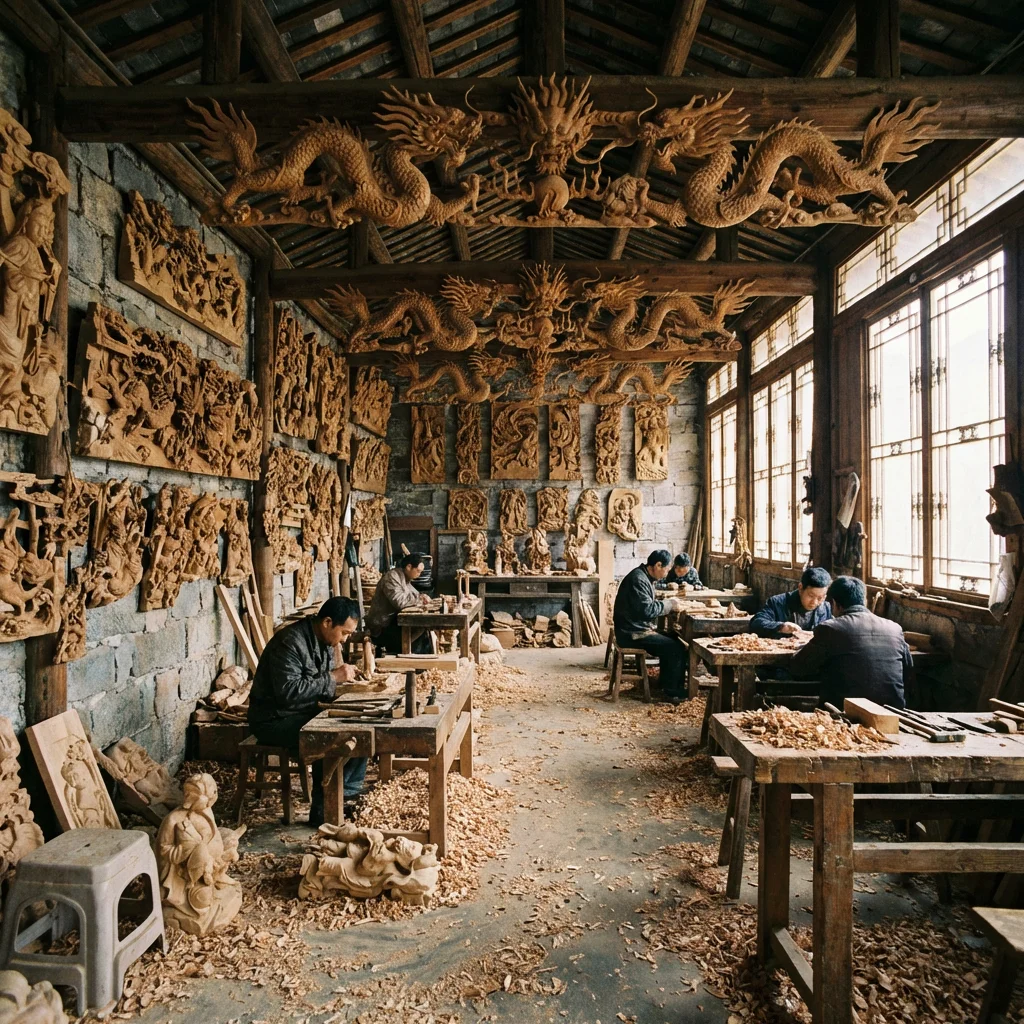
What sets Dongyang carving apart is its incredible use of Multi-layered Relief. A single panel might have five or six layers of depth, with figures in the foreground appearing to stand completely free from the background landscape. This technique requires an almost supernatural understanding of three-dimensional space, as the carver must calculate the position of every leaf and face before removing a single shaving of wood.
2. The Imperial Connection: Carving for the Palace
During the Ming and Qing dynasties, the masters of Dongyang were the "Imperial Woodcarvers." Much of the high-end interior work in the Forbidden City, including the magnificent throne screens and the intricate ceiling panels, was crafted by Dongyang hands. The style was chosen for its elegance, its lack of heavy lacquer, and its ability to showcase the natural beauty and grain of the high-quality woods used in the palace.
3. Scenic Storytelling: Landscapes and Operas
A Dongyang panel is often a visual poem. The themes range from the classic "Three Kingdoms" mythology to serene landscape scenes of the Jiangnan water towns. Because the relief is so detailed, the carvers can capture the wind in a willow tree or the expression on a tiny figure"s face. These panels were not just decoration; they were windows into a world of myth, history, and natural beauty for the families that owned them.
4. Tools of the Trade: The Precision of the Blade
A Dongyang master uses a unique set of tools, including very long-handled chisels that allow them to reach deep into the multi-layered carvings. The technique is focused on "White Carving," meaning the wood is left in its natural state without heavy paint or gilt. This places all the emphasis on the skill of the carver and the quality of the wood, making Dongyang work a pure celebration of the artisan"s touch.
5. FAQ: Understanding Dongyang Mastery
How long does a single panel take to carve?
For a high-quality, complex panel, it can take a master carver several months to a year. It is a slow, meditative process that cannot be rushed, as every stroke must be perfect to maintain the overall depth and harmony of the scene.
Can I buy modern Dongyang carvings?
Yes! Dongyang is still a thriving center of the craft. While many workshops now use modern tools for the initial stages, the final detail work is still done by hand by masters who have spent their lives learning the "dance" of the chisel.
What is the best way to display a Dongyang panel?
Because of its incredible depth, Dongyang work looks best when lit from the side or from above. This creates long shadows that highlight the multi-layered relief and bring the carved scenes to life.
6. Conclusion
Dongyang wood carving is a triumph of the human imagination over the limits of material. It shows us that with patience and skill, a flat piece of wood can be turned into a universe of stories. As we admire the deep, layered landscapes of a Dongyang screen, we are looking at the soul of Zhejiang and the eternal craftsmanship of China. It is a masterpiece in every grain.
From the white wood to the gold: Next, we explore the Golden Splendor of the South—Chaozhou Gilt Wood Carving!