


 Posted an update: 2026-4-1 13:51:07 26
It is called "Carved Silk" because it looks like it was made with a chisel, not a shuttle. Kesi (tapestry silk) is the most difficult and expensive weaving technique in the world, once reserved only for emperors and gods.
Kesi Tapestry: The "Carved Silk" That Is More Valuable Than Gold
Kesi (literally "cut silk") is a unique form of Chinese silk tapestry weaving. Unlike standard weaving where the weft thread travels across the entire width of the loom, Kesi uses small shuttles to weave individual areas of color. This creates a "cut" effect where colors meet, making the final fabric look like a masterpiece of carving. For over a thousand years, Kesi has been known as "an inch of Kesi is worth an inch of gold."
1. The "Cut" Effect: The Magic of Broken Wefts
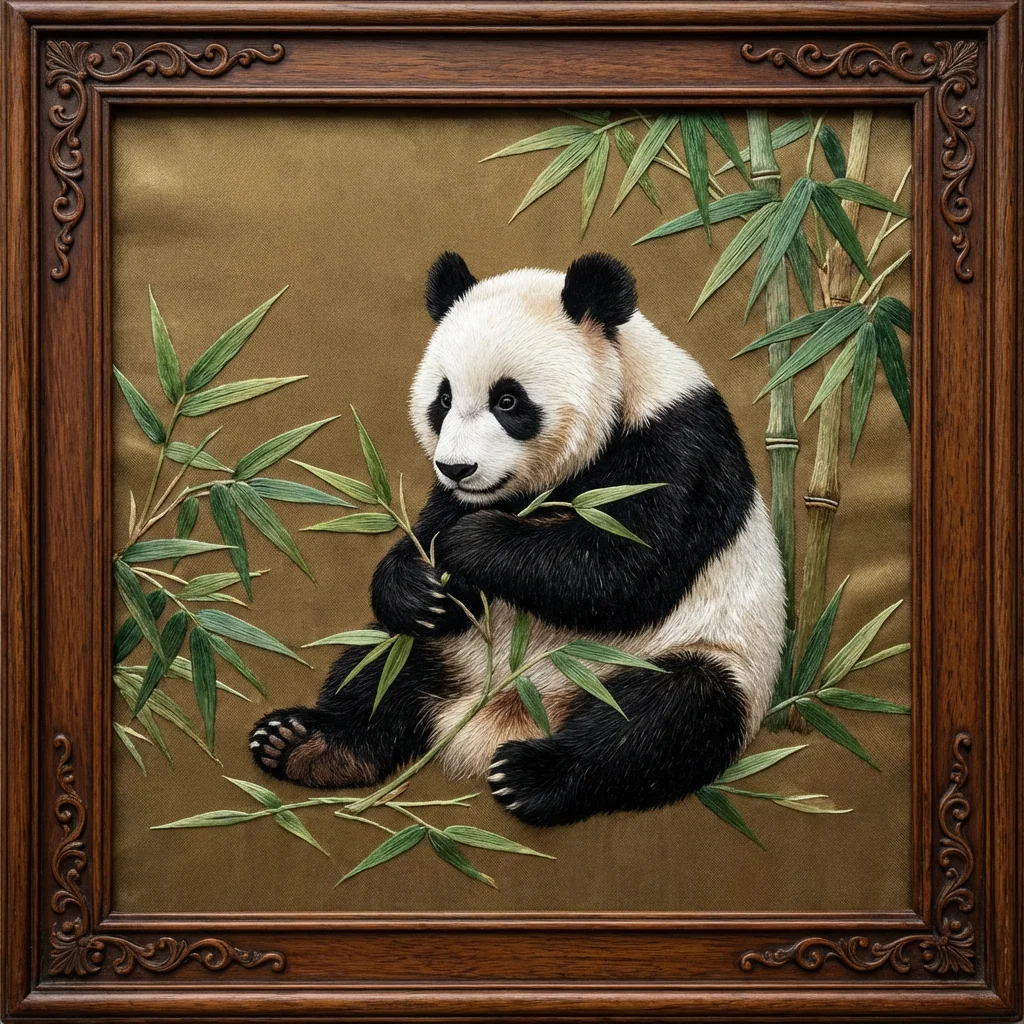
The hallmark of Kesi is the "Tong-Jing-Duan-Wei" (continuous warp, broken weft) technique. If you hold a piece of Kesi up to the light, you can see tiny gaps along the borders of the different colored areas. This creates a sharp, three-dimensional effect that mimics the lines of a woodcarving or a painting. Because the weft threads are not continuous, the weaver has total freedom to create complex, non-repeating designs that no other loom can achieve.
2. A Year for a Meter: The Extreme Labor of Kesi
Kesi is incredibly labor-intensive. A master weaver might use hundreds of different shuttles to create a single intricate pattern. Because every color change requires a manual stop and start, a single meter of high-quality Kesi can take several months or even a year to complete. This extreme dedication is why Kesi has always been the ultimate symbol of luxury and patience.
3. Imperial Heritage: The Fabric of the Palace
During the Song and Ming dynasties, Kesi was strictly controlled by the imperial court. It was used for the most important items: royal dragon robes, Buddhist thangkas, and official scrolls. Because it is as strong as it is beautiful, Kesi was often used to back high-end paintings and calligraphy, protecting them for centuries. Even today, Kesi remains the "royal standard" of Chinese textiles.
4. Painting with Silk: Kesi and Fine Art
Kesi reached its artistic peak when it began to replicate fine art paintings. Weavers would spend months studying a single ink-wash painting, then "paint" it in silk using thousands of microscopic color transitions. This "painting in silk" is considered one of the highest forms of traditional Chinese art, where the cold mechanical loom is transformed into a delicate artist"s brush.
5. FAQ: Appreciating Kesi Art
How can I tell real Kesi from machine embroidery?
Look at the back! Real Kesi is reversible—the pattern is identical on both sides. Also, look for the "cut" effect (tiny gaps) where colors meet. Machine embroidery will have messy threads on the back and no gaps between colors.
Why is it so much more expensive than regular silk?
Because it cannot be made by modern automated machines. Every thread must be placed by hand, and it requires a level of skill that takes decades to master.
How do I store Kesi?
Kesi should be stored flat, out of direct sunlight, and in a temperature-controlled environment. Because it is silk, it is sensitive to moisture and pests, so traditional cedar boxes are a great choice for storage.
6. Conclusion
Kesi is the soul of Chinese weaving. It represents a level of craftsmanship that challenges our modern sense of time and value. It is a reminder that some things can only be achieved through slow, deliberate work and a deep love for the craft. To touch a piece of Kesi is to touch the zenith of human textile engineering.
Continuing our journey of luxury: Next, we explore the vibrant and ancient Shu Brocade of the Southwest!