


 Posted an update: 2026-4-1 13:28:49 33
When the First Emperor of Qin (Qin Shi Huang) sought to conquer the afterlife, he didn’t just take an army of terracotta warriors; he took two magnificent bronze chariots. These 1/2 scale masterpieces are the finest examples of ancient mechanical engineering ever discovered.
The Chariots of the First Emperor: Engineering for the Eternal Journey
Unearthed in 1980 near the Mausoleum of the First Emperor in Xi"an, the Qin Bronze Chariots (c. 210 BC) are a testament to the sophistication of the Qin Empire. Composed of over 3,000 individual parts made of bronze, silver, and gold, these chariots represent the peak of pre-industrial precision, reflecting the power and mobility of the man who first unified China.
1. 3,000 Parts: A Marvel of Precision Assembly
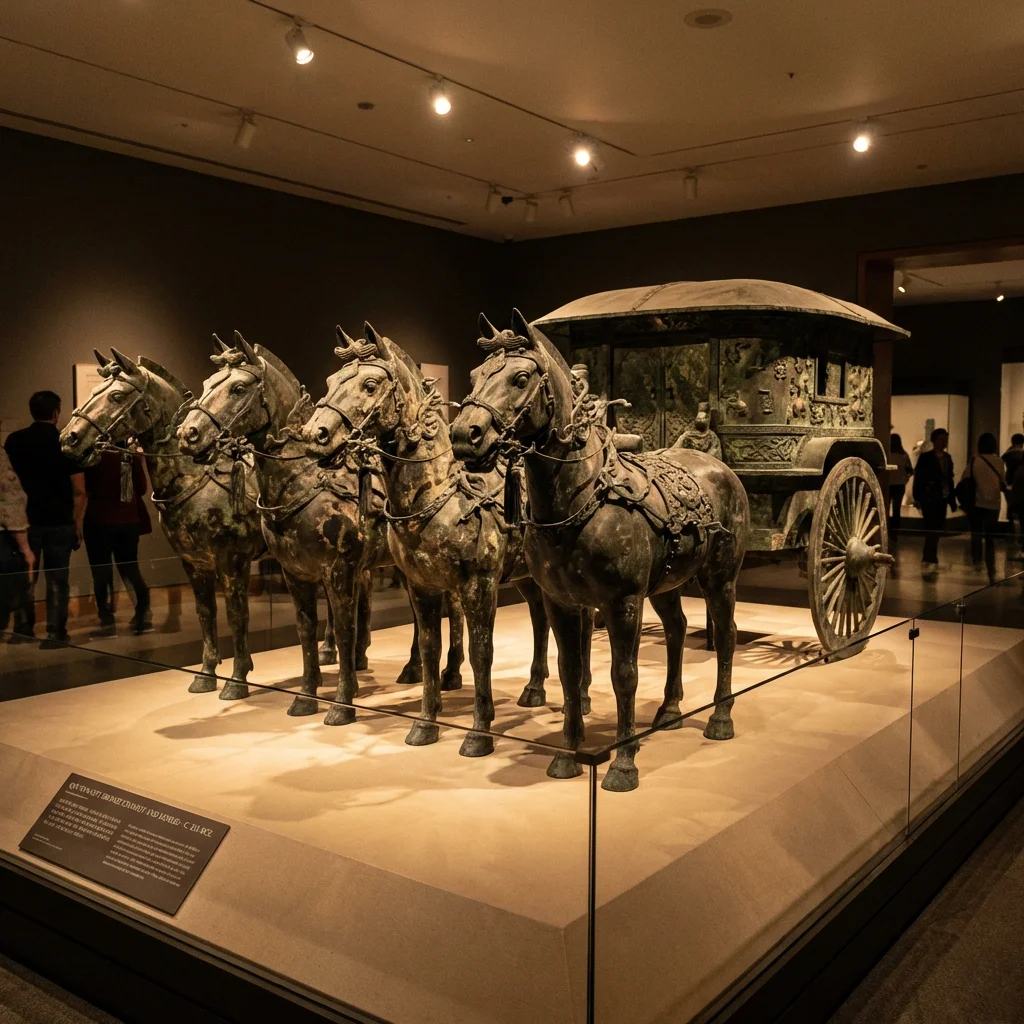
Each chariot set—consisting of a vehicle, four horses, and a driver—is incredibly complex. The horses feature realistic muscular definitions, and the wheels are designed with sophisticated spokes that could actually turn. The umbrella over the chariot is an engineering marvel in itself, featuring a mechanical joint that allowed it to be tilted to block the sun or wind, regardless of the chariot"s direction.
2. Gold and Silver: The Imperial Fittings
While the primary material is bronze, the harnesses and decorative elements are heavily inlaid with gold and silver. Over 14 kilograms of precious metals were used on each chariot. This was not just for luxury; it was a display of the Emperor"s absolute control over the resources of the known world and his divine status as the Son of Heaven.
3. Mobility and Status: The Emperor"s Fleet
The two chariots found represent different functions. Chariot No. 1 is an open "lead" vehicle with an umbrella, likely used for inspection tours. Chariot No. 2 is a closed "carriage" (An Che) with windows, designed for the Emperor"s personal comfort during long journeys. Together, they demonstrate the advanced state of transportation technology in the Qin Dynasty.
4. Metallurgy: Casting the Invisible Joints
The Qin artisans used a variety of advanced joining techniques, including casting-on, soldering, riveting, and socketing. Many of the joints are so fine that they are invisible to the naked eye. The bronze alloy used was specially formulated to be lighter yet stronger than traditional ritual bronzes, allowing for the creation of thin, durable walls for the chariot"s cabin.
5. FAQ: Understanding the Qin Chariots
Are they life-sized?
No, they are approximately 1/2 scale (half-size). Even at this scale, they are the largest and most complete ancient bronze chariots ever found.
Can the wheels still turn?
When they were first discovered, the mechanical parts were still functional. However, for preservation reasons, they are now kept in a static museum display.
Where can I see them?
They are on permanent display at the Emperor Qinshihuang"s Mausoleum Site Museum in Xi"an.
6. Conclusion
The Qin Bronze Chariots are a stunning reminder that 2,000 years ago, China was already a world leader in engineering and precision manufacturing. They are more than just art; they are the high-tech blueprints of an empire. To see them is to understand the momentum that drove the unification of the East.
From the machines of war to the spirits of nature: Next, we explore the fierce symbolism of Zoomorphic Bronze!