National Treasure
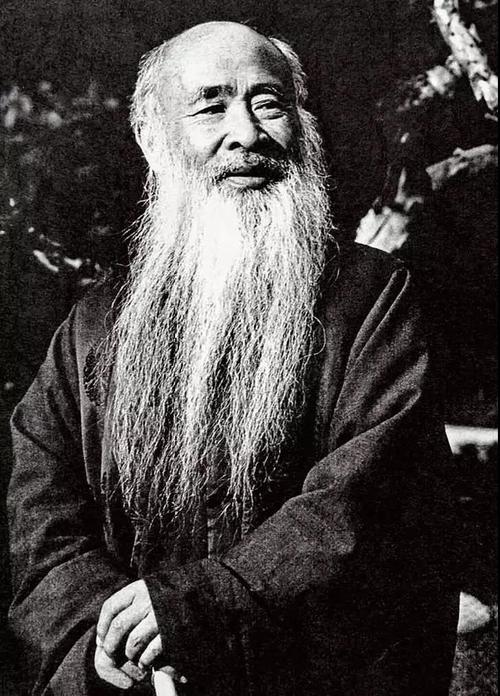
Zhang Daqian
The Greatest Master of Chinese Painting in 500 Years (五百年来第一人)
Birth Year
1899
Hometown
Modern
Honors
0 Followers
Zhang Daqian (also known as Chang Dai‑chien), born Zhang Zhengquan (art names: Daqian Jushi, Xiali Gangren; studio: Dafeng Tang), was a 20th‑century Chinese painting master, calligrapher, and art collector. He was a founder of the Dafeng School, hailed in the West as the “Brush of the East”, and ranked alongside Qi Baishi as “Zhang of the South, Qi of the North”. He was also one of the Three Overseas Masters (with Huang Junbi and Pu Xinyu).
Basic Information
- Born: May 10, 1899, Neijiang, Sichuan, China (ancestral home: Panyu, Guangdong)
- Died: April 2, 1983, Taipei, Taiwan, aged 85
- Nicknames: The Almighty Master, Master Forger, Oriental Picasso
- Core Identity: A master who integrated tradition and modernity, East and West; excelled in figure, landscape, flower‑and‑bird, and animal painting, mastering both meticulous (gongbi) and freehand (xieyi) techniques.
Life & Artistic Journey
1. Early Years & Classical Foundation (1899–1940)
- Born into an artistic family; mother skilled in line drawing and embroidery. Began painting at age 9; by 12, he painted landscapes, flowers, and figures, earning the title “child prodigy”.
- In 1917, went to Kyoto, Japan with his elder brother Zhang Shanzi to study textile dyeing and weaving, while teaching himself painting.
- Returned to Shanghai in 1919; studied calligraphy under Zeng Xi and Li Ruiqing, masters of stele calligraphy. Briefly became a monk in Songjiang’s Chanding Temple (Dharma name: Daqian) after his fiancée’s death, laicized after 100 days.
- Held first solo exhibition in Shanghai (1925). Devoted himself to copying ancient masters: Shitao, Bada Shanren, Xu Wei, Chen Hongshou, even tracing back to Sui‑Tang styles. His forgeries were so precise they entered major museums worldwide.
- Appointed Professor at National Central University (1936).
2. Dunhuang Turning Point (1941–1943)
- Led a team to the Mogao Grottoes, Dunhuang. Over 3 years, he numbered grottos and copied nearly 300 murals, absorbing the grand, vibrant aesthetics of Buddhist art. This experience revolutionized his use of color and composition, laying the groundwork for his later splashed‑ink/splashed‑color style.
3. Global Wander & Style Innovation (1940s–1970s)
- Fled China in 1949; lived in Argentina, Brazil, the United States, then settled in Taipei (1976).
- In 1956, met Pablo Picasso in Paris—a landmark “East‑West Art Summit”.
- Failing eyesight in the late 1950s led him to pioneer Splashed‑Ink (Pomo) and Splashed‑Color (Pocai) techniques: pouring mineral pigments (azurite, malachite) onto rice paper, blending ink and color freely, merging abstract expressionism with traditional Chinese landscape. This style was liberated, bold, and poetic, creating a new language for Chinese painting.
4. Late Summit (1970s–1983)
- Completed his monumental work Lushan Scroll in Taipei.
- Died in Taipei on April 2, 1983. Posthumously honored with major retrospectives in Beijing and across the globe.
Artistic Style & Characteristics
- Almighty Mastery: Proficient in all subjects (figure, landscape, flower‑and‑bird, animals) and both techniques (meticulous, freehand). Blended literati painting, court art, and folk art.
- Three Stages of Growth:
- Before 40: Learning from the Ancients—mastered classical brushwork and composition.
- 40–60: Learning from Nature—traveled famous mountains (Huangshan, Huashan, Emei) to sketch from life.
- After 60: Learning from the Heart—innovated splashed‑ink/splashed‑color, merging Eastern philosophy with Western abstraction.
- Poetic & Philosophical Core: Embodied harmony between man and nature, with works rich in artistic conception (yijing) and lyricism. Integrated poetry, calligraphy, painting, and seal into one—hallmark of literati painting.
- Color Revolution: Revived mineral colors (azurite, malachite, cinnabar), creating vibrant, layered effects unseen in traditional ink paintings.
Representative Works
- Splashed‑Color Landscapes: Ten Thousand Li of the Yangtze River, Lake Aihen, Peach Blossom Land, Lushan Scroll
- Dunhuang & Figures: Dunhuang Mural Copies, Ladies with Flowers, Bodhisattva
- Flower‑and‑Bird: Autumn Crabapple, Lotus
- Ink Masterpieces: Ink Bamboo, Pine and Crane
Status & Legacy
- Global Acclaim: Works exhibited at the Louvre, British Museum, Metropolitan Museum of Art. His paintings once held the record for most expensive Chinese artwork (Peach Blossom Land sold for nearly HK$300 million in 2016).
- Cultural Bridge: His fusion of Eastern and Western art opened new paths for modern Chinese painting.
- Influence: Founded the Dafeng School, inspiring generations of artists. His emphasis on tradition → nature → innovation remains a core ethos for Chinese painters today.