The Essential Canvas of Chinese Art
Xuan paper, produced in Jing County, Anhui Province, has been the preferred medium for Chinese calligraphy and painting for over a thousand years. Its unique absorbency, texture, and durability make it irreplaceable. Understanding the three main types — raw (shengxuan), sized (shuxuan), and half-sized (banshengshu) — is essential for every practitioner of Chinese painting.
Raw Xuan Paper (Shengxuan)
Raw xuan paper is untreated and exhibits strong absorbency. When ink or water touches its surface, it is rapidly absorbed, producing pronounced bleeding and spreading effects with deep penetration into the fibers. This characteristic makes it ideal for large freehand (daxieyi) painting, where artists exploit the natural flow and fusion of ink and water to create richly varied compositions. It also suits calligraphic styles — particularly running and cursive scripts — that benefit from vivid ink rhythms. However, raw xuan presents significant challenges for beginners, as controlling the degree of ink diffusion requires considerable experience.
Sized Xuan Paper (Shuxuan)
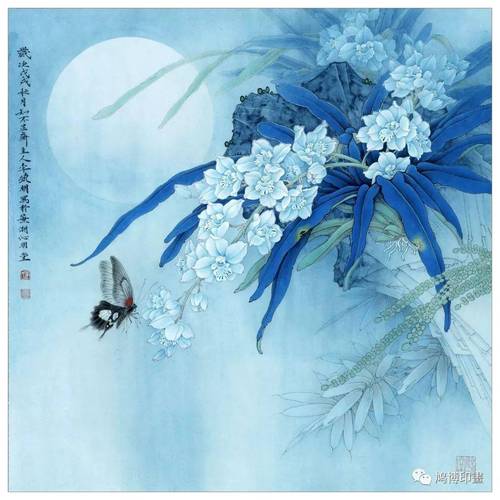
Sized xuan paper undergoes processing, typically with an alum solution, rendering it nearly non-absorbent or only minimally absorbent. Ink applied to sized paper remains precisely where it is placed without spreading. This stable surface is perfectly suited to meticulous Gongbi painting, where fine lines and precisely layered colors demand exact control, and to small regular-script calligraphy requiring crisp, clean strokes. For beginners, sized paper offers a more forgiving experience — every line remains clearly controllable, enabling precise depiction.
Half-Sized Xuan Paper (Banshengshu)
Half-sized paper occupies the middle ground between raw and sized varieties. It possesses moderate absorbency — enough to create subtle ink diffusion and brushstroke variation without the rapid, uncontrolled spreading of raw paper. This balanced performance makes it remarkably versatile, suitable for both painting and various calligraphic styles. For beginners practicing regular or running script, half-sized paper provides an ideal introduction to xuan paper's unique qualities while remaining manageable. As skills develop, artists can gradually explore raw and sized papers according to their expressive needs.
Beyond the Three Types
Xuan paper can be further classified by raw material — blue sandalwood bark (tanpi) paper, straw (caoliao) paper, and blended varieties — and by manufacturing process, each yielding subtle differences in texture, whiteness, and aging properties. The paper's weight (measured in chi), from three-chi to eight-chi and beyond, also affects handling. Proper storage away from moisture and light preserves xuan paper's qualities for decades, with aged paper often prized for its mellowed absorbency and subtle coloration.