The Spirit of Xieyi Painting
Chinese freehand painting (xieyi) represents one of the most distinctive expressions of Eastern artistic philosophy. Emerging from the Yuan dynasty, maturing through the Ming, and reaching its full flower in the late Ming and early Qing, the large freehand (daxieyi) tradition achieved consummate mastery through modern masters like Wu Changshuo, Qi Baishi, and Pan Tianshou. Understanding the distinction between large and small freehand styles is essential for appreciating the full spectrum of Chinese painting.
The Four Dimensions of Large Freehand
Grandeur of Connotation: Large freehand bird-and-flower painting channels the artist's emotions through nature, using imagery to express feeling, cultivate the spirit, and create poetic realms. It pursues beauty grounded in natural truth and genuine emotion, integrating poetry and calligraphy into painting to deepen the expressive power of brush and ink.
Grandeur of Artistic Conception: The fundamental aesthetic challenge of large freehand is the dialectical mastery of "form" and "conception" — the degree to which an artist grasps both objective reality and subjective world determines the ultimate height of their art. Qi Baishi crystallized this as "wonderfully poised between likeness and unlikeness."
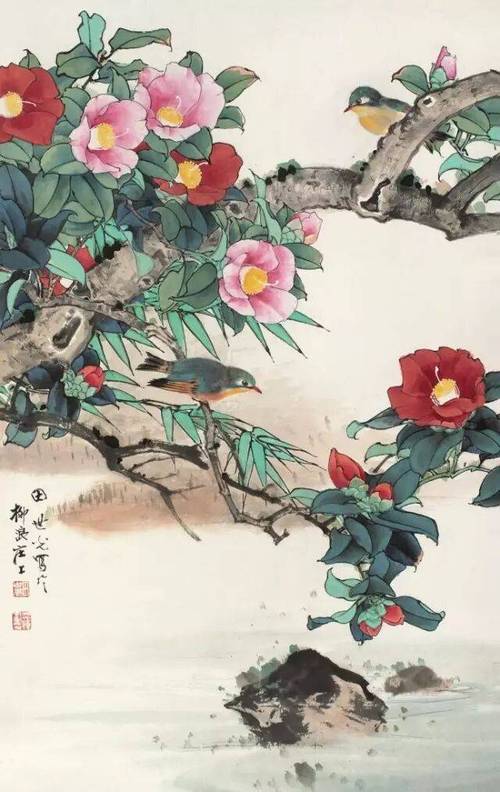
Grandeur of Spirit: Large freehand painting is profoundly shaped by the three pillars of Chinese thought — Confucianism, Daoism, and Chan Buddhism. Confucianism taught that art should perfect moral character; Daoism held that naivety and untrammeled freedom were the marks of a "true painter." Chan Buddhism, channeled through Dong Qichang, infused Ming painting with meditative depth.
Grandeur of Vitality: Later influenced by epigraphy, bronze-and-stone studies, and commercial culture, large freehand evolved into a style both refined and accessible. In the finest works, the viewer witnesses the painter's complete spiritual and technical freedom.
Five Key Differences
1. Painting Method: Small freehand combines meticulous techniques with spontaneous brushwork — birds' beaks and eyes may use outline drawing while bodies are rendered with direct ink dabbing. Large freehand, by contrast, abandons detailed description in favor of simplified, intensified brushwork and appropriately exaggerated forms, as seen in the works of Liang Kai, Bada Shanren, and Qi Baishi.
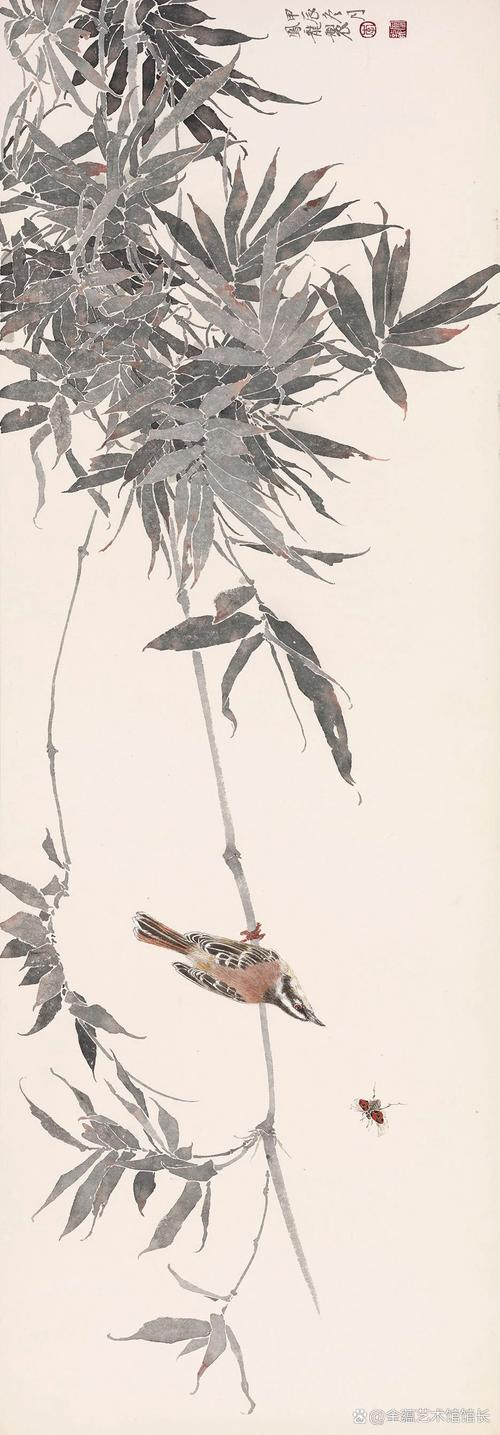
2. Formal Treatment: Large freehand liberates form to a greater degree; small freehand maintains relatively stricter formal control. If the image remains recognizable without outline-and-layer coloring, it is small freehand; if form is only suggested through splashed ink, it is large freehand.
3. Degree of Refinement: In depicting the same bird, large freehand employs more simplified, summary treatment while small freehand renders the subject more concretely. Yet Chinese painting always prioritizes the artist's authentic emotional expression.
4. Expressive Approach: Large freehand emphasizes conceptual expression through bold exaggeration — its essence is "great simplicity undecorated." Small freehand leans toward formal likeness balanced with spirit, achieving unity of form and meaning but with greater restraint.
5. Mode of Presentation: The "large" in large freehand refers not to physical scale but to spiritual magnitude. Large freehand belongs to the "abbreviated brush" tradition, closely allied with cursive and even wild-cursive calligraphy. Its greatest practitioners — Xu Wei, Shitao, Zhu Da, Qi Baishi — were all calligraphers of profound accomplishment. Ultimately, large freehand painting pursues the union of self and cosmos, transcending physical constraints to express the vast rhythm of existence itself.