


 Posted an update: 2026-4-1 14:25:24 98
A vessel for the gifts of the earth. The woven basket (Cao-kuang) is the essential companion of the farmer, where the grass is used to carry the harvest, the lunch, and the future.
The Woven Basket: Storage, Utility from the Fields, and the Masterpiece of the Structural Weave
In the traditional Chinese kitchen and courtyard, straw baskets are everywhere. Strong, lightweight, and naturally breathable, they are the perfect storage for everything from fresh eggs and vegetables to grain and dried herbs. Unlike plastic containers that trap moisture and cause rot, straw baskets allow the harvest to "breathe," extending the life of the food inside. But a straw basket is more than a tool; it is a masterpiece of structural weaving, where the artisan must balance the softness of the grass with the strength needed to carry a heavy load.
1. The Structural Skeleton: Weaving for Strength
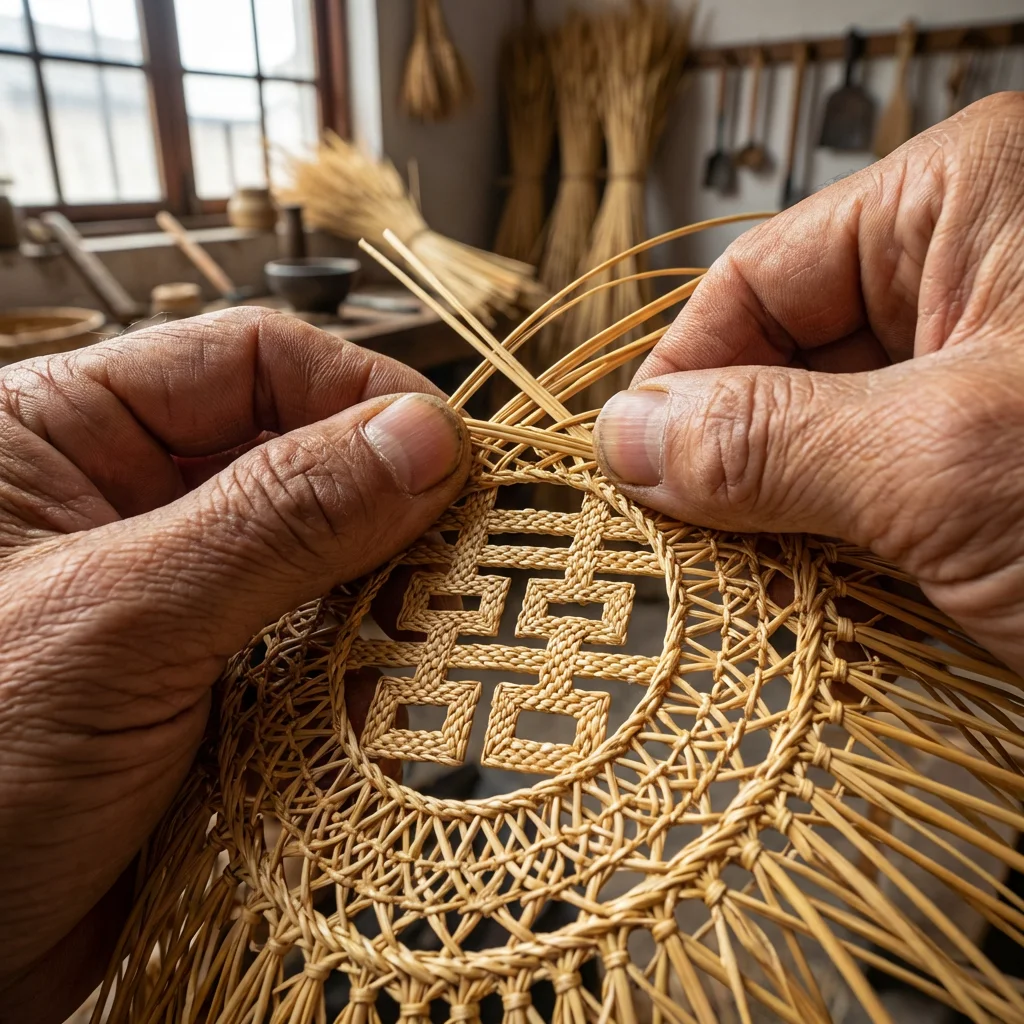
The secret of a strong straw basket is the **Internal Framework**. While the body of the basket is made from soft straw braids, the base and the edges are often reinforced with thicker stalks or even thin bamboo splints. This creates a "skeleton" that holds the shape and distributes the weight. The weaver uses a "twining" technique, where the vertical stalks are wrapped with horizontal braids, creating a mesh that is both flexible and incredibly durable. It is the art of turning grass into a solid form.
2. The Breathable Vessel: Why Straw is Better Than Plastic
Straw is naturally porous. In a damp climate, a straw basket will absorb excess moisture from the air; in a dry climate, it will release it. This natural humidity control is what makes it the ideal storage for food. Fruits stored in a straw basket will ripen more evenly and last longer than those in a sealed container. Furthermore, straw has a natural, subtle scent that enhances the aroma of the items stored inside, creating a sensory experience that plastic simply cannot provide. It is a vessel that works with nature, not against it.
3. Decorative Rims and Handles: The Artisan"s Signature
The rim and the handle of a basket are where the artisan truly shows their skill. A "braided rim" (Bian-kou) can involve dozens of strands of straw woven into a complex lace-like pattern that protects the edges from wear. The handles are often reinforced with hemp rope or multiple layers of thick straw to ensure they can withstand the stress of a full load. These details are not just for strength; they are the "signature" of the weaver, a mark of quality that distinguishes a master"s work from a simple utility item.
4. A Basket for Every Task: Diversity of Form
The form of the straw basket follows its function. The **Flat Tray** (Bo-qi) is used for drying grain in the sun; the **Deep Pail** (Cao-tong) is for carrying water or mud; and the **Delicate Lidded Basket** (Gai-kuang) is for storing precious seeds or household treasures. In some regions, baskets are woven so tightly that they are used for steaming bread, allowing the steam to pass through while keeping the heat inside. This incredible diversity shows the adaptability of the material and the creativity of the rural mind.
5. FAQ: Using and Caring for Traditional Straw Baskets
Can I use straw baskets for wet items?
Yes, but ensure the basket can dry out completely afterward. Straw is naturally resistant to water, but prolonged dampness can cause mold. If you use a basket for fresh vegetables, wipe it out after use and hang it in a well-ventilated place. Avoid leaving wet items in a straw basket for many days.
How much weight can a straw basket carry?
A well-made straw basket can carry a surprising amount—often up to 10-15kg depending on the size and the weave. However, always check the strength of the handles and the base before loading it heavily. If the basket starts to "groan" or the weave gaps significantly, it is reaching its limit.
How do I restore an old, brittle straw basket?
If a basket has become very dry and brittle, you can carefully spray it with a fine mist of water to restore some flexibility to the fibers. You can also apply a very light coat of natural beeswax or vegetable oil to the outer surface to help seal in the moisture and protect the straw from cracking. This will also give the basket a beautiful, deep luster.
6. Conclusion
The woven basket is the heart of the rural home. It shows us that utility and beauty are not separate things, but two parts of the same whole. As we fill a straw basket with the gifts of the season, we are participating in a tradition of care and resourcefulness that is thousands of years old. The basket is strong, the air is fresh, and the harvest is forever safe. Straw is the vessel of life, woven for the future.
From the utility to the play: Next, we explore the Joy of the Fields—Straw Toys and Figures!