


 Posted an update: 2026-4-1 14:13:10 95
In the water towns of the Jiangnan region, the stone is turned into poetry. The Suzhou School of jade carving is the absolute peak of artistic refinement, where the "Floating Carving" technique brings the spirit of the scholar-painter to the world of jade.
The Suzhou School: The "Floating" Carving and the Scholarly Elegance of Jiangnan Jade Art
Suzhou has been the center of high-end jade carving in China since the Ming Dynasty. Known for its "Zi-gang" style (named after the legendary master Lu Zigang), the Suzhou school is characterized by its incredible precision, its delicate relief work, and its deep connection to the values of the literati. A Suzhou jade piece is not just a carving; it is a three-dimensional ink-wash painting, a masterpiece of subtle beauty and intellectual depth.
1. Lu Zigang: The Legend of the Suzhou Master
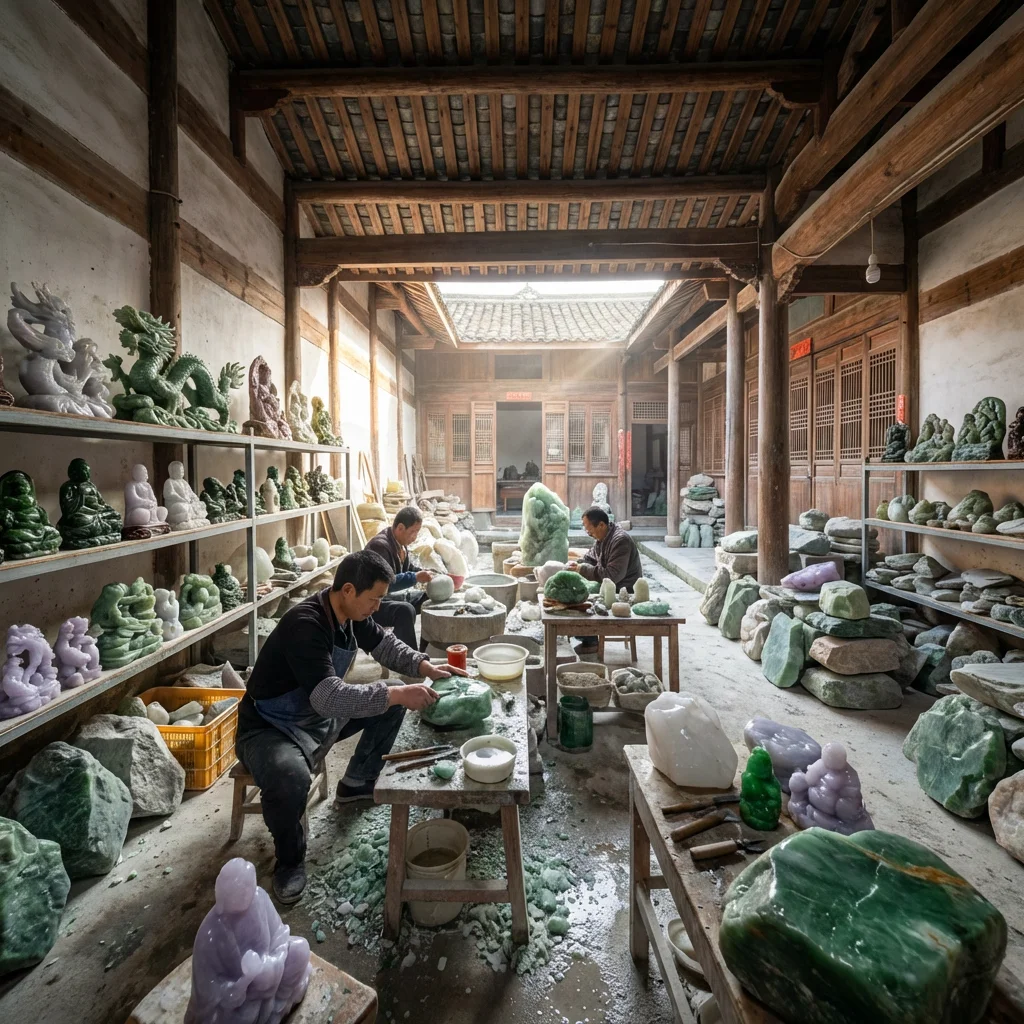
The spirit of the Suzhou school is defined by Lu Zigang, a master carver from the Ming Dynasty who was so famous that his work was sought after by emperors. He was the first artisan to sign his work, a bold move that elevated jade carving from a craft to a fine art. The "Zigang Pendant"—a rectangular jade tablet with a poem on one side and a landscape on the other—remains the most iconic and beloved form of Suzhou jade art today.
2. "Floating Carving": The Illusion of Depth
The hallmark of the Suzhou school is **Fu-diao** (Floating Relief). This technique involves carving extremely shallow layers—sometimes no thicker than a piece of paper—to create a sense of immense perspective and depth. Like a master painter using different shades of ink, the Suzhou carver uses the subtle variations in the jade"s translucency to represent mountains, clouds, and water. It is a style of restraint and elegance, where what is *not* carved is as important as what is.
3. Literary Motifs: Poetry in Stone
Suzhou jade is deeply connected to the world of the scholar. The themes are often taken from classic Chinese poetry and landscape painting. You will find scenes of scholars under pine trees, lonely fishermen on a lake, and delicate blossoms of plum and orchid. These carvings were designed to be handled and admired by the literati during their quiet moments of meditation and study, providing a physical connection to the spiritual world of art and literature.
4. Using the "Skin": The Art of Natural Color
A key skill of the Suzhou carver is **Qiao-diao** (Clever Carving), which involves using the natural "skin" or color variations of the jade boulder as part of the design. A brown spot in the white jade might be turned into a falling leaf, or a yellow vein might become a golden carp. This "collaboration with nature" is the soul of the Suzhou aesthetic, ensuring that every piece is unique and respects the original beauty of the stone.
5. FAQ: Identifying Suzhou School Jade
What makes Suzhou jade different from other schools?
Suzhou jade is known for being "Fine" (Jing), "Elegant" (Ya), and "Clean" (Jie). It avoids heavy or cluttered designs, focusing instead on perfect proportions and the highest level of detail in the relief work. If a piece feels like a quiet poem, it is likely from the Suzhou school.
Are modern Suzhou carvers still following the traditional ways?
Yes! Suzhou remains the center of high-end jade carving in China. While modern tools are used, the apprenticeship system and the scholarly aesthetic have been preserved. Many modern Suzhou masters are now national-level "Intangible Heritage Successors."
How do I care for a Suzhou jade pendant?
Because the relief work is so delicate, avoid wearing Suzhou jade during heavy physical activity. Clean it gently with a soft silk cloth and keep it away from perfumes and oils. Frequent "handling" with clean hands is encouraged, as it helps the jade develop its beautiful natural luster.
6. Conclusion
The Suzhou School is the poetic heart of Chinese jade art. It shows us that true mastery is not about force, but about understanding and restraint. As we look at the "floating" landscape of a Suzhou pendant, we are connecting with the refined spirit of the Jiangnan scholar and the eternal beauty of the stone. In the hands of a Suzhou master, the jade is no longer a stone; it is a dream.
From the poem to the throne: Next, we explore the Ultimate Symbol of Authority—Jade Seals!