


 Posted an update: 2026-4-1 13:57:18 112
In the mountain villages of Guizhou, the butterfly and the bird are born from fire and wax. Batik (La-ran), or wax-resist dyeing, is one of the most magical and ancient forms of Chinese textile art.
Batik (La-ran): The Wax-Resist Magic of the Miao and Buyi Peoples
Batik has been practiced by the ethnic minorities of southwestern China for over 2,000 years. Unlike standard dyeing, Batik uses melted beeswax to "paint" patterns onto white cloth. When the cloth is dipped into a vat of indigo dye, the wax prevents the color from reaching the fabric, creating a beautiful contrast of deep blue and brilliant white. This is the art of the mountains, carrying the soul and mythology of the people who wear it.
1. The Wax Knife: Painting with Fire
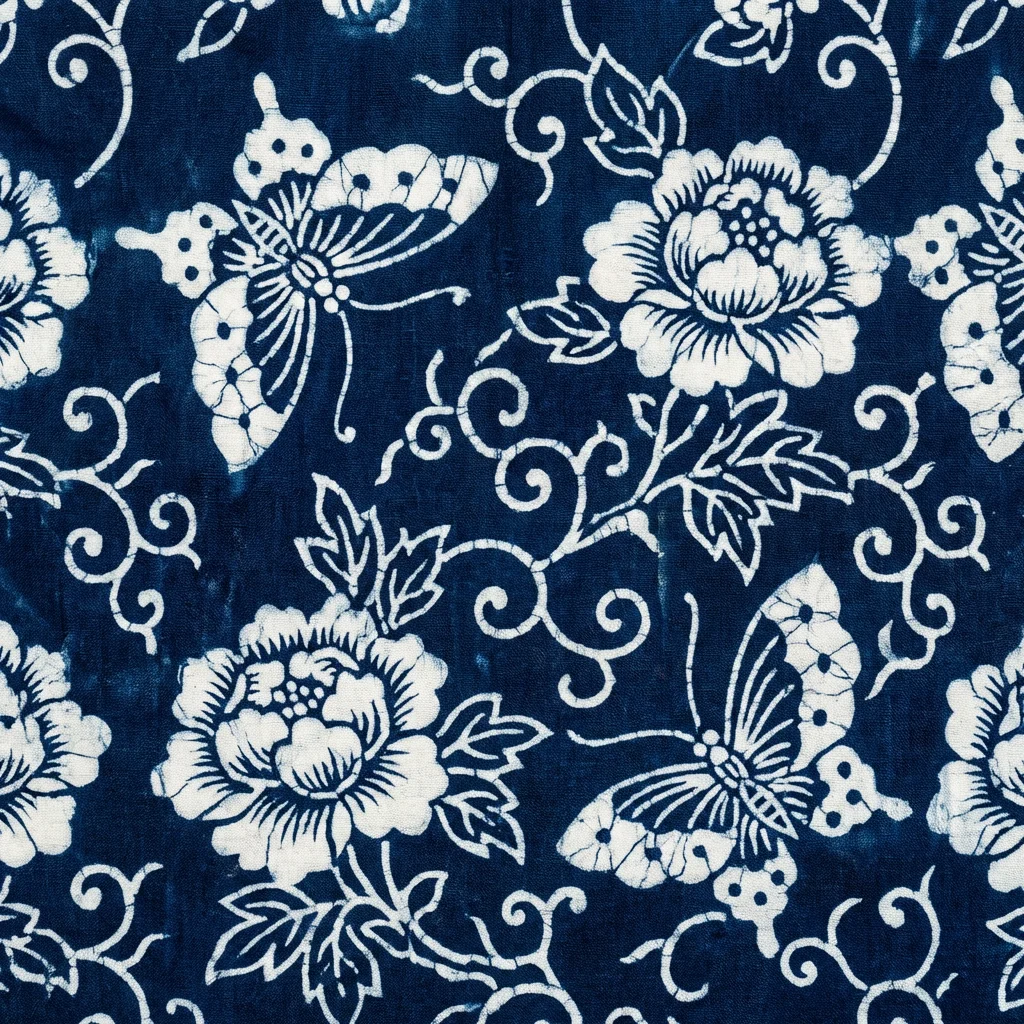
The primary tool of the Batik artisan is the "Wax Knife" (La-dao)—a small copper tool with a wooden handle. The artisan dips the knife into molten beeswax and free-draws intricate patterns onto the fabric. Because the wax cools quickly, the artisan must be fast and precise. This process requires a steady hand and a deep memory of the traditional patterns, as there is no way to "erase" a mistake once the wax touches the cloth.
2. Indigo Fermentation: The Living Blue
Traditional Batik always uses natural Indigo (Lan-cao). Dyeing with indigo is a slow, biological process. The indigo paste is fermented in large vats for several days until it produces a "flower" of foam on top. The waxed cloth is dipped into this living vat multiple times. Each dip makes the blue deeper and richer. This natural indigo has a unique, fresh scent and is believed to have medicinal properties that protect the skin and repel insects.
3. The Butterfly and the Fish: Mythic Symbols
Like Miao embroidery, Batik patterns are a form of storytelling. The Butterfly is the "Mother of All Life," while the Fish represents fertility and abundance. Circular patterns often represent the sun or the cycles of the seasons. For the Miao and Buyi people, wearing these patterns is a way to stay connected to their ancestors and the spiritual power of nature.
4. Cracking the Ice: The Beauty of the Ice-Crack Pattern
One of the most prized features of Batik is the "Ice-Crack" (Bing-wen). During the dyeing process, the hardened wax naturally cracks, allowing tiny veins of indigo to seep through. These random, fine lines resemble the cracks in a frozen lake. This "natural imperfection" is celebrated as the soul of Batik, ensuring that no two pieces are ever exactly the same.
5. FAQ: Appreciating and Caring for Batik
Does Batik bleed when washed?
Natural indigo Batik may release a little blue during the first few washes. This is normal! Wash it separately in cold water with a little salt to help set the color. Over time, the blue will become more stable and develop a beautiful "aged" character.
How can I tell handmade Batik from printed fabric?
Handmade Batik has the signature "ice-crack" lines and the pattern is visible on both sides of the cloth. Printed fabric will be flat and uniform, with a clear "front" and "back."
Can I use Batik for modern clothing?
Yes! Many modern designers use Batik fabric for shirts, dresses, and home decor. Its deep blue color and timeless patterns blend perfectly with both traditional and contemporary styles.
6. Conclusion
Batik is the poetry of the southwestern mountains. It is a slow, deliberate art that respects the rhythm of nature and the wisdom of the past. As we wrap ourselves in the indigo blue of a Batik robe, we are wrapping ourselves in the legends and spirit of the Miao and Buyi people. It is a living heritage that continues to bloom in every vat of blue.
From the wax knife to the tied knot: Next, we explore the vibrant sunbursts of Tie-Dyeing!