


 Posted an update: 2026-4-1 14:20:33 96
A single pole, a thousand threads. The tool and the technique of the bamboo carver are a masterpiece of coordination and patience, where a rough mountain grass is turned into the jewelry of the forest.
The Tool and the Technique: Splitting the Impossible Thread and the Secret of the Master"s Hand
The beauty of bamboo weaving begins not at the loom, but at the workbench. Before a single thread is woven, it must be split from a raw bamboo pole. This process, known as "Kua-si" (Splitting the silk), is the most difficult part of the craft. A master must be able to split a single 2mm thick piece of bamboo into 8 or even 12 paper-thin layers. This level of precision is achieved entirely by feel, a "Dance of the Blade" that takes decades to master.
1. The Master"s Knife: A Simple Tool for a Complex Art
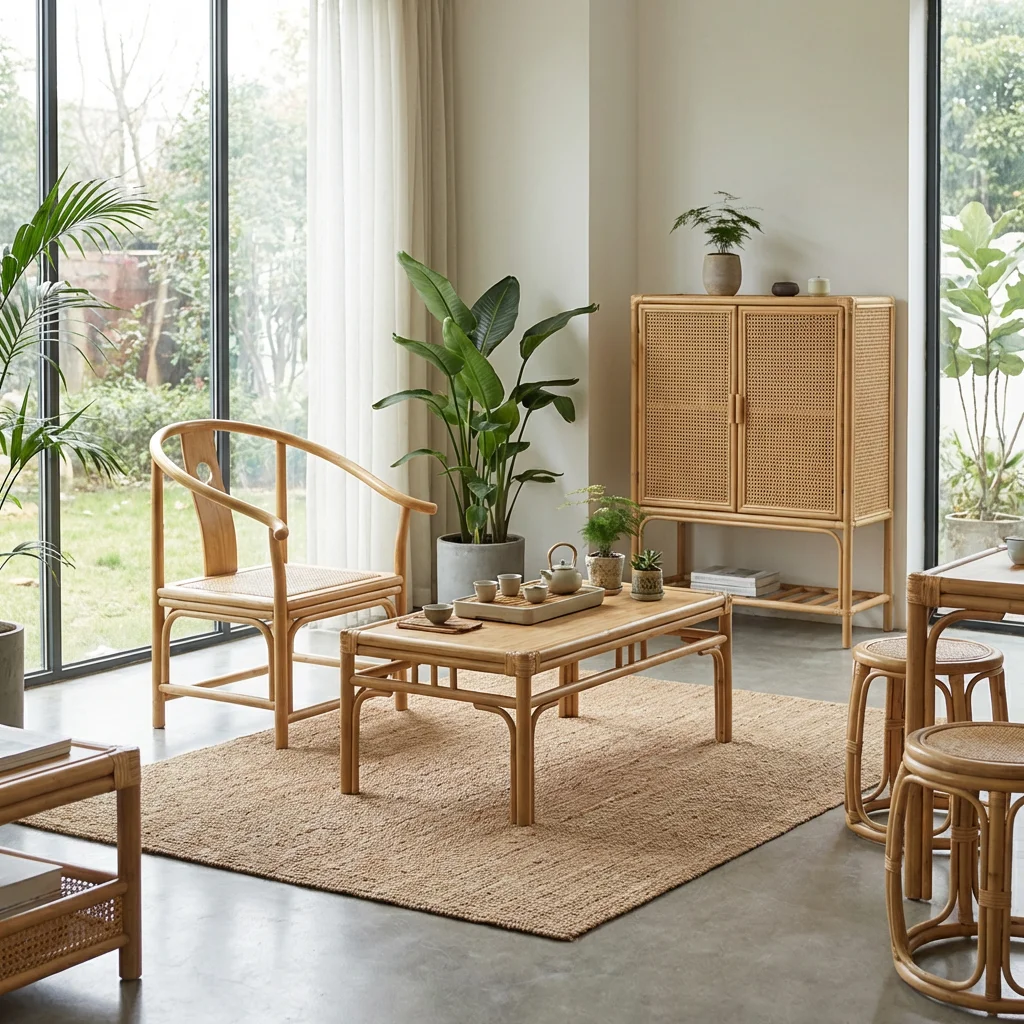
The primary tool of the bamboo weaver is a simple, long-handled knife. This knife is the extension of the master"s soul. It must be kept incredibly sharp, yet the master uses it with such gentleness that it never cuts too deep. By applying the perfect amount of pressure and angle, the artisan "guides" the blade through the internal fibers of the bamboo, allowing it to follow the natural grain of the plant. It is a process of "listening" to the wood, a masterpiece of human and natural collaboration.
2. Splitting the Green: The Strength of the Outer Skin
The most valuable part of the bamboo is the **Qing** (Green) outer skin. This layer is the most durable, flexible, and resistant to moisture. A master will split the outer skin into several "silk" threads, while the inner "yellow" layers are used for structural support or for less delicate weaving. Learning to separate the green from the yellow without damaging the precious outer fibers is the first lesson every apprentice must master, a task that requires a steady hand and a calm mind.
3. The Art of the Scraping: Achieving the Silk Luster
After the threads are split, they must be **Scraped** (Gua-si) to remove any rough fibers and to achieve a uniform thickness. This is where the bamboo begins to shine. As the master pulls the thread through a specialized scraper, the natural oils of the bamboo are brought to the surface, creating a luster that rivals the finest silk. This scraping also makes the threads more flexible, allowing them to be woven into the tightest and most complex patterns without snapping.
4. Weaving the Spirit: The Internal Logic of the Pattern
Once the threads are ready, the weaving begins. A bamboo weaver does not use a blueprint; the pattern is stored in their **Finger Memory**. They understand the internal logic of the weave—how many threads must go over and how many must go under to create a bird"s wing or a dragon"s scale. This coordination of thousands of individual threads into a single, cohesive form is a triumph of spatial thinking, where the artist "sees" the finished work inside the pile of threads before the first knot is tied.
5. FAQ: Understanding the Bamboo Weaver"s Process
Why is bamboo split into so many layers?
Splitting allows the artisan to choose the best fibers for each part of the work. The thinner the thread, the more delicate and flexible the final weave can be. For high-end artistic pieces, the threads must be paper-thin to allow for the incredible level of detail and the "silk-like" texture.
How long does it take to become a master?
Traditionally, it takes three years to learn the basic tools, and ten years to master the art of splitting and weaving. Many masters say they are still learning even after fifty years of practice, as every bamboo pole is different and requires a new approach.
What is the most difficult pattern to weave?
The **Pierced Relief** (Tou-diao) patterns, where the weave creates a three-dimensional scene with multiple layers of depth, are the most difficult. These require the artisan to manage thousands of threads in a complex, three-dimensional space, a task that tests the limits of human patience and skill.
6. Conclusion
The tool and the technique of the bamboo carver are the heart of the craft. They show us that with enough focus and respect, a simple mountain grass can be turned into a work of eternal beauty. As we admire the fine threads of a bamboo screen, we are admiring the decades of practice and the master"s touch that brought them to life. Bamboo is the soul of the forest, refined by the spirit of the hand.
From the tool to the future: Next, we explore the Ultimate Eco-Material—Bamboo in Modern Design!